


Urolithin A and spermidine are both used in healthy-aging supplement routines, but they're not the same. Urolithin A is more focused on mitochondrial health and mitophagy. Spermidine is more focused on broader autophagy and cellular renewal.
The short version: choose Urolithin A if your main goal is mitochondrial support, muscle function, and cellular energy. Choose spermidine if your main goal is broader cellular recycling, autophagy support, and a healthy-aging routine. They overlap, but they’re not interchangeable.
Neither supplement is proven to reverse aging, extend human lifespan, prevent dementia, or replace the basics: strength training, sleep, movement, and a nutrient-dense diet.
Quick Answer: Urolithin A vs Spermidine
| Choose | Best if you want | Simple note |
|---|---|---|
| Urolithin A | Mitochondrial and mitophagy-focused support | Best fit if your priority is muscle, mitochondria, and cellular energy. |
| Spermidine | Broader autophagy and cellular-renewal support | Best fit if your priority is general cellular recycling and healthy-aging routines. |
| Both | A broader cellular-health routine | Only if appropriate for your health status, medications, and supplement stack. |
| Neither first | Foundational longevity habits | Start with exercise, protein, sleep, blood-sugar health, and consistency. |
What Is Urolithin A?
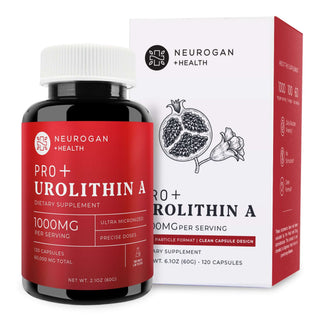
Urolithin A is a postbiotic compound made by certain gut bacteria when you eat foods rich in ellagitannins and ellagic acid. These compounds are found in foods like pomegranates, raspberries, strawberries, and walnuts. The catch is that not everyone converts these foods into Urolithin A efficiently.

That’s why Urolithin A supplements exist. They provide Urolithin A directly rather than relying solely on gut conversion from food.
Urolithin A is mainly discussed for its role in mitophagy.
Mitophagy is the cell’s process for clearing damaged mitochondria. Mitochondria are often described as the cell's energy centers, which is why Urolithin A is commonly associated with muscle and mitochondrial health and cellular energy. A Cambridge review describes Urolithin A as a gut microbiota-derived metabolite of ellagitannins and notes that its role in mitophagy makes it a more targeted mitochondrial health intervention [1].
What Is Spermidine?
Spermidine is a naturally occurring polyamine found in the body and in foods such as wheat germ, soybeans, natto, mushrooms, legumes, and some aged cheeses. It’s best known in supplement conversations for its connection to autophagy and longevity [2].

Autophagy is a broader cellular recycling process. It helps cells break down and reuse damaged or unneeded parts. Spermidine is often positioned for cellular renewal, healthy aging, and autophagy-support routines.
That doesn’t mean spermidine is a proven anti-aging treatment. It means it has a biological rationale that makes it interesting to healthy aging research. Human evidence is still developing, and outcomes are not guaranteed.
Urolithin A vs Spermidine: Comparison Table
| Factor | Urolithin A | Spermidine |
|---|---|---|
| Main pathway | Mitophagy | Autophagy |
| Main focus | Mitochondrial quality control | Broader cellular recycling |
| What it is | A postbiotic metabolite | A polyamine |
| Food relationship | Made from ellagitannin-rich foods by gut bacteria | Found directly in foods |
| Common food connections | Pomegranate, walnuts, raspberries, strawberries | Wheat germ, soybeans, natto, mushrooms, legumes |
| Best fit | Mitochondrial health and muscle-support routines | Autophagy and cellular-renewal routines |
| Evidence angle | More focused on mitochondrial and muscle-related endpoints | Broader healthy-aging and autophagy interest |
| Main limitation | Food conversion varies by gut microbiome; supplements can be expensive | Human outcome evidence is still mixed and developing |
Mitophagy vs Autophagy: Why the Difference Matters
This is the key difference between Urolithin A and spermidine.
- Autophagy is the broad recycling system. It helps the cell break down damaged proteins, organelles, and other cellular parts so they can be reused or cleared.
- Mitophagy is more specific. It’s a type of autophagy focused on mitochondria. Think of autophagy as general cellular housekeeping, and mitophagy as mitochondrial quality control.
The Cambridge review explains that autophagy targets damaged or redundant cellular components, while mitophagy focuses specifically on dysfunctional mitochondria. The same review summarizes the practical distinction this way: Urolithin A is more focused on mitophagy and mitochondrial health, while spermidine has a broader influence on autophagy and metabolic regulation [1].
That’s why the choice isn’t simply “which one is better?” The better question is: what are you trying to support?
Which Has Better Evidence?
Both compounds have research behind them, but the evidence isn't identical.
Urolithin A has a cleaner positioning around mitochondrial health, muscle function, and mitophagy.
The Cambridge review notes that clinical research on Urolithin A has focused on mitochondrial health and muscle-related outcomes, particularly in older adults [1]. It also has extensive private research from large companies selling Urolithin A supplements, which is why it’s often marketed at premium price points.
Spermidine has broader autophagy and healthy-aging interest. It’s also been studied in human populations, including older adults with subjective cognitive decline [2]. But the broader the claim, the more careful the wording needs to be. “Supports autophagy-related cellular renewal” is safer than “slows aging” or “prevents cognitive decline.”
If you want a quick breakdown: Urolithin A has a more focused mitochondrial and muscle-health lane. Spermidine has a broader cellular-recycling lane. Neither one has proven that it extends human lifespan.
Benefits Compared
| Goal | Better fit | Why |
|---|---|---|
| Mitochondrial health | Urolithin A | More directly associated with mitophagy and mitochondrial quality control. |
| Muscle function and endurance support | Urolithin A | More focused clinical positioning around muscle and mitochondrial endpoints. |
| Autophagy support | Spermidine | Better fit for broader cellular recycling and autophagy-support routines. |
| Cellular renewal | Spermidine | Commonly chosen for cellular housekeeping and healthy-aging routines. |
| Longevity routine | Depends | They support different pathways, so the better fit depends on your goal. |
| Food-first approach | Spermidine | Spermidine is found directly in several foods. |
| Gut-conversion independence | Depends | Urolithin A supplements bypass food conversion; spermidine supplements provide the compound directly. |
Dosage and How to Take Them
There is no universal best dose for Urolithin A or spermidine. Product formulas vary, and human studies often use specific branded ingredients or extracts that may not match every supplement on the market.
| Supplement | Practical guidance | What to avoid |
|---|---|---|
| Urolithin A | Follow the product label and choose a product with clear mg per serving. | Most safety data only covers up to about 4 months. Long-term safety beyond that window is less characterized, so any product implying "safe for years of daily use" is overstating what's actually been studied. |
| Spermidine | Follow the label and check the actual spermidine amount per serving. | Do not chase high doses or stack multiple polyamine products without guidance. |
| Both together | Consider only if the combination fits your routine, budget, and health status. | Do not combine supplements blindly just because both are used in longevity routines. |
If you are over 45, taking medication, pregnant, nursing, managing a medical condition, or using a larger supplement stack, ask a qualified healthcare professional before adding either supplement.
Side Effects, Interactions, and Who Should Be Careful
Urolithin A and spermidine are sold as wellness supplements, but that doesn’t make them right for everyone.
Use extra caution if you:
- are pregnant or nursing
- take prescription medications
- use blood pressure medication or blood-thinning medication
- have liver or kidney disease
- have a history of cancer or are in active treatment
- are preparing for surgery
- use a large supplement stack
Possible side effects may include digestive discomfort, nausea, headache, or sensitivity. With spermidine, many user questions cluster around liver, kidney, blood pressure, weight, hair, and daily-use concerns. The best answer is not fear. Use caution: follow the label, avoid overuse, and get guidance from a clinician if you have a medical condition.
Don’t use either supplement to self-treat high blood pressure, kidney disease, liver disease, cognitive decline, inflammation, or any diagnosed condition.
Food Sources: Can You Get Them Naturally?
You can support both pathways through food, but the food story is different.
| Compound | Food connection | Important note |
|---|---|---|
| Urolithin A | Pomegranates, walnuts, raspberries, strawberries, and other ellagitannin-rich foods | These foods don’t contain much Urolithin A directly. Your gut bacteria must convert precursors into Urolithin A. |
| Spermidine | Wheat germ, soybeans, natto, mushrooms, legumes, whole grains, and some aged cheeses | Spermidine is found directly in foods, though amounts vary widely, which is why supplementation is the easiest way to get a consistent and precise amount. |
Coffee, eggs, and yogurt may contain small or variable amounts of polyamines, but they shouldn’t be treated as reliable high-dose spermidine sources. If you want a measured amount, a supplement is easier to compare than food estimates.
Quality Testing: What to Look for Before Buying
Urolithin A and spermidine supplements can be expensive, so quality checks matter.
| Quality factor | What to look for |
|---|---|
| Ingredient identity | The label clearly states Urolithin A or spermidine, not vague “longevity blend” language. |
| Active amount | Clear mg per serving. |
| Source/form | Urolithin A shouldn’t be confused with pomegranate extract. Though you can purchase pomegranate extract supplements that contain gut- and cell-supporting ingredients that give you a more holistic approach for supporting your body’s natural urolithin production pathways. Spermidine should list the actual amount of spermidine or a standardized source, not wheat-germ extract. |
| Certificate of Analysis | Look for a COA that matches the product or batch. |
| Testing | Potency, purity, heavy metals, microbes, and other contaminant testing where applicable. |
| Claim quality | Supports cellular health and healthy-aging routines, not “reverses aging.” |
For Neurogan Health products, start with the lab test results page before choosing a supplement.
Urolithin A vs Spermidine: Which Should You Choose?
| Choose Urolithin A if... | Choose spermidine if... |
|---|---|
| You care most about mitochondria. | You care most about broad autophagy support. |
| You want a mitophagy-focused supplement. | You want a cellular-renewal supplement. |
| You are focused on muscle function and energy support. | You are focused on general healthy-aging support. |
| You want a postbiotic-style compound. | You want a polyamine supplement. |
| You are comfortable with a premium-priced supplement category. | You want a compound with more direct food-source overlap. |
Still unsure? Start with the goal. For mitochondria and muscle support, Urolithin A makes more sense. For broad cellular recycling and autophagy-support routines, spermidine supplements make more sense.
Urolithin A vs Spermidine FAQ
Which is better, Urolithin A or spermidine?
Neither is universally better. Urolithin A is the better fit for mitochondrial and mitophagy-focused support. Spermidine is the better fit for broader autophagy and cellular-renewal support.
What is the difference between Urolithin A and spermidine?
Urolithin A is a postbiotic metabolite linked mostly to mitophagy and mitochondrial quality control. Spermidine is a polyamine linked mostly to broader autophagy and cellular recycling.
Can you take Urolithin A and spermidine together?
Some people may combine them because they work through different cellular-maintenance pathways. Do not stack them without checking dose, safety, medications, and your overall supplement routine.
Is Urolithin A the same as CoQ10?
No. Urolithin A and CoQ10 are different compounds. Urolithin A is studied for mitophagy-related pathways, while CoQ10 is involved in mitochondrial energy production and antioxidant support.
Is resveratrol the same as spermidine?
No. Resveratrol is a plant polyphenol. Spermidine is a polyamine. They’re both discussed in healthy-aging routines, but they are not the same ingredient.
What is better than spermidine?
It depends on your goal. Urolithin A may be a better fit for mitochondrial and muscle-focused support. Spermidine may be a better fit for broad autophagy support. NAD+ supplements, NMN, and other longevity supplements work through different pathways.
Who should not take Urolithin A?
People who are pregnant, nursing, taking medication, preparing for surgery, or managing a medical condition should speak with a qualified healthcare professional before using Urolithin A.
Are there downsides to spermidine?
Possible downsides include digestive discomfort, uncertain long-term outcomes, medication questions, and the risk of overusing supplements based on longevity hype. Follow the label and use clinician guidance if needed.
Is spermidine hard on the liver or kidneys?
Spermidine should not be used to self-manage liver or kidney health. If you have liver disease, kidney disease, abnormal labs, or take medications that affect these organs, ask a healthcare professional before using spermidine.
Can spermidine raise blood pressure?
Do not use spermidine to manage blood pressure. If you have high blood pressure or take blood pressure medication, ask a healthcare professional before adding spermidine.
What food is highest in spermidine?
Wheat germ, soybeans, natto, mushrooms, legumes, and some aged cheeses are commonly discussed as spermidine-rich foods. Amounts vary by food, preparation, and serving size.
Is Urolithin A worth taking?
Urolithin A may be worth considering if your goal is mitochondrial health, muscle-support routines, and mitophagy-focused healthy aging, but it’s not a magic anti-aging supplement, and it shouldn’t replace exercise, protein, sleep, or medical care.
Does spermidine actually work?
Spermidine has a clear biological rationale around autophagy, but human results are still developing. It’s better framed as cellular health support rather than as a proven anti-aging or disease-prevention treatment.
Bottom Line
Urolithin A and spermidine both belong in the cellular-health conversation, but they serve different jobs.
Urolithin A is the better fit for mitochondrial health, mitophagy, and muscle-support routines. Spermidine is the better fit for broad autophagy, cellular renewal, and healthy-aging routines.
The smarter choice is not the trendier ingredient. It’s the one that matches your goal, has clear labeling, provides quality testing, and fits into a routine you can actually sustain.
For deeper comparison, explore spermidine supplements, our best spermidine supplement guide, spermidine dosage, spermidine side effects, and longevity supplements.
References
- Borsky, P., Holmannova, D., Soukup, O., Fiala, Z., Maresova, T., Hanzlova, M., ... & Borska, L. (2025). Distinct roles of urolithin A and spermidine in mitophagy and autophagy: implications for dietary supplementation. Nutrition Research Reviews, 1-44.
- Hofer, S. J., Daskalaki, I., Bergmann, M., Friščić, J., Zimmermann, A., Mueller, M. I., ... & Madeo, F. (2024). Spermidine is essential for fasting-mediated autophagy and longevity. Nature cell biology, 26(9), 1571-1584.


