Syn-Ake and Argireline are both synthetic cosmetic peptides used in wrinkle-focused skincare, but they are not the same ingredient and they do not work through exactly the same proposed mechanism.
Argireline, also known as Acetyl Hexapeptide-8, was designed around the SNAP-25/SNARE pathway involved in neurotransmitter release. Syn-Ake, whose active INCI name is Dipeptide Diaminobutyroyl Benzylamide Diacetate, was designed around a different concept inspired by Waglerin-1 and muscle-type nicotinic acetylcholine receptor signaling.
Both are most relevant to the appearance of dynamic expression lines, such as forehead lines and crow's feet.
However, their evidence bases are not equal. Argireline has several published human studies, including randomized placebo-controlled research, while Syn-Ake's independent clinical evidence is more limited and some of its most widely cited human data come from supplier research or multi-active formulas.
Syn-Ake vs Argireline at a Glance
| Feature | Syn-Ake | Argireline |
|---|---|---|
| INCI name | Dipeptide Diaminobutyroyl Benzylamide Diacetate | Acetyl Hexapeptide-8 |
| Ingredient type | Synthetic cosmetic peptide | Synthetic cosmetic hexapeptide |
| Main cosmetic focus | Expression-line appearance | Expression-line appearance |
| Proposed mechanism | Waglerin-inspired nicotinic acetylcholine receptor concept | Interference with SNARE-complex-dependent neurotransmitter release |
| Snake-venom connection? | Inspired by Waglerin-1 biology; contains no real snake venom | No |
| Independent human evidence | Limited | More substantial, including randomized placebo-controlled studies |
| Can they be used together? | Yes. A 2026 clinical serum contained both ingredients. | |
What Is Syn-Ake?
Syn-Ake is a synthetic cosmetic peptide developed for the appearance of expression lines.
Its active INCI ingredient is Dipeptide Diaminobutyroyl Benzylamide Diacetate.
The ingredient was designed around the biological concept of Waglerin-1, a peptide found in temple-viper venom that interacts with muscle-type nicotinic acetylcholine receptors.
Syn-Ake itself contains no snake venom.
Its proposed cosmetic use centers on wrinkles influenced by repeated facial movement, such as:
- forehead lines;
- frown lines;
- crow's feet; and
- other expression-related wrinkles.
For the full evidence review, see What Is Syn-Ake?
What Is Argireline?
Argireline is the trade name commonly used for Acetyl Hexapeptide-8, a synthetic peptide designed as a topical anti-wrinkle ingredient.
Its sequence was modeled from the N-terminal region of SNAP-25, a protein involved in the SNARE complex that helps regulate neurotransmitter-containing vesicle fusion.
Early experimental research suggested that Argireline can interfere with formation or stability of the SNARE complex and reduce neurotransmitter release. [1]
That mechanism is why Argireline is often discussed in relation to expression-line skincare.
How Do Syn-Ake and Argireline Differ?
The main difference is the signaling pathway each peptide was designed around.
Argireline is primarily associated with:
SNAP-25 → SNARE complex → neurotransmitter vesicle release.
Syn-Ake is primarily associated with:
Waglerin-inspired signaling → muscle nicotinic acetylcholine receptor concept.
Both concepts ultimately relate to facial-muscle signaling, which explains why both ingredients are marketed for dynamic expression lines.
But they are chemically different peptides and should not be described as interchangeable.
How Does Argireline Work?
Argireline was developed from a sequence related to SNAP-25.
The SNARE complex is involved in membrane fusion required for neurotransmitter release.
Laboratory research reported that Argireline interfered with SNARE-complex formation and reduced neurotransmitter release. [1]
An early study of an oil-in-water emulsion containing 10% Argireline reported reduction in wrinkle depth after 30 days of use in healthy female volunteers. [1]
Importantly, the researchers also noted that Argireline's effect was much lower than botulinum neurotoxin.
So while the mechanistic comparison to Botox is often used in marketing, topical Argireline should not be presented as clinically equivalent to injected botulinum toxin.
How Does Syn-Ake Work?
Syn-Ake was developed using a different biological model.
Its design was inspired by Waglerin-1, a venom peptide known to interact with muscle-type nicotinic acetylcholine receptors.
In cosmetic use, Syn-Ake is proposed to influence pathways associated with repeated facial muscle contraction and therefore soften the appearance of expression lines.
But an important distinction remains:
The pharmacology of Waglerin-1 does not prove that topically applied Syn-Ake produces the same neuromuscular effect in human facial tissue.
Syn-Ake should therefore not be described as a topical muscle paralytic.
Which Has Better Human Evidence?
At present, Argireline has the stronger independent human clinical evidence base.
Argireline Human Evidence
A randomized placebo-controlled study published in 2013 evaluated 60 subjects with peri-orbital wrinkles.
Participants received Argireline or placebo in a 3:1 ratio and applied the treatment twice daily for four weeks. [2]
The study reported:
- improvement in subjective wrinkle assessments;
- reductions in objective wrinkle-roughness measurements; and
- no comparable reduction in the placebo group. [2]
The reported anti-wrinkle response rate was 48.9% in the Argireline group versus 0% in the placebo group. [2]
A separate earlier publication also reported reduced wrinkle depth after approximately 30 days of topical 10% Argireline. [1]
More recent studies have continued to investigate Argireline in finished formulations, although some combine it with other ingredients, making it difficult to attribute outcomes exclusively to the peptide.
Syn-Ake Human Evidence
Syn-Ake has less independent human evidence.
A 2009 scientific review summarized a Pentapharm supplier study involving 45 healthy volunteers. [3]
The study compared:
- 4% Syn-Ake cream;
- 10% Argireline cream; and
- placebo.
The creams were applied to the forehead twice daily for 28 days.
The review reported significant before-and-after measurements for Syn-Ake. [3]
However, the source was a Pentapharm ingredient fact sheet, not a full independently published randomized controlled trial.
That limitation is important when comparing the strength of evidence.
Has Syn-Ake Been Directly Compared With Argireline?
Yes, but the available comparison should be interpreted cautiously.
The 45-person supplier study summarized in the 2009 topical-peptide review directly compared 4% Syn-Ake with 10% Argireline and placebo over 28 days. [3]
The reported results favored Syn-Ake on certain before-and-after wrinkle measurements.
But because the underlying evidence came from an ingredient-supplier fact sheet rather than a peer-reviewed independent head-to-head clinical trial, it should not be used to conclude that Syn-Ake is clinically superior to Argireline.
There is currently no robust independent trial establishing that one peptide consistently outperforms the other.
Syn-Ake and Argireline Have Also Been Used Together
An important newer development is that the two peptides do not necessarily need to be treated as alternatives.
A 2026 study evaluated a serum containing both:
- Dipeptide Diaminobutyroyl Benzylamide Diacetate; and
- Acetyl Hexapeptide-8. [4]
The formula also contained:
- gluconolactone;
- niacinamide; and
- Laminaria extract.
The research included one ex-vivo study and two human clinical studies.
One clinical group of 50 participants focused on static wrinkles and overall skin quality, while another group of 42 participants focused on dynamic wrinkles. [4]
The finished serum produced improvements in wrinkle and skin-quality measurements.
However:
The study tested the full multi-active formula, so it cannot determine whether Syn-Ake, Argireline, the other actives, or their combination caused the results.
Syn-Ake vs Argireline for Forehead Lines
Both ingredients are conceptually relevant to forehead expression lines.
Syn-Ake's historical supplier testing specifically evaluated forehead application.
Argireline has also been evaluated for expression-related facial wrinkles and has a broader published human evidence base.
There is not enough high-quality independent head-to-head evidence to say that one is universally better for forehead lines.
Syn-Ake vs Argireline for Crow's Feet
Argireline has particularly relevant published evidence for the peri-orbital area.
The randomized 2013 study specifically evaluated peri-orbital wrinkles and reported statistically significant improvement compared with placebo. [2]
Syn-Ake is also commonly used in products designed for crow's feet, but its independent human evidence for that specific area is more limited.
Which Is Better for Dynamic Wrinkles?
Both peptides are designed around biological concepts related to facial expression and therefore make the most conceptual sense for dynamic wrinkles.
Examples include:
- forehead lines;
- frown lines;
- crow's feet; and
- other lines that become more visible during facial movement.
Current evidence does not establish a clear clinical winner.
Argireline has the stronger independent human research base, while Syn-Ake has a different proposed signaling mechanism and a smaller evidence base.
What About Static Wrinkles?
Static wrinkles remain visible when the face is relaxed.
They reflect multiple age-related changes, including:
- collagen loss;
- elastin changes;
- photodamage;
- skin thinning;
- hydration changes; and
- repeated facial movement over time.
Because Syn-Ake and Argireline are mainly designed around expression-related mechanisms, neither should be treated as a comprehensive solution for all aspects of static skin aging.
Ingredients targeting extracellular-matrix remodeling, hydration, photoprotection, retinoid signaling, and other pathways may address different parts of the aging process.
Syn-Ake vs Argireline for Collagen
Neither peptide is primarily defined as a collagen-signaling peptide.
Argireline's best-established mechanistic rationale centers on neurotransmitter release and SNARE signaling.
Syn-Ake's main rationale centers on Waglerin-inspired neuromuscular signaling.
There are laboratory findings suggesting broader skin effects for both compounds, but those should not be converted into claims that either peptide reliably stimulates collagen production in human facial skin.
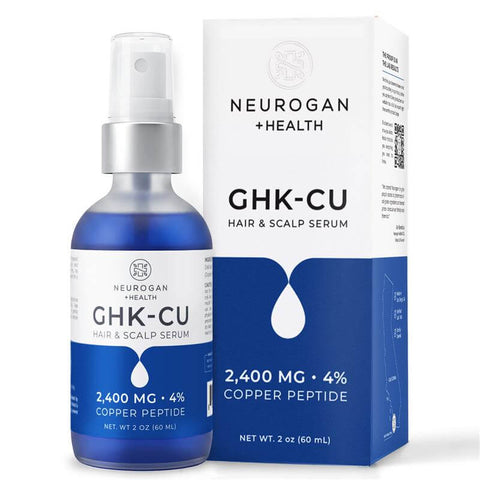
If collagen and extracellular-matrix remodeling are the primary focus, a peptide such as GHK-Cu represents a different biological category.
Are Syn-Ake and Argireline Like Botox?
Neither is equivalent to Botox.
Botulinum toxin is an injected prescription biologic that directly blocks acetylcholine release at the neuromuscular junction.
Syn-Ake and Argireline are topical cosmetic peptides.
Argireline was explicitly designed to interfere with part of the SNARE-dependent neurotransmitter-release pathway, while Syn-Ake was developed around a Waglerin-inspired receptor concept.
But topical delivery, potency, tissue penetration, clinical evidence, and magnitude of effect differ substantially from injected botulinum toxin.
Terms such as “Botox in a bottle” should therefore be understood as marketing shorthand rather than evidence of equivalent clinical performance.
Can You Use Syn-Ake and Argireline Together?
Yes.
There is no established clinical rule requiring the two peptides to be separated.
More importantly, a 2026 clinical serum contained both active ingredients in the same formulation. [4]
That demonstrates that they can be formulated together.
It does not prove that they are synergistic or that using both produces better results than either peptide alone.
Is Combining Syn-Ake and Argireline Better?
We do not currently have a controlled human study comparing:
- Syn-Ake alone;
- Argireline alone;
- Syn-Ake plus Argireline; and
- placebo
under otherwise identical conditions.
Without that design, it is not possible to establish true additive or synergistic benefit.
The 2026 multi-active serum study is encouraging for the combination concept, but several other active ingredients were present. [4]
Which Has Better Evidence for Safety?
Argireline has more published human-use data.
The 2013 randomized study evaluated topical Argireline for four weeks and reported efficacy without a major safety signal in the published abstract. [2]
Additional Argireline studies have also evaluated finished topical formulations.
Syn-Ake has laboratory safety research, including cytotoxicity and genotoxicity testing, but its independent human clinical safety database is smaller.
For either ingredient, reactions to a finished product may come from:
- the peptide;
- preservatives;
- fragrances;
- solvents;
- other active ingredients; or
- the overall formulation.
Can You Use Either Peptide Every Day?
Both ingredients have been studied in skincare regimens involving regular repeated use.
Historical Syn-Ake research commonly used twice-daily application for approximately four weeks. [3]
The 2013 Argireline randomized study also used twice-daily application for four weeks. [2]
This does not mean that every formulation should automatically be used twice daily.
Follow the directions for the finished product.
Can You Use Syn-Ake or Argireline With Retinol?
There is no established universal chemical incompatibility requiring either peptide to be separated from retinol.
The more practical concern is irritation from the overall skincare routine.
If several active products are being introduced, adding them gradually can make it easier to determine which product is responsible if irritation develops.
For more detailed routine guidance, see How to Use Syn-Ake.
Can You Use Syn-Ake or Argireline With GHK-Cu?
There is no established rule requiring these peptide categories to be separated.
They also address different biological concepts:
- Syn-Ake → expression-line signaling concept;
- Argireline → SNARE/neurotransmitter-release concept;
- GHK-Cu → copper-binding and tissue-remodeling biology.
For a detailed comparison of those categories, see Syn-Ake vs GHK-Cu.
How to Think About Choosing Between Syn-Ake and Argireline
The most useful comparison is based on evidence and formulation rather than assuming that one ingredient is universally better.
| If Your Priority Is... | What the Evidence Suggests |
|---|---|
| A peptide with more independent human wrinkle research | Argireline currently has the stronger evidence base |
| A Waglerin-inspired expression-line peptide | Syn-Ake is the relevant ingredient |
| Peri-orbital wrinkle evidence | Argireline has a randomized human study specifically in this area |
| Using both peptide concepts | They can coexist in the same formulation; a 2026 clinical serum used both |
| Proven superiority of one over the other | No robust independent evidence establishes this |
Frequently Asked Questions
Is Syn-Ake the same as Argireline?
No. Syn-Ake is Dipeptide Diaminobutyroyl Benzylamide Diacetate. Argireline is Acetyl Hexapeptide-8. They are different synthetic peptides with different proposed mechanisms.
Which has more research, Syn-Ake or Argireline?
Argireline currently has more published independent human research, including randomized placebo-controlled clinical evidence.
Has Syn-Ake been compared directly with Argireline?
Yes, an older 45-person supplier study compared 4% Syn-Ake with 10% Argireline and placebo. However, the underlying study was reported through an ingredient-supplier fact sheet rather than an independently published head-to-head randomized trial.
Does Syn-Ake work better than Argireline?
Current evidence does not establish that Syn-Ake is clinically superior to Argireline. Claims of superiority rely heavily on older supplier-generated comparison data.
Does Argireline work better than Syn-Ake?
Argireline has stronger independent human evidence, but there is not enough high-quality head-to-head research to conclude that it is universally more effective.
Can Syn-Ake and Argireline be used together?
Yes. A 2026 clinical serum included both ingredients in the same formulation. That establishes formulation compatibility, but not proven synergy.
Is Argireline Botox in a bottle?
No. Argireline was designed around a mechanism related to neurotransmitter release, but topical Argireline is much less potent than injected botulinum toxin and should not be described as clinically equivalent.
Is Syn-Ake Botox in a bottle?
No. Syn-Ake is a topical synthetic cosmetic peptide with a Waglerin-inspired mechanism. It does not contain botulinum toxin and has a much smaller clinical evidence base.
Which is more appropriate for crow's feet?
Both are used in products targeting expression lines, but Argireline has direct randomized human evidence involving peri-orbital wrinkles.
Which is more appropriate for forehead lines?
Both have been studied or marketed for forehead expression lines. There is not enough independent head-to-head evidence to establish superiority.
The Bottom Line
Syn-Ake and Argireline target a similar cosmetic problem through different proposed mechanisms.
Argireline is associated with SNAP-25 and SNARE-complex-dependent neurotransmitter release. Syn-Ake is built around a Waglerin-inspired nicotinic acetylcholine receptor concept.
The major evidence difference is:
- Argireline: several published human studies, including randomized placebo-controlled research;
- Syn-Ake: promising laboratory evidence, older supplier-generated human data, and newer studies involving multi-active formulas.
An older supplier comparison reported favorable Syn-Ake results against Argireline, but that evidence is not strong enough to establish Syn-Ake as clinically superior.
The more recent evidence also shows that these peptides do not necessarily need to compete: a 2026 clinical serum included both in the same formula.
For a broader introduction, read What Is Syn-Ake?, and for application guidance see How to Use Syn-Ake.
Resources:
- Blanes-Mira C, Clemente J, Jodas G, et al. A synthetic hexapeptide (Argireline) with antiwrinkle activity. International Journal of Cosmetic Science. 2002;24(5):303-310. PMID: 18498523.
- Wang Y, Wang M, Xiao S, et al. The anti-wrinkle efficacy of Argireline, a synthetic hexapeptide, in Chinese subjects: a randomized, placebo-controlled study. American Journal of Clinical Dermatology. 2013;14(2):147-153. PMID: 23417317.
- Gorouhi F, Maibach HI. Role of topical peptides in preventing or treating aged skin. International Journal of Cosmetic Science. 2009;31(5):327-345. PMID: 19570099.
- Zhu M, He X, Zhu Z, et al. The effect of a serum containing acetyl hexapeptide-8, dipeptide diaminobutyroyl benzylamide diacetate and gluconolactone on skin biomarkers, wrinkles and skin texture: Ex vivo and clinical studies. International Journal of Cosmetic Science. 2026. PMID: 41668671.
- Gok B, Budama-Kilinc Y, Kecel-Gunduz S. Anti-aging activity of Syn-Ake peptide by in silico approaches and in vitro tests. Journal of Biomolecular Structure and Dynamics. 2024;42(10):5015-5029. PMID: 37349941.
Disclaimer: This article is for educational purposes and is not a substitute for medical or dermatological advice. Cosmetic skincare products are not intended to diagnose, treat, cure, or prevent disease. Patch test new skincare products before broader use and discontinue use if persistent irritation develops.