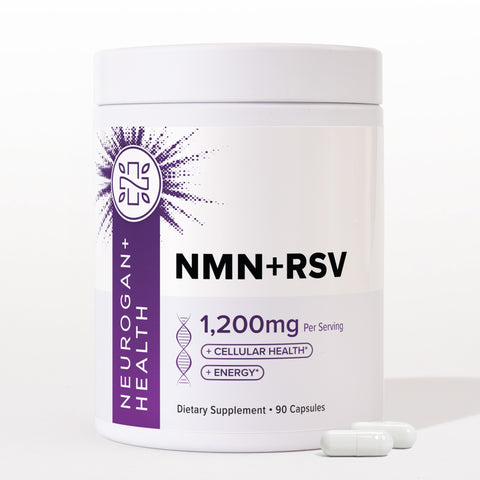
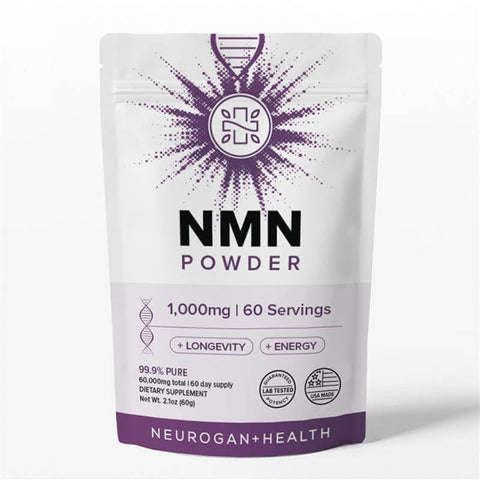

NMN supplements are popular for one specific reason: they hand your body a building block it can use to make NAD+.
NAD+, short for nicotinamide adenine dinucleotide, is a coenzyme found throughout your body. Your cells use it in reactions tied to energy metabolism, cell signaling, DNA-maintenance pathways, and other basic jobs that keep things running.
NMN, or nicotinamide mononucleotide, sits just one step upstream of NAD+ in this system. A simplified version looks like this:
NMN → NAD+
That's why NMN is one of several compounds researchers are studying to support NAD+ levels.
The strongest human evidence is also fairly specific: oral NMN has repeatedly been shown to raise blood NAD+ or NAD-related metabolites in human trials. What's still less clear is how much those biochemical changes actually translate into long-term improvements in health, function, or lifespan [1].
So the most useful way to think about NMN isn't as an "anti-aging pill." It's better understood as a targeted NAD+ support supplement with growing, but still developing, human evidence.
NMN and NAD+ at a Glance
|
Question |
Short Answer |
|
What is NMN? |
Nicotinamide mononucleotide, a molecule your body can use to make NAD+ |
|
What is NAD+? |
A coenzyme involved in cellular energy metabolism and many other reactions |
|
Does oral NMN increase NAD+? |
Human trials show it can increase blood NAD+ or related metabolites |
|
Does NMN reverse aging? |
No |
|
Is NMN a stimulant? |
No |
|
Has NMN been studied in adults over 45? |
Yes |
|
Common human research doses |
Roughly 250 to 900 mg/day, with higher short-term doses also studied |
|
Is there one proven optimal dose? |
No |
|
Is NMN the same as NAD+? |
No, NMN is a precursor to NAD+ |
|
Is NMN the same as NR? |
No, both are NAD+ precursors, but they enter the pathway differently |
What Is NMN?
NMN stands for nicotinamide mononucleotide. It's a naturally occurring molecule that comes from vitamin B3 metabolism, and it's part of the body's own NAD+ production pathway.
Here's the important distinction: NMN is not NAD+ itself. Instead, your cells can use NMN to build NAD+.
Once available inside your cells, NAD+ handles many jobs, including cellular energy metabolism, oxidation-reduction reactions, mitochondrial metabolism, normal DNA-maintenance pathways, sirtuin activity, PARP activity, cellular stress responses, and metabolic signaling.
What Does NAD+ Actually Do?
NAD+ is sometimes marketed as simply an "energy molecule." That's too simple.
Your body gets chemical energy from carbohydrates, fats, and proteins. Cells process those nutrients through metabolic pathways to produce ATP, the form of energy your body actually uses to power cellular work.
NAD+ helps by accepting and transferring electrons during those metabolic reactions. Think of it this way: food provides the fuel, mitochondria help process that fuel, and NAD+ takes part in the reactions that keep cellular metabolism running.
That's why NAD+ comes up so often in conversations about mitochondrial function and cellular energy. But NAD+ does more than support energy metabolism. Enzymes like sirtuins and PARPs also use it, and they play roles in cell signaling and DNA-maintenance responses.
How Does NMN Support NAD+?
NMN is already part of the pathway your body uses to make NAD+. One important route is called the NAD+ salvage pathway.
In simplified form:
Nicotinamide → NMN → NAD+
The final step, turning NMN into NAD+, is handled by enzymes called nicotinamide mononucleotide adenylyltransferases, or NMNATs for short.
This is part of why NMN draws so much interest as an NAD+ precursor: it sits close to NAD+ in the pathway. But being just one step away from NAD+ doesn't automatically mean NMN is clinically better than every other NAD+ precursor out there.
NR, or nicotinamide riboside, can also raise NAD+ and has its own body of human research.
The better question isn't which molecule sits closest on a chart. It's whether oral NMN actually produces measurable changes in real people. Here, the answer is pretty clear.
Does NMN Actually Increase NAD+ in Humans?
Yes. This is one of the better-supported claims around NMN. Several controlled human studies have found increases in blood NAD+ or related metabolites after people took oral NMN.
250 mg per Day in Older Men
A randomized, placebo-controlled trial gave healthy older men 250 mg of NMN daily for 6 or 12 weeks.
NMN significantly increased blood NAD+ and related metabolites, and it was well tolerated throughout the study. Some muscle-function measurements also changed, though the researchers noted that several findings still need confirmation in larger trials. [1].
250 mg per Day in Older Adults
Another randomized study with 60 older adults used 250 mg of NMN daily for 12 weeks. The NMN group had significantly higher blood NAD+ and NAD-related metabolites after 12 weeks. Researchers also reported a shorter four-meter walking time and improvements in certain sleep measures, though the study's main stepping-test outcome didn't differ significantly from placebo [2].
300, 600, and 900 mg per Day
A 60-day randomized trial with 80 healthy middle-aged adults compared placebo, 300 mg NMN, 600 mg NMN, and 900 mg NMN.
Blood NAD levels increased across all three NMN groups. The study also found differences in six-minute walking performance and self-reported health measures, though insulin-resistance measurements didn't significantly differ from placebo [3].
Put together, this supports a careful, well-earned statement: oral NMN can increase measured blood NAD+ or NAD-related metabolites in humans.
It doesn't establish that raising blood NAD+ automatically means someone will live longer or avoid age-related disease. Those are genuinely separate questions.
What Are the Potential Benefits of NMN?
NMN's most reliable, well-demonstrated effect in humans is NAD+ support.
Researchers are also looking into whether that translates into improvements in metabolic function, muscle function, walking performance, exercise capacity, sleep, physical resilience, and cellular energy metabolism.
NAD+ Levels: Relatively Strong Evidence
Multiple human studies show that oral NMN can raise NAD+ or related metabolites in blood [1].
Physical Function: Promising but Inconsistent
Some trials have reported improvements in walking speed, six-minute walking distance, and certain muscle-function measures. But these observations aren't consistent across every study or outcome measured.
Metabolic Health: Population-Specific Evidence
One widely discussed randomized trial studied postmenopausal women with prediabetes who were overweight or obese. NMN supplementation improved muscle insulin sensitivity and insulin signaling compared with placebo [4].
That's interesting evidence in humans, but it shouldn't be stretched into "NMN improves insulin sensitivity in everyone." The study looked at a specific population and measured a specific metabolic outcome.
Cognition: Not Established
A fair amount of mechanistic and animal research connects NAD+ metabolism to brain function.
Human evidence that NMN improves memory or prevents cognitive decline is much less developed. For anyone mainly interested in cognitive aging, calling NMN a proven memory supplement would be misleading.
What Are the Benefits of NMN for Adults Over 45?
NMN attracts a lot of interest from middle-aged and older adults, partly because NAD+ biology changes with age, and partly because several human NMN trials have specifically studied older populations.
Adults over 45 usually consider NMN for maintaining NAD+ status, cellular energy metabolism, physical function, healthy-aging routines, metabolic resilience, and mitochondrial support.
That's also the right level of claim to make. Neurogan Health's current NMN supplement collection focuses on NAD+ support, cellular energy routines, and healthy aging, rather than claiming NMN reverses aging or treats age-related disease.
Does NMN Give You More Energy?
NMN isn't a stimulant. It doesn't work like caffeine, nicotine, or prescription stimulants. Its connection to energy sits further upstream.
NMN supports NAD+ availability, and NAD+ plays a role in the metabolic reactions cells use to process nutrients and generate ATP. That makes the phrase "supports cellular energy metabolism" a lot more accurate than saying "NMN gives you energy."
Some people report feeling more energetic while taking NMN. That could be a personal experience, but it isn't proof that NMN reliably boosts perceived energy for everyone.
What Is the Best NMN Dosage?
There's no officially established optimal NMN dose for healthy aging. Human trials have used a fairly wide range.
|
NMN Amount |
Example Human Research |
|
250 mg/day |
Older adults, older men, metabolic studies |
|
300 mg/day |
Middle-aged adult dose-response research |
|
600 mg/day |
Middle-aged adult dose-response research |
|
900 mg/day |
Middle-aged adult dose-response research |
|
1,250 mg/day |
Short-term safety study |
The 300/600/900 mg trial found all three doses increased blood NAD, with the strongest combined NAD and physical-performance result showing up at 600 mg/day [3].
That doesn't mean 600 mg is the perfect dose for everyone. It means 600 mg performed well within that particular 60-day trial.
A separate safety study tested 1,250 mg of NMN once daily for four weeks in healthy adults and found it well tolerated, with no major safety concerns tied to NMN [5]. Again, that shows short-term tolerability, not that everyone should be taking 1,250 mg.
How Neurogan Health NMN Doses Compare
Neurogan Health currently offers a few different NMN amounts and formats.

NMN Capsules 500 mg
The NMN 500 mg capsules provide 500 mg of NMN per capsule for a 60-day supply, made with beta-NMN and third-party testing. This amount sits within the broader range used in human research, while offering a lower serving size than Neurogan's 900 mg capsule.

NMN Capsules 900 mg
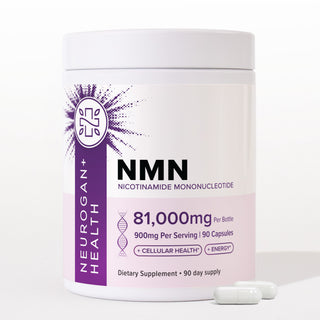
The NMN 900 mg capsules contain 900 mg of NMN per capsule, in a one-capsule serving, with a 90-day supply and beta-NMN. Neurogan positions this as its higher-potency NMN capsule option.

Liposomal NMN
The Liposomal NMN Capsules have 700 mg of beta-NMN per serving, delivered inside a phospholipid system meant to protect the ingredient during digestion and support uptake.
Here's an important distinction worth keeping in mind: standard oral NMN already has human evidence showing it can raise blood NAD+.
Strong head-to-head human evidence proving liposomal NMN produces better clinical outcomes is still limited.

NMN Powder
The NMN Powder contains 99.9% pure beta-NMN, giving people who want more control over their exact serving a flexible format instead of a fixed capsule amount.
Is More NMN Better?
Not necessarily. One of the easiest traps in supplement marketing is assuming "higher dose equals stronger benefit." That's not always how biology works.
Once a pathway has what it needs, extra amounts may produce smaller and smaller returns. Higher doses can also cost more, add to pill burden, and raise the odds of individual intolerance.
Human NMN research hasn't shown that continuously taking more and more NMN produces progressively better healthy-aging results.
NMN vs. NR for NAD+ Support
NMN isn't the only NAD+ precursor out there. NR, or nicotinamide riboside, is another one you’ll see often on the market.
|
NMN |
NR |
|
|
Full name |
Nicotinamide mononucleotide |
Nicotinamide riboside |
|
Relationship to NAD+ |
Direct precursor |
Converted through NAD+ biosynthesis pathways |
|
Human evidence that it raises NAD+ |
Yes |
Yes |
|
Human clinical research |
Growing |
Extensive |
|
Proven superior to the other |
No |
No |
Both compounds can support NAD+ metabolism. There's currently no strong direct human evidence proving that NMN produces better health outcomes than NR just because NMN sits closer to NAD+ in the pathway.
You can see the deeper comparison in our guide to NMN vs. NR.
NMN vs. Taking NAD+ Directly
NMN and NAD+ also aren't interchangeable. NMN gives your body a precursor. Direct NAD+ products give you NAD+ itself.
Open questions remain about how efficiently orally taken NAD+ reaches tissues intact, compared with taking a precursor instead. Research on oral NAD+ is less extensive than research on several NAD+ precursors.
Neurogan currently offers both NMN supplements and NAD+ supplements, so shoppers can choose between a precursor-focused approach or a direct NAD+ format. For a broader comparison between these compounds, see our guide to NMN vs. NAD+ vs. NR.
Do You Need to Take NMN and NAD+ Together?
Not necessarily. If NMN is already supplying material your body uses to build NAD+, adding direct NAD+ on top doesn't automatically mean you'll get double the benefit.
Your NAD+ metabolism is regulated. More input doesn't translate into a matching jump in downstream results. For most people, picking one clear NAD+ support strategy makes more sense than stacking several overlapping ingredients just because they touch the same pathway. We've also covered the practical side of this question separately in Can You Take NMN and NAD Together?
When Is the Best Time to Take NMN?
There's no universally best time of day for NMN.
Plenty of people take it in the morning because it's easy to fold into a daily routine, and because NMN gets associated with cellular energy pathways. Human NMN trials were generally designed to test whether supplementation works, not to prove that 8 a.m. beats 2 p.m.
Consistency probably matters a lot more than chasing a supposedly perfect hour.
Should You Take NMN With Food?
Human evidence doesn't show that NMN must be taken with food to work. Different products may give different directions.
In practice, this comes down more to the specific formulation, your personal tolerance, and routine consistency than to a universal rule. If NMN upsets your stomach on an empty stomach, taking it with food is a perfectly reasonable adjustment.
What Are the Side Effects of NMN?
Short-term clinical trials have generally reported good tolerability. For example, 250 mg/day has been studied for 12 weeks in older adults, 300 to 900 mg/day for 60 days, and 1,250 mg/day for four weeks, all without major safety signals in those trials [5].
Some people report mild issues such as stomach discomfort, nausea, headache, digestive changes, or sensitivity around timing.
Here's the bigger limitation worth keeping in mind: most human NMN trials are relatively short. We don't yet have decades of controlled human safety data on daily, high-dose NMN supplementation.
For a deeper breakdown, see NMN side effects and safety.
Is It Safe to Take NMN Every Day?
Daily NMN has been used in human clinical trials, which makes it much better supported than unusual "megadose" or intermittent protocols invented online.
But there are really two separate questions here. Has daily NMN been well tolerated during human trials? Generally, yes. Do we know the effects of taking high-dose NMN every day for 10, 20, or 30 years? No. The current evidence simply hasn't followed people that long yet.
Does NMN Increase Cancer Risk?
This topic deserves careful wording.
NAD+ metabolism matters to healthy cells. It also matters to cancer cells. That creates a legitimate research question: could adjusting NAD+ pathways influence tumor biology in certain situations? Preclinical research is exploring both sides of that question.
Current evidence does not show that standard NMN supplementation causes cancer in humans. It would also be inaccurate to claim NMN prevents cancer.
People with active cancer, or a history of cancer, should talk with their oncology team before using NAD+-boosting supplements, since adjusting metabolic pathways during cancer treatment deserves individual medical judgment.
Does NMN Help Memory or Cognitive Function?
Researchers have a reasonable, mechanism-based reason to be curious about NAD+ and brain aging. The brain has high energy demands, and mitochondrial metabolism, cellular stress responses, inflammation, vascular health, and NAD+-dependent enzymes all intersect with how the brain functions.
But that's mechanistic evidence, not proof. Right now, the human NMN research doesn't support calling NMN a proven memory or dementia-prevention supplement.
What About NMN and Methylation?
Another biochemical question people increasingly ask about long-term NMN use is this.
When NAD+ gets used up, nicotinamide can be produced as a byproduct. Nicotinamide can then be processed through pathways that involve methylation. That has led to concern that increasing NAD+ precursor intake might increase demand on methyl-group metabolism in some people.
That doesn't mean NMN automatically "depletes" methylation. It's more nuanced, and it depends on dose, NAD+ turnover, dietary methyl donors, individual metabolism, homocysteine status, genetics, and other supplements a person is taking.
We cover this topic separately in NMN and methylation.
Should You Take TMG With NMN?
TMG, or trimethylglycine, is a methyl donor. Some people combine TMG with NMN because of the methylation question above.
But TMG shouldn't automatically be treated as a mandatory sidekick for every NMN user. The more sensible approach is to look at your overall diet, folate, vitamin B12, choline, betaine intake, homocysteine levels, and personal medical history before assuming that anyone taking NMN needs extra methyl donors on top of it.
How to Choose a High-Quality NMN Supplement
Look for the Actual Amount of NMN
The label should clearly state how many milligrams of NMN you get per capsule and per serving.
Look for Beta-NMN
The product should name the ingredient directly rather than hiding it inside a vague "longevity complex."
Avoid Proprietary Blends
You should know exactly how much NMN you're buying.
Look for Third-Party Testing
Useful tests may cover identity, potency, purity, heavy metals, microbial contamination, and pesticides where relevant.
Check the Batch Information
A Certificate of Analysis is much more useful when it matches an actual batch rather than reading like a generic marketing PDF.
Ignore Impossible Promises
Steer clear of products claiming NMN reverses aging, guarantees a longer life, cures fatigue, restores youthful DNA, prevents dementia, treats diabetes, or eliminates wrinkles. The human evidence doesn't support those claims.
What Is an NMN Certificate of Analysis?
A Certificate of Analysis, or COA, is a lab report that documents test results for a product or ingredient.
For an NMN supplement, a useful COA may include the material identity, NMN concentration, purity, heavy-metal testing, microbiological testing, pesticide screening, a lot or batch number, the test date, and lab information.
A COA doesn't automatically prove a product is excellent, but it gives you something concrete to check instead of relying purely on marketing language.
Standard NMN vs. Liposomal NMN
Liposomal NMN surrounds, or pairs, NMN with phospholipids meant to support stability and delivery through digestion. That sounds appealing on paper, but this comparison needs some perspective.
Standard oral NMN already has human research showing it raises blood NAD+. Liposomal NMN may offer formulation advantages, but we don't yet have enough large, independent, head-to-head human trials showing liposomal NMN produces better healthy-aging outcomes than standard NMN.
Standard NMN is more straightforward, aligns more directly with most existing human research, and is generally less complex.
Liposomal NMN uses a phospholipid delivery system, appeals to people interested in absorption-focused formulations, and has fewer direct human comparative outcome studies.
Neurogan offers both formats in its NMN supplements collection.
Is NMN Powder Better Than Capsules?
Not inherently. The main advantage of powder is dose flexibility.
Capsules offer convenience, predetermined servings, portability, and no measuring involved. Powder offers easier dose adjustment, easier mixing, and potentially a lower cost per gram depending on the product.
Either way, the molecule is still NMN. There's no good reason to assume powder automatically produces better biological results just because it's not sitting inside a capsule.
What Else Supports NAD+ Naturally?
NMN isn't the only way to influence NAD+ metabolism.
Your body already makes NAD+ from vitamin B3-related compounds found in food, and lifestyle matters here too, since NAD+ metabolism connects with your broader metabolic health.
Useful foundations include regular exercise, sufficient sleep, maintaining a healthy body composition, adequate protein and micronutrient intake, managing metabolic health, limiting excessive alcohol, and avoiding smoking.
Exercise is especially relevant, since it stimulates mitochondrial adaptation and improves metabolic function through pathways far broader than any single supplement could cover. NMN should sit on top of these habits, not replace them.
Is NMN Worth Taking for NAD+ Support?
If your goal is specifically to support NAD+ levels, NMN has a reasonable evidence base behind it. Human trials have repeatedly shown that oral NMN can raise blood NAD+ or related metabolites, which makes that central claim genuinely credible [1].
What gets less certain is everything marketers often tack onto that result. Higher NAD+ doesn't automatically prove a longer lifespan, reversed biological age, sharper cognition, a major energy boost, disease prevention, or younger-looking skin. Those outcomes need their own separate evidence.
For someone over 45 who understands that distinction and wants a targeted NAD+ precursor, NMN is one of the more directly researched options available.
You can compare Neurogan's current options in the NMN supplements collection, including 500 mg NMN capsules, 900 mg NMN capsules, liposomal NMN, and NMN powder.
NMN for NAD+ Support: The Bottom Line
NMN is one of the body's natural precursors to NAD+, and that relationship isn't just theoretical. Controlled human trials show that oral NMN can increase blood NAD+ or NAD-related metabolites across several studied doses [1].
That makes NAD+ support one of the strongest, most defensible reasons to use NMN.
Beyond that, the picture gets more nuanced. There are promising findings around walking performance, muscle function, insulin sensitivity in specific populations, sleep measures, and metabolic health. But human studies remain relatively small and short compared with the scale of claims often made about longevity supplements.
NMN can support NAD+ levels. Whether that translates into major long-term healthy-aging benefits is still being studied.
Choose a product based on dose, format, transparency, testing, and how well it fits your routine, not on promises that NMN can reverse aging.
Frequently Asked Questions
What Is NMN NAD+ Support Good For?
NMN supplies a precursor your body can convert into NAD+. NAD+ supports cellular energy metabolism, redox reactions, cell signaling, and several enzyme systems tied to cell maintenance. Human trials show oral NMN can raise blood NAD+ or related metabolites.
Does NMN Actually Increase NAD+?
Yes. Multiple controlled human trials have found increased blood NAD+ or NAD-related metabolites after oral NMN supplementation at doses including 250, 300, 600, and 900 mg per day [1].
What Is the Best Dose of NMN?
No universally established optimal dose exists. Human research has commonly studied roughly 250 to 900 mg/day, while higher doses have been tested for short-term safety.
Is 500 mg of NMN Enough?
500 mg falls within the broader range represented in human NMN research, though no trial has established 500 mg as the ideal dose for everyone. Neurogan's standard lower-dose capsule formula provides 500 mg per two-capsule serving.
Is 900 mg of NMN Too Much?
A randomized human trial studied 900 mg/day for 60 days and reported good tolerability during that period. That doesn't establish 900 mg as necessary or optimal for everyone [3].
Is NMN Better Than NAD+?
They serve different roles. NMN is a precursor your body can convert into NAD+. Direct oral NAD+ provides the coenzyme itself. Human research on NAD+ precursors like NMN is currently more developed for demonstrating increases in blood NAD-related metabolites.
Is NMN Better Than NR?
Neither has been conclusively shown to be superior in direct human outcome trials. Both are NAD+ precursors, and both can increase NAD+ availability. See our complete NMN vs. NR comparison.
Do I Need to Take NAD+ if I Already Take NMN?
Not necessarily. The body already uses NMN to make NAD+. There's no strong evidence that stacking direct NAD+ with NMN doubles the benefit.
When Should I Take NMN?
There's no universally proven optimal time. Morning use is common, but consistency and tolerance matter more than claiming one exact hour is biologically superior.
Can You Take NMN Every Day?
Controlled human studies have used daily NMN for several weeks to several months. Short-term tolerability has generally been good, but very long-term human safety data remains limited.
What Are the Downsides of NMN?
The main limitations are incomplete long-term evidence, uncertain clinical benefit for many marketed outcomes, cost, and possible mild individual side effects like digestive discomfort or headache. NMN isn't proven to extend human lifespan.
Does NMN Improve Memory?
Human evidence is currently insufficient to call NMN a proven memory supplement. NAD+ metabolism is relevant to brain biology, but mechanistic plausibility shouldn't be confused with proven cognitive benefit.
How Do I Know Whether an NMN Supplement Is High Quality?
Look for the exact NMN dose, beta-NMN identification, transparent supplement facts, third-party testing, accessible COAs, batch information, contaminant testing, and realistic claims.
References
-
Igarashi, M., Nakagawa-Nagahama, Y., Miura, M., Kashiwabara, K., Yaku, K., Sawada, M., Sekine, R., Fukamizu, Y., Sato, T., Sakurai, T., Sato, J., Ino, K., Kubota, N., Nakagawa, T., Kadowaki, T., & Yamauchi, T. (2022). Chronic nicotinamide mononucleotide supplementation elevates blood nicotinamide adenine dinucleotide levels and alters muscle function in healthy older men. npj Aging, 8, 5.
-
Morifuji, M., Higashi, S., Ebihara, S., & Nagata, M. (2024). Ingestion of β-nicotinamide mononucleotide increased blood NAD levels, maintained walking speed, and improved sleep quality in older adults in a double-blind randomized, placebo-controlled study. GeroScience, 46(5), 4671–4688.
-
Yi, L., Maier, A. B., Tao, R., Lin, Z., Vaidya, A., Pendse, S., Thasma, S., Andhalkar, N., Avhad, G., & Kumbhar, V. (2023). The efficacy and safety of β-nicotinamide mononucleotide (NMN) supplementation in healthy middle-aged adults: A randomized, multicenter, double-blind, placebo-controlled, parallel-group, dose-dependent clinical trial. GeroScience, 45(1), 29–43.
-
Yoshino, M., Yoshino, J., Kayser, B. D., Patti, G. J., Franczyk, M. P., Mills, K. F., Sindelar, M., Pietka, T., Patterson, B. W., Imai, S. I., & Klein, S. (2021). Nicotinamide mononucleotide increases muscle insulin sensitivity in prediabetic women. Science, 372(6547), 1224–1229.
-
Fukamizu, Y., Uchida, Y., Shigekawa, A., Sato, T., Kosaka, H., & Sakurai, T. (2022). Safety evaluation of β-nicotinamide mononucleotide oral administration in healthy adult men and women. Scientific Reports, 12, 14442.