


You already know vitamin C is good for you. Your mom told you, your doctor, and every juice brand on the planet has reminded you at least a thousand times.
But what most people don’t know is that how you take your vitamin C matters as much as whether you take it.
Liposomal supplements have changed the game for vitamin C by wrapping this essential nutrient in tiny fat-based bubbles (liposomes) that help your body absorb it in higher doses. So, now you’ve got another choice to make in the supplement aisle: capsules or powder?
We’re biased, and we’ll admit that up front.
At Neurogan Health, we chose vegetable capsules for our Liposomal Vitamin C for very good reasons. But rather than just telling you “capsules are better, trust us,” let’s look at the actual science and practicality behind both forms so you can see for yourself why we made that call.
Understanding Liposomal Vitamin C Delivery Forms
Regular vitamin C (ascorbic acid) has a bit of an absorption problem. Your gut can only take in so much at once because it relies on specific transporters (SVCT1 and SVCT2) that have a cap on how much they can carry [1]. Once those transporters are maxed out, any extra vitamin C you take basically goes straight through you.
Liposomal vitamin C supplements get around this bottleneck, allowing you to take and make use of higher vitamin C doses compared to regular vitamin C.
In liposomal suspensions, the vitamin C molecules are wrapped in microscopic spheres made of phospholipids (the same type of fat that makes up your cell membranes). This shell protects the vitamin C from stomach acid and digestive enzymes, so that your body can absorb it more efficiently through a process called endocytosis (basically, your cells swallow the whole package).
A 2025 scoping review by Carr analyzed 10 trials and found that 9 out of 10 showed higher plasma bioavailability with liposomal vitamin C, with improvements ranging from 1.2 to 5.4x higher peak concentrations [2].
Liposomal Vitamin C Capsules: Pros and Cons
Capsules are the most popular delivery form for liposomal vitamin C because they solve a lot of practical problems that other forms struggle with.
Benefits of Capsule Form
-
Convenience: This is a big one. You pop two capsules with water, and you’re done. No measuring spoons, no blending, no weird-tasting drinks to choke down before your morning coffee.
-
Precise Dosing: Each capsule contains a precisely measured amount of liposomal vitamin C. You don’t have to eyeball to scoop or wonder if you got the right amount. Consistency is key when you’re supplementing daily, especially if you’re trying to maintain steady blood levels of vitamin C.
-
No Mixing Required: Powders need to be dissolved in liquid, and liposomal powders don’t always play well with water. You can end up with clumps, a gritty texture, or a drink that tastes like orange juice mixed with sunscreen. Capsules skip all of that.
-
Stability: This is a little more technical, but it’s important. Once liposomal powder is exposed to moisture — say, by opening a container every day in a humid kitchen — its structure can begin to break down. Capsules keep the powder sealed away in individual doses, protecting the delicate phospholipid bilayer from moisture, air, and light.
Vegetable Capsule Advantages
The two main types of capsules you’ll see on the market are gelatin capsules (made from animal collagen) and vegetable capsules (made from plant cellulose).
We chose vegetable capsules for a few key reasons:
-
Plant-based and diet-friendly: Vegetable capsules work for vegans, vegetarians, and people who avoid animal products for religious or personal reasons. They’re also free from common allergens.
-
Lower moisture content: Hydroxypropyl methylcellulose (HPMC) only contains about 4-6% moisture, compared to 13-16% in gelatin capsules [3]. That might seem like a small difference, but for liposomal technology that’s sensitive to moisture, it’s a big deal.
-
Easy to digest: Vegetable capsules dissolve smoothly in your stomach and are gentle on the digestive system, making them a great option for those with sensitive stomachs or who tend to react negatively to gelatin.
Why 180 Capsules?
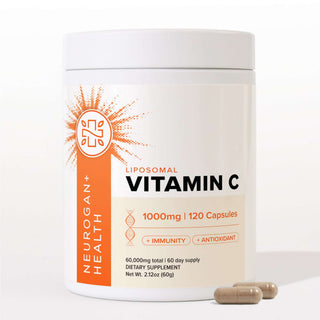
Our Liposomal Vitamin C capsules come in a 180-capsule bottle, and that number wasn’t chosen at random.
At the recommended dose of 2 capsules per day for a 1000 mg vitamin C dose, that’s a full 3-month supply. We designed it this way because consistency is everything with vitamin C supplementation. Your body doesn’t store large amounts of vitamin C — it’s water-soluble (meaning you pee out what you don’t need), so you need to replenish it regularly.
A 3-month supply means you can build a daily habit at a fair price point without constantly re-ordering. It also gives your body enough time to experience the cumulative benefits of consistent vitamin C supplementation.
Potential Drawbacks
Are capsules perfect? Almost. But let’s be fair.
If you have difficulty swallowing capsules (though our vegetable capsules are standard size and go down more smoothly than most tablets), capsules might not be the best format.
Another drawback is that you can’t adjust your dose as granularly as you can with powder. But honestly, with pre-measured capsules, you shouldn’t need to.
Liposomal Vitamin C Powder: Pros and Cons
You can also purchase loose liposomal vitamin C powder to mix with water or your preferred beverage. Let’s go over some of the pros and cons.
Benefits of Powder Form
Powder does have a couple of things going for it, like flexible dosing. If you want to take a specific amount, like 743 mg instead of 750, a powder format lets you do that. This level of precision is more relevant in clinical settings than everyday use, but it’s technically still an advantage.
Next, you have mixability. You can stir powder into smoothies, juice, or water. Some people like the ritual of mixing their supplements into a morning drink.
Potential Drawbacks of Powder Form
This is where powder starts to lose ground.
There’s a hassle with measuring, like having to pull out measuring spoons or scales. And at 7 AM on a Monday morning, nobody wants to carefully level off a scoop of powder.
Then there’s the taste and texture. Liposomal formulations have a distinct flavor that’s not great. The phospholipids give it a fatty, slightly off-putting taste that even flavoring can’t fully mask. Capsules bypass your taste buds entirely.
Most importantly, there are stability concerns. Every time you open a container of powder, you expose the entire batch to air and moisture. Over weeks and months, this repeated exposure can degrade the liposomal delivery system. A 2024 study confirmed that liposomal encapsulation remains more stable when kept in sealed, individual-dose formats [4].
Why We Use Vegetable Capsules at Neurogan Health
We spent a lot of time thinking about the delivery form for our Liposomal Vitamin C, and the choice came down to a simple question: what gives our customers the best possible experience and the best possible results?
Vegetable capsules won on both counts.
The HPMC shell protects our liposomal formula from moisture degradation, which means the liposomes are more likely to be intact when they reach your gut — and intact liposomes are the whole point.
They’re also inclusive. We wanted a product that anyone could take, regardless of dietary restrictions. Whether you’re vegan, follow a halal or kosher diet, or simply prefer plant-based products, our capsules work for you.
And then there’s the practical side. Two capsules. Glass of water. Done. No measuring, no mixing, no questionable-tasting drinks.

What About Tablets?
Tablets are everywhere in the supplement aisle. Aren’t they basically the same thing as capsules?
Not even close. Especially when it comes to liposomal delivery.
Why Tablets Aren’t Ideal for Liposomal Delivery
Tablets are made by compressing powder under extremely high pressure. That’s fine for simple vitamins, but it’s a problem for liposomal formulations.
Remember those delicate phospholipid spheres we talked about? The ones protecting your vitamin C? High-pressure compression can crush and rupture them.
Research shows that liposomal structures are significantly damaged under mechanical stress, with increased cargo release at higher compression forces [4].
Additionally, tablets require binders, fillers, and coatings to hold their shape. These additives can interact with or degrade the liposomal structures.
This is exactly why we didn’t go with tablets. The whole point of a liposomal formula is the liposomes — and we weren’t about to compromise them.
Which Form Offers Better Absorption & Stability?
When it comes to absorption, the liposomal technology itself is the star — not the delivery form of vitamin C. Whether the liposomal vitamin C starts in a capsule or a powder, the absorption mechanism (endocytosis and membrane fusion) works the same way once it reaches your intestines. However, the liposomes need to survive long enough to get there.
That’s where stability becomes the deciding factor, and it’s where capsules pull ahead.
Capsules protect the liposomal powder from moisture, air, and light — the three biggest threats to liposome integrity. Each dose is individually sealed within an HPMC shell that keeps the environment inside dry and controlled.
Powder, by contrast, gets exposed to all three of those threats every time you open the container. Over a 3-month supply, repeated exposure can meaningfully reduce the percentage of intact liposomes in your powder.
The 2021 study by Gopi and Balakrishnan showed that liposomal vitamin C achieved 1.77-fold higher bioavailability compared to non-liposomal forms — but that improvement depends on the liposomes being intact at the time of consumption [5]. If your liposomes have degraded from improper storage, you’re essentially paying a premium for standard vitamin C.
Comparison Table: Capsules vs Powder vs Tablets
|
Feature |
Capsules |
Powder |
Tablets |
|
Convenience |
High — pop & go |
Low — measure & mix |
Medium — swallow |
|
Precise Dosing |
Pre-measured |
Requires measuring |
Pre-measured |
|
Taste |
None (bypasses taste buds) |
Often unpleasant |
May have a coating taste |
|
Liposome Protection |
Excellent — sealed per dose |
Poor — exposed repeatedly |
Poor — crushed during compression |
|
Moisture Stability |
High (HPMC: 4–6%) |
Degrades with exposure |
Varies with coating |
|
Dietary Flexibility |
Veg capsules = universal |
Usually fine |
May contain animal-based binders |
|
Absorption |
High (liposomes intact) |
High if fresh; degrades |
Reduced (damaged liposomes) |
|
Shelf Life Integrity |
Excellent |
Declines after opening |
Good, but liposomes are compromised |
|
Ease of Travel |
Very easy |
Messy and inconvenient |
Easy |
|
Digestive Comfort |
Gentle |
Can cause GI upset at high doses |
Slower to dissolve |
FAQs
Resources:
-
Levine, M., Conry-Cantilena, C., Wang, Y., Welch, R. W., Washko, P. W., Dhariwal, K. R., ... & Cantilena, L. R. (1996). Vitamin C pharmacokinetics in healthy volunteers: evidence for a recommended dietary allowance. Proceedings of the National Academy of Sciences, 93(8), 3704-3709.
-
Carr, A. C. (2025). Do Liposomal Vitamin C Formulations Have Improved Bioavailability? A Scoping Review Identifying Future Research Directions. Basic & clinical pharmacology & toxicology, 137(1), e70067.
-
Biyani, M. (2021). HPMC Capsules for Moisture Sensitive and Hygroscopic Products. Pharmaceutical Science and Technology, 5(2), 50-52.
-
Romano, E., Palladino, R., Cannavale, M., Lamparelli, E. P., & Maglione, B. (2024). Enhanced stability of oral vitamin C delivery: A novel large-scale method for liposomes production and encapsulation through dynamic high-pressure microfluidization. Nanomaterials, 14(6), 516.
-
Gopi, S., & Balakrishnan, P. (2021). Evaluation and clinical comparison studies on liposomal and non-liposomal ascorbic acid (vitamin C) and their enhanced bioavailability. Journal of liposome research, 31(4), 356-364.

