


Vitamin C is vitamin C… until you start comparing how it’s delivered.
The form you choose can change how much actually shows up in your blood and immune cells, how your stomach feels, and whether a dose is efficient or mostly “expensive pee.”
What Is Vitamin C?
Vitamin C (ascorbic acid/ascorbate) is an essential, vitamin known for its role in collagen formation, antioxidant activity, and support for normal immune function. Because your body doesn’t store much vitamin C, you need a steady dietary supply from foods (like citrus, berries, peppers) and/or supplements [1].
Vitamin C supplements became widely available in the 1930s after synthetic ascorbic acid was developed and commercialized (Reichstein process) [2].
It didn’t really become a household vitamin until 1970, when Linus Pauling released his bestselling book, Vitamin C and the Common Cold. In it, Pauling made the case for high-dose vitamin C to fight colds, turning vitamin C tablets into a staple almost overnight [3].
Around the same time high-dose vitamin C was gaining popularity, researchers were also learning something important about how the body actually handles it. Vitamin C absorption is dose-dependent and saturable. This means that at lower single doses, absorption is high. As the dose climbs, fractional absorption drops and more of it is excreted. In classic pharmacokinetic studies, absorption was nearly complete at 200 mg but fell below 50% at doses like 1,250 mg [4].
This tells us more about how the body actually handles a single dose of vitamin C, opening the door to developing different forms of vitamin C to improve absorption at higher doses.
What Is Liposomal Vitamin C?
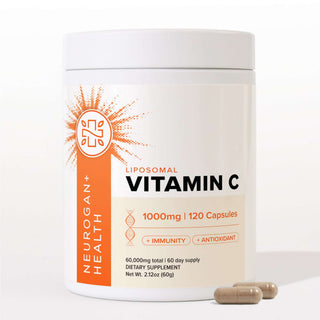
Liposomal vitamin C is vitamin C packaged inside tiny lipid (fat-like) spheres called liposomes — materials that closely resemble cell membranes. The goal of liposomal technology is to protect vitamin C from digestion and to improve its delivery into the bloodstream (and potentially into cells).
In a randomized, double-blind, placebo-controlled crossover study (single 500 mg dose), liposomal vitamin C produced higher peak plasma vitamin C and higher leukocyte (immune cell) vitamin C than the same dose of non-liposomal vitamin C [5].
Key Differences Between Liposomal and Regular Vitamin C
Liposomal and traditional vitamin C (ascorbic acid tablets) differ in costs, how they’re absorbed, and transported in the body.
Absorption and Bioavailability
The biggest difference between liposomal vitamin C and standard ascorbic acid tablets is their bioavailability in larger doses. When you take a small amount of regular vitamin C (up to 200 mg), your body absorbs most of it. But when you take any more of that at the same time, your body doesn’t do a good job of absorbing it — essentially, maxing out.
The extra amount just passes through and gets excreted. At 1 g (1000 mg) or more in a single oral dose, absorption efficiency falls below 50%. In one study, less than 50% of a 1250 mg dose was absorbed, with the rest excreted [6].
In one study, people took 4 grams of liposomal vitamin C and 4 grams of regular vitamin C. The liposomal version led to higher vitamin C levels in their blood over the next 4 hours. The researchers concluded that liposomal vitamin C was better absorbed than the regular form [7]. Taking vitamin C with a full glass of water can also improve tolerance and capsule dissolution
Cellular Uptake
Cellular uptake might sound really similar to bioavailability, and while they are related, cellular uptake means how vitamin C moves from your blood into your cells. Your body uses special proteins called transporters to carry vitamin C into cells.
In a 2024 study, healthy adults took either 500 mg of liposomal vitamin C, 500 mg of regular vitamin C, or a placebo. Researchers measured their blood levels over 24 hours.
The liposomal version raised blood vitamin C levels by about 27% at its peak and by about 21% overall compared to regular vitamin C. It also led to about 20% higher levels inside white blood cells, which are important for immune function [5].
The researchers said the liposomal form helped vitamin C enter and remain in cells more effectively. But the difference wasn’t huge — it was about 10–20% higher, not dramatically more.
When most people take regular vitamin C tablets at typical supplement doses (like 200–500 mg once or twice a day), their blood levels and even their white blood cells usually reach near their maximum capacity. In other words, the body is already pretty “full” of vitamin C.
Liposomal vitamin C doesn’t completely change that limit, but it can raise the levels slightly. At the same dose, studies show about 20–30% higher blood levels and around 10–20% higher levels inside white blood cells over 24 hours.
Dosage Efficiency
Regular vitamin C works very well at smaller doses. After about 500–1,000 mg in a single dose, absorption drops, and more of it gets excreted.
In one earlier clinical trial, adults took 500 mg of either regular or liposomal vitamin C. The liposomal version led to about 20–30% higher blood levels and 10–20% higher levels inside white blood cells compared to the same dose of regular vitamin C [5]. Another study found that liposomal vitamin C was about 1.7–2.3 times more bioavailable than regular vitamin C [8].
This is what people mean by “dosage efficiency.” With regular vitamin C, taking more doesn’t mean your body uses more. With liposomal vitamin C, each milligram tends to go a bit further — so a smaller dose can sometimes produce similar blood levels to a larger regular ascorbic acid dose.
Cost
If you walk into Walmart and grab a big bottle of regular vitamin C — say 250 tablets of 1,000 mg for around $10 — you’re getting a huge amount of vitamin C for very little money. When you break it down, it costs just a tiny fraction of a cent per milligram. It’s one of the cheapest supplements you can buy.
Now compare that to liposomal vitamin C. A bottle of 120 capsules at 1,000 mg might cost around $35. When you run the numbers, you’re typically paying anywhere from 5 to 10 times more per milligram compared to basic vitamin C tablets.
Liposomal vitamin C must be encapsulated in phospholipid “bubbles” (liposomes), which requires extra ingredients (e.g., phosphatidylcholine) and specialized processing (emulsification, sometimes high‑pressure or ultrasonic equipment).
Regular vitamin C tablets are just ascorbic acid (or ascorbate) plus standard tablet excipients, made with very cheap, high‑volume tableting equipment.
So the real question isn’t “Which one is cheaper?” The answer is clearly regular vitamin C.
The better question is whether the improved absorption and delivery of liposomal vitamin C is worth paying several times more per dose for your specific goals.
Is Liposomal Vitamin C Better Than Regular Vitamin C?
For most healthy people taking a modest daily amount (around 200–500 mg), regular vitamin C is fine. At those doses, absorption is already high, and blood levels often approach saturation.
Where liposomal vitamin C really stands out is at higher doses.
As you increase the amount of regular vitamin C, absorption efficiency drops, and more is excreted.
So “better” really depends on your goal:
-
If you want cost-effective daily support, regular ascorbic acid is hard to beat.
-
If you’re targeting higher blood saturation levels for higher-dose protocols or improved delivery per milligram, liposomal vitamin C offers stronger advantages.
-
If you have a sensitive stomach, liposomal or buffered forms may also be more comfortable.
Benefits of Liposomal Vitamin C Over Traditional Forms
Liposomal vitamin C stands out among other supplement forms in several ways.
Better Immune Cell Delivery
When it comes to immune system support, liposomal vitamin C led to about 20% higher vitamin C levels inside white blood cells (leukocytes) compared to regular vitamin C at the same dose [5]. White blood cells are your immune system’s frontline warriors — so getting more vitamin C into them is important for maintaining health.
More Efficient At Higher Doses
Regular ascorbic acid faces an absorption ceiling. As the dose climbs above 500–1,000 mg, your gut transporters become saturated, and less of it makes it through. Liposomal delivery sidesteps this bottleneck, allowing more to reach your bloodstream even at higher intakes.
Gentler On The Stomach
Because liposomal vitamin C doesn’t rely solely on gut transporters (it’s absorbed partly through lipid pathways), it tends to cause far less GI distress than high doses of regular ascorbic acid.
When to Choose Liposomal vs. Regular Vitamin C
The honest answer is that both forms work — the right choice depends on how much you’re taking, your budget, and how your stomach handles it.
Choose Regular Ascorbic Acid When…
-
You want reliable daily immune and antioxidant support at a budget-friendly price.
-
You’re taking 200–500 mg/day — at these doses, absorption is already very high regardless of form.
-
GI tolerance isn’t an issue for you.
-
You’re otherwise healthy and eating a reasonably balanced diet.
Choose Liposomal Vitamin C When…
-
You’re targeting higher doses (above 500–1,000 mg) and want more of each dose to actually reach your bloodstream.
-
You have a sensitive stomach that reacts to high-dose ascorbic acid.
-
You’re looking for maximum cellular delivery, especially for white blood cell support.
-
You’re willing to pay a significant premium per milligram for better pharmacokinetics.
Other Forms of Vitamin C and How They Compare
Liposomal isn’t the only alternative to plain ascorbic acid. Here’s what the other popular forms bring to the table.
Ascorbic Acid: The Classic Standard
Ascorbic acid is the pure form of vitamin C — the exact same molecule found in oranges, peppers, and kiwis. It’s the most studied form, the cheapest to manufacture, and for most people, it works just as well as any fancier alternative.
At doses of 200–500 mg, ascorbic acid is efficiently absorbed, and your blood levels can approach their natural ceiling. The main downsides come at higher doses: absorption efficiency drops, and some people experience stomach upset — especially above 1,000 mg at once.
If you’re taking a basic daily supplement and your stomach handles it fine, there’s little reason to pay more for anything else.
Buffered Vitamin C (Calcium Ascorbate, Magnesium Ascorbate, Potassium Ascorbate)
Buffered vitamin C is ascorbic acid combined with a mineral — usually calcium, magnesium, or potassium. The mineral neutralizes the acidity of ascorbic acid, raising the pH and making it much gentler on your stomach and teeth.
The bioavailability is comparable to plain ascorbic acid. The trade-off is that some of the weight goes to the mineral, so you get slightly less ascorbate per gram. As an example, calcium ascorbate delivers about 890 mg of vitamin C per gram, versus 1,000 mg for pure ascorbic acid [9].
A bonus: you get a small dose of the mineral alongside your vitamin C — handy if you’re already supplementing calcium or magnesium, but worth tracking if you’re watching your intake of those minerals.
Ester-C®
Ester-C® is a patented, branded form of vitamin C — calcium ascorbate, but with a mixture of vitamin C metabolites (threonate, lyxonate, xylonate, and others) that occur naturally when vitamin C is metabolized in the body.
The manufacturer’s claim is that these metabolites help vitamin C enter white blood cells faster and stay in the body longer: “up to 24 hours of retention in leukocytes, compared to regular ascorbic acid.”
What does the independent research say? It’s mixed.
Some studies show that Ester-C® is absorbed comparably to regular ascorbic acid, without a significant boost in blood levels. A study published in the Journal of the American College of Nutrition found that Ester-C® and regular ascorbic acid produced similar plasma vitamin C levels [10]. Where Ester-C® may have an edge is in white blood cell retention — suggesting the metabolites help vitamin C persist longer in leukocytes, which could theoretically benefit immune function. But this hasn’t been consistently replicated in independent trials.
Like other buffered forms, Ester-C® is non-acidic and easy on the stomach, so it’s a good choice if you want a gentle vitamin C and don’t mind paying a bit more than a standard buffered form.
Time-Release (Sustained-Release) Vitamin C
Time-release vitamin C is regular ascorbic acid embedded in a slow-release matrix — usually a cellulose or polymer coating — that releases vitamin C gradually over several hours instead of all at once, where it might not all get absorbed (especially in higher doses).
The idea is pretty clever: since absorption efficiency drops at high single doses, why not spread the same amount over 4–8 hours? Smaller amounts absorbed continuously could, theoretically, mean more total vitamin C gets into your system.
In practice, the evidence isn’t all there.
Some studies suggest that slow-release forms maintain slightly more stable plasma vitamin C levels compared to a single large dose [11]. However, they generally don’t show a big advantage over simply splitting a regular dose into two or three smaller servings throughout the day, which achieves a similar effect for less money.
The practical benefit of time-release is convenience. One capsule instead of three spread throughout the day. If you struggle with remembering multiple doses, time-release could be a sensible trade-off.
Bioflavonoid Blends (Vitamin C + Bioflavonoids)
In nature, vitamin C rarely appears alone. In fruits and vegetables, it coexists with bioflavonoids — plant compounds like quercetin, rutin, hesperidin, and naringenin — that also have their own antioxidant and anti-inflammatory properties.
The theory behind bioflavonoid blends is that these compounds work synergistically with vitamin C, potentially enhancing its absorption and prolonging its activity in the body. The idea here is to design a supplement in the way nature packages it.
The problem is the evidence.
Human studies have not consistently shown that common bioflavonoids significantly boost ascorbic acid bioavailability. Early research by Vinson and Bose (1988) suggested improved bioavailability when bioflavonoids were present, but later research has produced more mixed results [12].
That said, the bioflavonoids themselves have documented benefits like anti-inflammatory, antioxidant, and potentially cardioprotective effects. So while they may not dramatically change how much vitamin C you absorb, you’re getting two beneficial ingredients in the package of one supplement.
Sodium Ascorbate
Sodium ascorbate is another buffered, non-acidic form of vitamin C — ascorbic acid combined with sodium. Like calcium ascorbate, it’s very gentle on the stomach and delivers comparable bioavailability to regular ascorbic acid.
Each gram of sodium ascorbate provides about 889 mg of ascorbate and about 111 mg of sodium [13]. That’s not a lot of sodium for most people, but it’s worth paying attention to if you’re on a strict low-sodium diet.
Sodium ascorbate is popular in high-dose vitamin C protocols and is often the form used in intravenous vitamin C administration in clinical research settings. At high oral doses, it is much better tolerated than pure ascorbic acid.
Comparison Table Side-By-Side Of Different Vitamin C Forms
|
Form |
Bioavailability vs. Standard |
GI Friendliness |
Cost |
Best For |
|
Ascorbic Acid (Standard) |
Baseline — excellent up to ~500 mg, but drops sharply at higher doses |
Moderate — can cause stomach upset or loose stools at high doses |
$ |
Daily maintenance, budget-conscious supplementers |
|
Liposomal Vitamin C |
20–80% higher blood levels vs. standard at the same dose; better leukocyte delivery |
Excellent — very gentle on digestion |
$$$ |
High-dose protocols, sensitive stomachs, maximum absorption per mg |
|
Buffered (Calcium / Magnesium Ascorbate) |
Similar to ascorbic acid |
Excellent — non-acidic, very well tolerated |
$$ |
Sensitive stomachs; those also wanting extra calcium or magnesium |
|
Ester-C® |
Similar to ascorbic acid in blood levels; may improve leukocyte retention (evidence mixed) |
Excellent — non-acidic |
$$$ |
Sensitive stomachs; those wanting a patented, branded form |
|
Time-Release |
Similar to splitting a dose into 2–3 servings of regular vitamin C across the day |
Good — reduces GI impact vs. large single doses |
$$ |
Convenience; people who want steady, stable blood levels all day |
|
Bioflavonoid Blend |
Similar to ascorbic acid (bioflavonoids do not reliably boost absorption) |
Good |
$–$$ |
"Whole-food" supplement preference; added bioflavonoid benefits |
|
Sodium Ascorbate |
Similar to ascorbic acid |
Excellent — non-acidic; watch sodium content at very high doses |
$–$$ |
Sensitive stomachs, high-dose protocols, low-acid preference |
FAQ
What is the healthiest form of vitamin C to take? Liposomal vitamin C is the strongest option for most people because it combines high bioavailability with minimal stomach irritation. If you're on a budget, regular ascorbic acid works well at standard doses. Buffered forms like calcium ascorbate or sodium ascorbate are a good middle ground if you have a sensitive stomach but don't want to pay the premium for liposomal.
Which form of vitamin C is better absorbed? Liposomal vitamin C leads the pack for oral absorption. The lipid coating protects it through your digestive system and delivers more into your bloodstream compared to standard ascorbic acid, which starts losing absorption efficiency above 200 mg. IV vitamin C is technically the most bioavailable, but for everyday supplementation, liposomal is the best you can get without a needle.
What is the purest form of vitamin C? L-ascorbic acid is vitamin C in its purest chemical form. It's the most studied, most widely available, and the form your body naturally recognizes. The trade-off is that it's also the harshest on your stomach at higher doses and degrades quickly when exposed to light and air. If purity is your priority, look for pharmaceutical-grade L-ascorbic acid with no fillers or additives on the label.
Which is better, ascorbic acid or liposomal vitamin C? They're the same molecule, just delivered differently. Ascorbic acid is cheaper and effective at standard doses up to about 200 mg. Beyond that, your body's absorption rate drops and digestive side effects go up. Liposomal wraps that same ascorbic acid in a fat-based shell, which lets you absorb more per dose with less gut irritation. If you're taking 500 mg or more daily, liposomal is worth the extra cost.
Resources:
-
Office of Dietary Supplements. (n.d.). Vitamin C and health: Fact sheet for health professionals. National Institutes of Health. https://ods.od.nih.gov/factsheets/VitaminC-HealthProfessional/
-
Vitamin C. (n.d.). In Wikipedia. Retrieved February 17, 2026, from https://en.wikipedia.org/wiki/Vitamin_C
-
Wikipedia contributors. (n.d.). Vitamin C and the common cold. Wikipedia. Retrieved February 17, 2026, from https://en.wikipedia.org/wiki/Vitamin_C_and_the_Common_Cold_(book)
-
Levine, M., Conry-Cantilena, C., Wang, Y., Welch, R. W., Washko, P. W., Dhariwal, K. R., ... & Cantilena, L. R. (1996). Vitamin C pharmacokinetics in healthy volunteers: evidence for a recommended dietary allowance. Proceedings of the National Academy of Sciences, 93(8), 3704-3709.
-
Purpura, M., Jäger, R., Godavarthi, A., Bhaskarachar, D., & Tinsley, G. M. (2024). Liposomal delivery enhances absorption of vitamin C into plasma and leukocytes: a double-blind, placebo-controlled, randomized trial. European journal of nutrition, 63(8), 3037-3046.
-
Levine, M., Conry-Cantilena, C., Wang, Y., Welch, R. W., Washko, P. W., Dhariwal, K. R., ... & Cantilena, L. R. (1996). Vitamin C pharmacokinetics in healthy volunteers: evidence for a recommended dietary allowance. Proceedings of the National Academy of Sciences, 93(8), 3704-3709.
-
Ko, J., Yoo, C., Xing, D., Gonzalez, D. E., Jenkins, V., Dickerson, B., ... & Kreider, R. B. (2023). Pharmacokinetic analyses of liposomal and non-liposomal multivitamin/mineral formulations. Nutrients, 15(13), 3073.
-
Gopi, S., & Balakrishnan, P. (2021). Evaluation and clinical comparison studies on liposomal and non-liposomal ascorbic acid (vitamin C) and their enhanced bioavailability. Journal of liposome research, 31(4), 356-364.
-
National Center for Biotechnology Information. (2025). Calcium ascorbate (CID 54740489). PubChem Compound Summary. National Institutes of Health. https://pubchem.ncbi.nlm.nih.gov/compound/Calcium-ascorbate
-
Mitmesser, S. H., Ye, Q., Evans, M., & Combs, M. (2016). Determination of plasma and leukocyte vitamin C concentrations in a randomized, double-blind, placebo-controlled trial with Ester-C®. Springerplus, 5(1), 1161.
-
Sacharin, R., Taylor, T., & Chasseaud, L. F. (1977). Blood levels and bioavailability of ascorbic acid after administration of a sustained-release formulation to humans. International Journal for Vitamin and Nutrition research. Internationale Zeitschrift fur Vitamin-und Ernahrungsforschung. Journal International de Vitaminologie et de Nutrition, 47(1), 68-74.
-
Vinson, J. A., & Bose, P. (1988). Comparative bioavailability to humans of ascorbic acid alone or in a citrus extract. The American journal of clinical nutrition, 48(3), 601-604.
-
Carr, A. C., & Vissers, M. C. (2013). Synthetic or food-derived vitamin C—are they equally bioavailable?. Nutrients, 5(11), 4284-4304.

