We’ve noticed that there’s a lot of conflicting advice on how to take vitamin C supplements. Some packages say, "Take it on an empty stomach."” With food.” “Early morning only.” “Don’t mix it.” “Mix it.” “Use hot water.” “Never use hot water.”
So, let’s simplify this whole conversation.
These tips should work whether you’re taking standard ascorbic acid pills, effervescent tablets, or liposomal vitamin C capsules.
The basics of making the most of your vitamin C supplementation for antioxidant protection, immune cell function, and collagen production for the skin come down to respecting the delivery system [1].
Why Water Matters for Vitamin C Absorption
This might seem obvious, but you should take your supplement capsules with water. Water does more than help you swallow a dry pill.
Hydration Supports Nutrient Transport
When you’re dehydrated, normal digestive and circulatory processes don’t run efficiently.
Vitamin C (ascorbic acid) is water-soluble. This means it dissolves in fluid and travels through the bloodstream in plasma — a fluid that’s about 92% water. Water’s a key part of the transport system that carries vitamin C throughout your body.
With proper hydration, your blood volume is optimized, making circulation more efficient and improving nutrient delivery to tissues.
Water Helps Capsules Dissolve
Another reason to take vitamin C capsules with water is to help them dissolve more easily. Capsules are typically made of gelatin or plant-based cellulose (like Neurogan Health capsules). They’re designed to protect the supplement from degrading and to dissolve in the stomach, releasing the contents for absorption in the small intestine.
Drinking 8-12 ounces of water with your vitamin C capsules helps prevent the capsule from sticking to the esophagus, ensures it reaches the stomach, and promotes proper breakdown.
If you don’t drink enough water, the capsules might take a while to dissolve, or you might end up with mild stomach irritation, especially with high doses.
The Right Way to Take Liposomal Vitamin C Capsules with Water
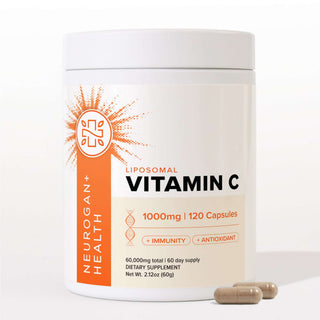
Liposomal vitamin C supplements work differently from standard ascorbic acid pills or effervescent tablets.
Liposomal refers to a delivery system in which vitamin C is encapsulated in tiny phospholipid spheres (liposomes) to protect the active compound from premature degradation and improve its stability in the digestive tract.

How Much Water? (8-12 oz Recommended)
8-12 ounces of water, or a standard glass, with liposomal vitamin C, is the sweet spot. If you take any less than 4 ounces, you might not have enough to dissolve the capsule, and more than 16 ounces could lead to unnecessary dilution, so there’s no need to chug large amounts of water.
Water Temperature: Room Temperature or Cold (Both Fine)
Either room temperature or cold water works fine for taking your vitamin C supplement. However, extremely hot water isn’t recommended, especially with liposomal formats.
This is because heat can destabilize phospholipid membranes. Liposomes rely on the structural integrity of their membrane to remain intact until they reach the intestine, so cold or room-temperature water helps preserve their stability.
Timing with Meals: Flexible
You don’t have to stress out too much about when to take liposomal vitamin C because it’s much gentler on the stomach. However, taking standard vitamin C tablets with food might help reduce stomach sensitivity in some people.
Swallow Whole vs. Opening Capsules (Do Not Open)
This is where some people go wrong. Opening a liposomal vitamin C capsule and mixing it with water can damage the phospholipid bilayer that stabilizes the vitamin C. Once it’s exposed to air, mechanical agitation, or heat, it’s compromised, reducing its efficacy.
If you’re having trouble swallowing a capsule, it’s better that you switch to a different vitamin C format, like effervescent tablets that dissolve in water or liposomal liquid.
Taking Different Vitamin C Forms with Water
Follow the directions on your supplements to ensure you’re getting the necessary nutrients. We’ll go over the different techniques of taking your vitamin C with water, depending on the format.
Vitamin C Capsules
Capsules are designed to release the contents in a controlled manner, and breaking them before swallowing destroys that design. The best practice with capsules is to:
-
Swallow whole — do not chew
-
Drink with 8-12 ounces of room temperature or cold water
-
Take with food if you have a sensitive stomach
Vitamin C Powder
Vitamin C powders are typically made from ascorbic acid or buffered forms such as sodium ascorbate and are meant to be mixed with water. These could be a good option if you can’t swallow pills.
Follow the instructions on the label, but the general best practice with vitamin C powder is to:
-
Mix thoroughly with at least 8 ounces of water until dissolved
-
Avoid hot water
Although ascorbic acid is relatively stable, hot water can degrade vitamin C, making it less effective.
Liquid Vitamin C
Liquid vitamin C could include standard aqueous solutions, liposomal emulsions, and buffered liquid forms. For standard liquid vitamin C, diluting it in water is optimal to reduce the acidic taste.
For liposomal liquids, you can take it directly under the tongue for last absorption or mix it into a drink — just avoid mixing it into hot beverages.
Does Water Temperature Affect Vitamin C Absorption?
This question comes up frequently in discussions of vitamin C supplementation. Let’s separate regular vitamin C from liposomal vitamin C.
Regular vitamin C (ascorbic acid) is relatively stable at room temperature, but prolonged exposure to high heat can degrade it, so it’s best to take it with room-temperature or cold water.
Liposomal vitamin C is more sensitive to temperature because of the lipid membranes. Brief exposure to warm water isn’t going to ruin your supplement, but it’s still best to take it with nothing hotter than room temp.
FAQs
Resources:
-
Carr, A. C., & Maggini, S. (2017). Vitamin C and immune function. Nutrients, 9(11), 1211.