
If you're adding fisetin to your routine, one of the first questions is pretty simple: should I take fisetin in the morning or at night?
Here's the short answer: timing matters a lot less than how you take it. Based on current human research on fisetin absorption, the biggest factors are:
-
taking it with a meal, ideally one that contains healthy fats
-
using a well-formulated product with improved absorption
-
following the dosing schedule that fits your specific goal
-
staying consistent if you're on a daily routine
There's no strong human evidence showing that morning is biologically better than evening. Unlike caffeine or melatonin, fisetin doesn't appear to directly affect wakefulness or your sleep cycle.
For most healthy adults, taking fisetin with breakfast or lunch is the easiest way to remember it, and it ensures you take it with food, which may help absorption.
If you're following an intermittent (senolytic) protocol under medical supervision, the timing of each dose usually matters less than sticking to the prescribed schedule.
Quick Answer
|
Question |
Evidence-Based Answer |
|
Morning or evening? |
Either works. Morning tends to be more practical. |
|
Empty stomach? |
No. Taking it with food is generally better. |
|
With fat? |
Yes. A meal with healthy fats may improve absorption. |
|
Daily or pulse dosing? |
Depends on your health goals and your healthcare provider's guidance. |
|
Split doses? |
Used in some research protocols, but not necessary for everyone. |
Key Takeaways
-
There's no proven "perfect" time of day to take fisetin.
-
Taking fisetin with food fits its poor natural water solubility and lines up with current research.
-
Healthy fats may help absorption, since fisetin dissolves much better in fat than in water.
-
Morning or early afternoon is often the easiest routine to stick with long-term.
-
Clinical studies on senolytic effects often use intermittent dosing protocols rather than continuous daily use.
-
Human evidence is still developing, so dosing approaches keep evolving.
What Is Fisetin?
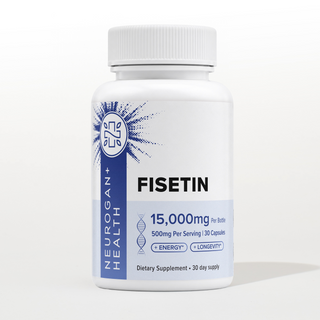
Fisetin is a naturally occurring flavonoid found in foods including strawberries, apples, persimmons, onions, cucumbers, and grapes. It belongs to the same broad family of plant compounds as quercetin and luteolin.
Interest in fisetin has grown because lab and animal studies suggest it may influence several biological processes tied to healthy aging, including cellular senescence, oxidative stress, inflammatory signaling, and how cells respond to stress.
Researchers are especially interested in fisetin because it has shown senolytic activity in animal and lab models, meaning it may help clear certain senescent, or "zombie," cells under experimental conditions.
Human evidence is still much more limited, and ongoing clinical trials are checking whether these findings actually translate into meaningful health outcomes for people [1, 2]

What Does Current Research Say About the Best Time to Take Fisetin?
Here's one of the most important takeaways from the available research: no one has identified a biologically superior time of day for taking fisetin.
Unlike supplements that influence circadian biology or hormones, fisetin hasn't been shown to need morning-only or evening-only use.
Instead, researchers tend to focus on three practical things:
-
Absorption
-
Bioavailability (how much actually gets into your bloodstream)
-
Consistency.
Since fisetin naturally has poor oral bioavailability, getting those three factors right likely matters more than choosing a specific hour of the day [3].
Morning vs. Evening: Which Is Better?
Taking Fisetin in the Morning
For most people, mornings offer some practical perks.
It's easy to remember, pairs naturally with breakfast, fits into existing supplement routines, and may reduce forgotten later doses.
Morning dosing is especially common among people already taking supplements like NMN, resveratrol, CoQ10, vitamin D, or omega-3 fatty acids. That doesn't mean these all need to be taken together. It just reflects how most people's daily routines work.
Taking Fisetin at Night
Some supplement companies suggest evening use based on theories about overnight cellular repair. But there's currently no strong human evidence that fisetin works better when taken before bed.
If taking fisetin with dinner helps you stay consistent, evening dosing is a perfectly reasonable choice too.
Which One Should You Choose?
Here's roughly how the evidence stacks priorities:
|
Priority |
Importance |
|
Taking it consistently |
Very high |
|
Taking it with food |
Very high |
|
Using a quality formulation |
Very high |
|
Morning vs. evening |
Low |
For most adults, consistency matters far more than picking the exact hour.
Should You Take Fisetin With Food or on an Empty Stomach?
Current recommendation: take fisetin with a meal.
Here's why. Fisetin is highly lipophilic, meaning it dissolves much better in fat than in water. That creates two challenges: poor water solubility and limited oral absorption.
A meal that includes healthy fats may help fisetin dissolve and get absorbed through the intestine more effectively.
Good options include meals with avocado, olive oil, nuts, seeds, eggs, salmon, or full-fat yogurt.
Direct human studies comparing fed versus fasted fisetin intake are still limited, but this recommendation lines up with what we know about fisetin's chemistry and the pharmacokinetic research available so far [3].
Why Bioavailability Matters More Than Timing
Many people spend real time agonizing over morning versus evening. In reality, the bigger question is whether your body can actually absorb the supplement in the first place.
Natural, unformulated fisetin has fairly poor oral bioavailability because it dissolves poorly in water, gets metabolized quickly, and is eliminated from the body fast.
Researchers have looked into several ways to improve absorption, including lipid-based formulations, micellar delivery systems, fenugreek galactomannan complexes, cyclodextrin complexes, liposomal preparations, and nanoparticle delivery systems.
Some enhanced formulations have shown higher blood concentrations compared with standard fisetin in early human pharmacokinetic studies. One randomized crossover study found that a hydrogel-based fisetin formulation produced substantially higher blood levels than plain, unformulated fisetin in healthy volunteers [3].
Morning vs. Evening at a Glance
|
Goal |
Recommended Approach |
|
General healthy aging support |
Morning or lunch, with food |
|
Sensitive stomach |
Always take with a meal |
|
Tend to forget doses |
Pair it with breakfast |
|
Taking multiple supplements |
Fit it into your existing routine |
|
Physician-directed pulse dosing |
Follow the prescribed protocol exactly |
Recommended Fisetin Dosage
One of the most common questions people ask is how much fisetin to take. The honest answer depends on why you're taking it.
Unlike vitamins such as vitamin D or vitamin C, there's no officially established recommended daily allowance for fisetin. Human research is still evolving, and clinical studies have used a wide range of dosing strategies depending on the condition they studied.
|
Goal |
Common Supplemental Range |
Evidence Level |
|
General wellness |
100 to 500 mg per day |
Limited human evidence |
|
Enhanced bioavailability products |
Follow manufacturer directions |
Moderate |
|
Clinical research protocols |
Often much higher, physician-supervised |
Research only |
Many commercially available products contain between 100 mg and 500 mg per capsule, though enhanced formulations sometimes use lower doses since absorption is already improved.
Important: clinical trial doses shouldn't be copied at home without medical supervision. Many studies testing fisetin as a senolytic use doses far higher than what you'd find in an over-the-counter supplement.
Daily Supplementation vs. Pulse Dosing
One common misconception is that everyone should take fisetin every single day. Current research actually looks at two pretty different strategies.
Daily Supplementation
Daily supplementation is meant to provide continuous exposure to fisetin. People who choose this route are often hoping to support healthy aging, antioxidant defenses, cellular resilience, or general wellness. That said, long-term human data here is still limited.
Pulse (Intermittent) Dosing
Many of the best-known senolytic clinical trials have actually studied intermittent dosing instead of daily use.
These protocols often involve fairly high doses for just a few days in a row, followed by several weeks with no supplementation at all.
Researchers chose this approach because senolytics may work through a "hit-and-run" mechanism, briefly targeting senescent cells rather than needing continuous exposure. This idea is still being studied in humans [1,2].
Examples of pulse dosing schedules used in research include two consecutive days, monthly cycles, or other physician-directed schedules. Follow these protocols only in clinical research or under direct medical supervision, not at home.
How Long Does Fisetin Take to Work?
The honest answer depends entirely on what outcome you're expecting.
Absorption
Human pharmacokinetic studies suggest fisetin reaches measurable blood levels within a few hours after you take it, though this varies quite a bit depending on the formulation used [3].
Cellular Effects
Some biological changes happen well before you'd actually feel anything. Researchers track things like senescence biomarkers, inflammatory markers, gene expression, and oxidative stress markers. These lab measurements are very different from symptoms you can feel day to day.
Noticeable Benefits
Right now, there's no established timeline for when healthy adults should expect to notice benefits. Human longevity studies are still ongoing, and a lot of the claims floating around online are based on animal studies rather than completed human trials. Because of that, anyone promising dramatic results within days or weeks is overstating what the evidence actually shows.
Does Timing Affect Absorption?
Current evidence suggests meal timing matters a lot more than clock timing. The factors most likely to affect absorption are meal composition, fat intake, the specific supplement formulation, and your own individual metabolism.
There's currently no convincing evidence that taking fisetin at 8 a.m. absorbs any better than taking it at 7 p.m.
Can You Take Fisetin With Other Supplements?
In many cases, yes. People commonly combine fisetin with supplements like quercetin, resveratrol, NMN, omega-3 fatty acids, vitamin D, or magnesium. That said, this doesn't mean every possible combination has been thoroughly studied. Human interaction research here is still limited.
Fisetin and Quercetin
These two flavonoids get discussed together a lot, since both have antioxidant properties and are being studied for healthy aging. Lab research suggests they may touch some overlapping pathways, but there's very little high-quality human evidence showing extra benefits from combining them.
Fisetin and Resveratrol
These two are often bundled into longevity-focused routines. Current evidence doesn't establish that taking them together produces better clinical results in humans than either one alone.
Drug Interactions
This is one of the more important safety considerations. Lab research suggests fisetin may influence several drug-metabolizing enzymes, including members of the cytochrome P450 family. How much that matters in real life is still uncertain, but it's a reasonable reason for caution.
Talk with your healthcare provider before taking fisetin if you use blood thinners such as warfarin, antiplatelet medications, diabetes medications, immunosuppressive drugs, or any prescription medications processed by CYP enzymes.
Don't stop or adjust prescription medications on your own without medical advice.
Potential Side Effects
Short-term human studies have generally found fisetin to be well tolerated, though the research is still limited. Reported side effects may include mild stomach discomfort, nausea, digestive upset, or headache. These have generally been uncommon in published human studies. Since long-term safety data is still thin, researchers continue monitoring for side effects in ongoing clinical trials.
Is Fisetin Hard on the Liver?
Current evidence doesn't suggest that fisetin commonly causes liver damage in healthy adults.
That said, long-term safety data is still limited, and anyone with liver disease should check with their healthcare provider first. Remember too that supplements aren't evaluated by the FDA for safety or effectiveness before they hit shelves.
Is Fisetin Hard on the Kidneys?
There's currently no strong evidence that fisetin harms healthy kidneys when taken as directed. Interestingly, several preclinical studies are actually looking into whether fisetin might help protect kidney tissue from oxidative stress and inflammation, though those findings shouldn't be treated as proof of benefit in people yet. Anyone with chronic kidney disease should talk with a nephrologist before using fisetin.
Who Should Avoid Fisetin?
Until more safety data is available, fisetin generally isn't recommended without medical guidance for pregnant women, breastfeeding women, children, people scheduled for surgery, anyone taking anticoagulants, people with significant liver disease, or anyone managing a complex medication regimen.
Evidence Summary
|
Question |
Current Evidence |
|
Morning vs. evening |
No meaningful difference shown |
|
Take with food |
Yes, generally recommended |
|
Better with fat |
Likely yes |
|
Daily use proven? |
Limited evidence |
|
Pulse dosing supported? |
Used in clinical research |
|
Long-term safety established? |
No |
|
Strong human longevity evidence? |
Not yet |
Choosing a High-Quality Fisetin Supplement
Not all fisetin supplements are made equally. Since natural fisetin has fairly poor oral bioavailability, the quality of the formulation may matter more than the exact time of day you take it.
When comparing products, look past the milligram number on the front label. Prioritize supplements that offer third-party testing, a current Certificate of Analysis (COA), clear Supplement Facts labeling, transparent ingredient sourcing, manufacturing in a GMP-compliant facility, and no unnecessary proprietary blends.
A reputable company should be willing to share a recent COA showing identity testing, purity, heavy metal testing, microbial testing, and residual solvent testing where relevant. If a company won't provide a COA or any testing information, that's a real warning sign.
Is a Higher Dose Always Better?
No. Many people assume a 1,000 mg capsule must be twice as effective as a 500 mg capsule, but current research doesn't support that. Since absorption is the real bottleneck, formulation quality likely matters more than simply cranking up the dose.
Enhanced delivery systems, including micellar, lipid-based, and other bioavailability-boosting technologies, are being actively studied and may achieve higher circulating levels than conventional fisetin powder, though it's still not established whether that translates into better clinical outcomes [3].
Should You Choose Standard or Enhanced Fisetin?
|
Standard Fisetin |
Enhanced Formulation |
|
Usually lower cost |
Usually more expensive |
|
Conventional powder |
Bioavailability-enhanced delivery |
|
Less pharmacokinetic data |
Some human PK studies available |
|
Widely available |
Fewer manufacturers |
If you go with an enhanced formulation, look for published human pharmacokinetic data rather than relying on marketing claims alone.
Best Practices for Taking Fisetin
Based on current evidence, most healthy adults can follow a few simple guidelines: take it with a meal, include a source of healthy fat, follow the dosage on the label unless your healthcare provider says otherwise, store it the way the manufacturer recommends, stay consistent with your routine, and check in with your healthcare provider if you take prescription medications or have a chronic condition.
Is Fisetin Worth Taking?
That really depends on your expectations. Current evidence supports cautious optimism, not certainty.
What the evidence supports: human studies suggest fisetin is generally well tolerated in the short term, and researchers continue investigating its effects on cellular senescence, inflammation, vascular function, and healthy aging [1,2]
What remains uncertain: there isn't yet enough evidence to conclude that fisetin slows biological aging in humans, extends lifespan, reverses age-related disease, or produces consistent clinical benefits in healthy adults. Those questions are still the subject of ongoing clinical trials.
If evidence-based healthy aging is your goal, fisetin may be a reasonable supplement to bring up with your healthcare provider, but it should be viewed as one piece of a broader lifestyle approach, not a replacement for sleep, exercise, nutrition, or managing existing health conditions.
Frequently Asked Questions
Should I Take Fisetin in the Morning or at Night?
Either works. Current human evidence doesn't show that one time of day beats the other. For most people, taking fisetin with breakfast or lunch is simply easier to remember, and it ensures it's taken with food.
Should I Take Fisetin With Food?
Yes. Because fisetin has poor water solubility, taking it with a meal, especially one containing healthy fats, may improve absorption.
Can I Take Fisetin on an Empty Stomach?
You can, but it's generally not recommended. Taking it with food may improve both tolerability and absorption.
How Long Does Fisetin Take to Work?
Fisetin gets absorbed within a few hours, but there's no established timeline for noticeable benefits in healthy adults. Human clinical research is still ongoing, and effects may depend on the specific outcome being studied.
Can I Take Fisetin Every Day?
Some people use daily supplementation, while many clinical studies on senolytic effects use intermittent, or "pulse," dosing instead. The right schedule depends on your goals and is worth discussing with your healthcare provider.
What Medications Can Interact With Fisetin?
Possible interactions include anticoagulants, antiplatelet medications, certain diabetes medications, and drugs metabolized by cytochrome P450 enzymes. Since clinical interaction data is still limited, talk with your healthcare provider before combining fisetin with prescription medications.
Does Fisetin Make You Tired?
There's no consistent evidence that fisetin causes drowsiness. Fatigue hasn't shown up as a common side effect in short-term human studies.
Is Fisetin Safe?
Short-term studies suggest fisetin is generally well tolerated, but long-term safety hasn't been established yet. As with any supplement, individual responses can vary.
Can You Take Too Much Fisetin?
No tolerable upper intake level has been established. High-dose regimens used in clinical research shouldn't be copied outside of supervised studies. Follow the product label or your healthcare provider's guidance instead.
Is Morning or Evening Better for Longevity?
Current evidence doesn't support either morning or evening as being biologically better for longevity. Consistency, appropriate dosing, and product quality matter far more than the exact time of day.
Final Thoughts
For most adults, the best time to take fisetin is simply whenever you can take it consistently, alongside a meal.
Current research doesn't point to a biologically ideal hour of the day. Instead, the strongest practical recommendations are to take fisetin with food, choose a high-quality and transparently tested product, follow a dosing schedule that fits your goals, and keep your expectations realistic while human longevity research continues to develop.
If you take prescription medications, manage a chronic condition, or are considering high-dose or intermittent fisetin protocols, check with your healthcare provider before getting started.
Continue Learning
You may also find these guides helpful:
References
-
Yousefzadeh, M. J., Zhu, Y., McGowan, S. J., Angelini, L., Fuhrmann-Stroissnigg, H., Xu, M., Ling, Y. Y., Melos, K. I., Pirtskhalava, T., Inman, C. L., McGuckian, C., Wade, E. A., Kato, J. I., Grassi, D., Wentworth, M., Burd, C. E., Arriaga, E. A., Ladiges, W. L., Tchkonia, T., Kirkland, J. L., Robbins, P. D., & Niedernhofer, L. J. (2018). Fisetin is a senotherapeutic that extends health and lifespan. EBioMedicine, 36, 18–28. https://pubmed.ncbi.nlm.nih.gov/30279143/
-
ClinicalTrials.gov. (n.d.). Studies investigating fisetin for frailty, chronic kidney disease, osteoarthritis, and healthy aging. U.S. National Library of Medicine. https://clinicaltrials.gov/search?term=fisetin
-
Krishnakumar, I. M., Jaja-Chimedza, A., Joseph, A., Balakrishnan, A., Maliakel, B., & Swick, A. G. (2022). Enhanced bioavailability and pharmacokinetics of a novel hybrid-hydrogel formulation of fisetin orally administered in healthy individuals: A randomised double-blinded comparative crossover study. Journal of Nutritional Science, 11, e95. https://pubmed.ncbi.nlm.nih.gov/36304817/