NMN and resveratrol get paired up often in healthy-aging supplement routines, but they actually do very different jobs.
NMN, or nicotinamide mononucleotide, is a precursor your body can use to make NAD+. NAD+ is a coenzyme involved in cellular energy metabolism and a long list of other reactions.
Resveratrol is a plant polyphenol studied for its antioxidant activity and its effects on metabolic and cellular signaling pathways.
The idea behind taking them together is fairly simple: NMN supports NAD+ availability, while resveratrol may influence some of the NAD+-dependent pathways involved in how cells respond to stress. That’s what makes the combination so interesting.
But there's an important gap in the evidence:
Human studies have looked at NMN and resveratrol separately, but we don't yet have strong randomized human evidence showing that NMN plus resveratrol works better than either compound on its own.
One frequently cited combination study found interesting tissue-specific effects when NMN and resveratrol were given together, but that study was done in mice, not people.
So yes, you can take NMN and resveratrol together. Just don't confuse a promising biological hypothesis with proven human "anti-aging synergy."
NMN and Resveratrol at a Glance
|
NMN |
Resveratrol |
|
|
Full name |
Nicotinamide mononucleotide |
Trans-resveratrol |
|
Compound type |
NAD+ precursor |
Polyphenol |
|
Main research interest |
NAD+ metabolism and cellular energy pathways |
Antioxidant, metabolic, vascular, and cellular signaling |
|
Natural sources |
Small amounts in foods like broccoli, avocado, and edamame |
Grapes, berries, peanuts, and Japanese knotweed |
|
Common supplement form |
Beta-NMN |
Trans-resveratrol |
|
Human evidence |
NAD+ levels, physical function, metabolism, and safety |
Metabolic, vascular, inflammatory, and oxidative-stress outcomes |
|
Proven to extend human lifespan? |
No |
No |
|
Can they be taken together? |
Yes |
Yes |
|
Proven superior together? |
Not yet |
Not yet |
What Is NMN?
NMN stands for nicotinamide mononucleotide. It's a naturally occurring molecule involved in producing NAD+, or nicotinamide adenine dinucleotide. A simplified version of the pathway looks like this:
NMN → NAD+
NAD+ then takes part in reactions all over the body, including:
-
Cellular energy metabolism
-
Oxidation-reduction reactions
-
DNA maintenance pathways
-
Sirtuin activity
-
PARP activity
-
Cellular signaling
That doesn't mean NMN itself is "energy." Instead, NMN gives your body material it can use to produce NAD+, which is needed for many of the reactions that turn nutrients into usable cellular energy.
Human NMN trials support one claim particularly well: oral NMN can increase measured blood NAD levels.
For example, a randomized 60-day trial with 80 healthy middle-aged adults tested 300, 600, and 900 mg of NMN per day. Every NMN group increased blood NAD compared with placebo. The study also reported improvements in its six-minute walking measure, while insulin-resistance measurements didn't significantly differ from placebo [1].
That's a lot more precise than saying NMN has been proven to "reverse aging." It hasn't.
What Is Resveratrol?
Resveratrol is a polyphenol, a type of plant compound. It occurs naturally in foods including:
-
Grapes
-
Certain berries
-
Peanuts
-
Japanese knotweed
Most resveratrol supplements use a concentrated form called trans-resveratrol.

Researchers have studied resveratrol for effects involving:
-
Oxidative stress
-
Vascular function
-
Glucose and lipid metabolism
-
Inflammation-related pathways
-
Cellular stress signaling
-
Sirtuin-related pathways
But resveratrol is one of those ingredients where the marketing story is often a lot cleaner than the actual research. Human studies are mixed, and results vary by population, dose, study length, and outcome measured.
A 2026 umbrella review that pulled together systematic reviews and meta-analyses of randomized trials found effects across some health outcomes, but overall evidence still varies widely by outcome and population [2].
Neurogan Health also offers standalone trans-resveratrol capsules for people who want to control their resveratrol dose separately from NMN.
NMN vs. Resveratrol: What's the Difference?
NMN and resveratrol often get lumped together as "longevity supplements," but that label hides how different they actually are.
NMN Mainly Targets NAD+ Metabolism
NMN sits directly inside the NAD+ production pathway. That's why most NMN research focuses on questions like:
-
Does NMN increase NAD+?
-
Does that influence cellular metabolism?
-
Does it affect physical function or metabolic health?
-
Is it safe at commonly studied doses?
Resveratrol Is a Polyphenol With Several Possible Targets
Resveratrol doesn't "make NAD+." Instead, researchers have studied its effects on several signaling systems and physiological processes. Its antioxidant properties are relatively straightforward. Its relationship with SIRT1, though, needs more explaining.
Does Resveratrol Really Activate SIRT1?
You've probably seen the claim: "resveratrol activates SIRT1."
This idea became popular for a reason. SIRT1 belongs to a family of proteins called sirtuins, which depend on NAD+ to function.
Early lab research suggested resveratrol could activate SIRT1, which helped create the popular idea that NMN supplies NAD+, resveratrol activates sirtuins, and together that adds up to anti-aging synergy.
The actual science is a lot less tidy than that.
Researchers have questioned whether some of the early direct SIRT1 activation findings were influenced by the specific lab assay used.
More importantly, the human clinical evidence is inconsistent. A 2025 systematic review and meta-analysis looked at 11 randomized controlled trials measuring SIRT1 gene expression, protein expression, or serum levels.
Overall, resveratrol did not significantly increase SIRT1 across those measurements, although some subgroup findings differed based on dose and duration [3].
That doesn't mean resveratrol has zero relationship with SIRT1 biology.
It means calling resveratrol a proven, direct human SIRT1 activator claims more certainty than the evidence actually supports. That distinction matters when talking about why resveratrol might complement NMN.
Prominent longevity researcher Dr. David Sinclair often talks about the potential benefits of NMN and resveratrol, and they're found in his daily longevity routine, which is why these two together have become so popular. And for wellness enthusiasts looking to experiment with their health protocols, it's one of the most popular and accessible combinations.
How Could NMN and Resveratrol Work Together?
The pairing still has a reasonable biological rationale.
NMN supports NAD+ production. Sirtuins need NAD+ to function. Resveratrol influences several stress-response and metabolic pathways that overlap with NAD+-dependent biology. So researchers have asked whether combining the two produces different effects than NMN alone.
One study tested exactly that idea.
Researchers gave mice NMN alone, or combined NMN with either resveratrol or ginsenosides. The combination of NMN and resveratrol raised NAD+ levels more than NMN alone in certain tissues, including heart and skeletal muscle [4].
But the effects were tissue-dependent, and most importantly:
These were mice.
The experiment doesn't show that people taking NMN and resveratrol together will experience greater longevity, more energy, better cognition, stronger muscles, slower aging, or better cardiovascular health than people taking NMN alone.
It's evidence for a potentially interesting interaction. It isn't proof of superior outcomes in humans.
Should You Take NMN and Resveratrol Together?
You can take NMN and resveratrol together, and there's no established reason healthy adults need to keep them separate.
The stronger question is whether you need to combine them. The answer is no. NMN doesn't need resveratrol to become NAD+. Resveratrol doesn't need supplemental NMN to have antioxidant or signaling effects.
A combination makes the most sense for someone who already wants to use both compounds and would rather keep their routine simple.
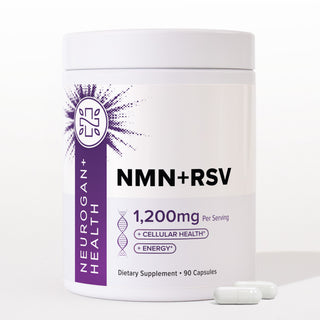
Neurogan Health's NMN + Resveratrol Capsules combine the two in a 1:1 formulation. The current two-capsule serving gives you:
-
600 mg beta-NMN and
-
600 mg micronized trans-resveratrol, for a combined 1,200 mg.
That makes the combination convenient. It doesn't mean a 1:1 ratio has been clinically proven to outperform every other ratio.

Is a 1:1 NMN-to-Resveratrol Ratio Best?
There's no established evidence-based optimal ratio of NMN to resveratrol.
A 1:1 ratio is common because:
-
It's straightforward
-
Convenient
-
Easy to dose
-
Easy to formulate into a single product.
But researchers haven't established 600 mg NMN plus 600 mg resveratrol, or 1,000 mg plus 1,000 mg, as a universally optimal healthy-aging ratio.
We wanted to highlight that because some personal longevity routines get mistaken for clinical protocols pretty often. Someone's personal supplement stack isn't the same thing as a dosage recommendation backed by randomized trials.
Neurogan's 1:1 product should be understood as a specific formulation, not proof that equal amounts are biologically required.
What Are the Potential Benefits of NMN and Resveratrol?
The evidence is easiest to follow when you look at the two compounds separately.
NMN Research
Human NMN research has looked at outcomes involving blood NAD+, physical performance, insulin sensitivity, metabolic markers, sleep-related outcomes, subjective wellbeing, and safety and tolerability.
The 300, 600, and 900 mg/day study mentioned earlier found increased NAD+ across all NMN groups, with the 600- and 900-mg groups producing the highest blood NAD concentrations. Researchers also reported differences in six-minute walking performance [1].
A more recent post-hoc analysis of that same trial dug further into the relationship between NMN-driven increases in NAD and various lab markers. That work helps refine our understanding of NMN metabolism, but it doesn't turn changes in NAD into proof of a longer life [5].
Resveratrol Research
Resveratrol studies have examined antioxidant activity, glucose metabolism, cardiovascular risk markers, endothelial function, inflammatory markers, body composition, and SIRT1-related outcomes.
Results vary. For example, a 2025 randomized trial in older adults with knee osteoarthritis reported changes in plasma SIRT1 and measures related to frailty after 500 mg/day of resveratrol for 16 weeks [6].
That specific finding doesn't overturn the broader SIRT1 meta-analysis mentioned earlier. It just shows why the evidence should be described as mixed, rather than reduced down to "resveratrol activates SIRT1."
The Combination
There's interesting animal research on NMN plus resveratrol. But we still don't have strong human randomized trials showing the combination produces better clinical outcomes than either compound alone.
So rather than claiming "NMN and resveratrol have proven synergistic anti-aging effects," a more honest conclusion is: NMN and resveratrol influence complementary areas of cellular biology, but clinically observed synergy in humans remains unproven.
Can NMN Improve Energy and Physical Performance?
NMN indirectly supports energy metabolism by helping replenish NAD+, which is needed for the metabolic reactions that process nutrients and produce cellular energy.
That makes NMN different from something like caffeine. Caffeine can change how alert or stimulated you feel. NMN is being studied much farther upstream, at the level of cellular metabolism.
A randomized NMN trial found statistically significant differences in six-minute walking performance compared with placebo, with greater distances reported in the 600 and 900 mg groups [1].
But that doesn't mean everyone taking NMN will "feel energized."
Cellular metabolism and how energetic you feel day to day are related, but they're not identical. Sleep, physical activity, calorie intake, iron status, thyroid function, medications, and many other factors can influence fatigue.
How Much NMN Should You Take?
There's no official NMN dose for longevity or "optimal aging." Human studies have tested a range of amounts.
|
NMN Dose |
Example Research Context |
|
250 mg/day |
Metabolic and older-adult trials |
|
300 mg/day |
Dose-response trials |
|
600 mg/day |
Dose-response trials |
|
900 mg/day |
Dose-response trials |
|
1,000+ mg/day |
Short-term human studies |
|
1,250 mg/day |
Short-term safety research |
One randomized trial found NMN was well tolerated at 300, 600, and 900 mg/day over 60 days, with 600 mg producing the strongest combined result across the study's NAD and physical-performance measures [1].
That doesn't establish 600 mg as the perfect dose for everyone. Clinical-study doses describe what researchers tested. They aren't universal prescriptions.
You can compare different formulations in our NMN supplements collection.
How Much Resveratrol Should You Take?
There's also no universal resveratrol dose for healthy aging. Human research has used amounts ranging from fairly small doses up to more than 1,000 mg per day, tested for different questions and populations.
Higher isn't automatically better. Higher-dose resveratrol studies are also more likely to report gastrointestinal problems.
Neurogan's standalone trans-resveratrol capsules provide a higher standalone serving, while the NMN + Resveratrol formula provides 600 mg trans-resveratrol alongside 600 mg NMN per two-capsule serving.
Those are product serving amounts. They shouldn't be interpreted as universal clinical recommendations.
When Should You Take NMN and Resveratrol?
There's no convincing human evidence that NMN and resveratrol must be taken at a particular time of day to work.
Some people prefer taking them earlier in the day. Others just pick a consistent time that fits their routine. The evidence doesn't support claiming that taking NMN at 8 a.m. rather than 6 p.m. will produce better long-term healthy-aging outcomes.
We cover timing separately in our guide to the best time to take resveratrol.
Should Resveratrol Be Taken With Fat?
This is another spot where simple supplement advice can be misleading. Resveratrol often gets described as something you should automatically take with a high-fat meal.
Human pharmacokinetic research doesn't support that as a general rule, and resveratrol's oral absorption is complicated by how quickly it's metabolized. A 2025 meta-analysis reviewing human clinical pharmacokinetic data found substantial variability in oral resveratrol exposure across studies [7].
So we wouldn't build an NMN plus resveratrol routine around the assumption that "more dietary fat automatically means more resveratrol absorption." Follow the product directions and prioritize a routine you can actually stick with.
What Are the Side Effects of NMN and Resveratrol?
NMN and resveratrol should be considered separately here, too.
Possible NMN Side Effects
Short-term human NMN trials have generally reported good tolerability at the doses studied. Some people report digestive discomfort, nausea, headache, or other mild gastrointestinal symptoms.
The bigger limitation isn't evidence of widespread toxicity. It's that long-term human data is still much thinner than short-term safety data.
Possible Resveratrol Side Effects
Resveratrol can cause gastrointestinal effects, particularly at higher doses, including diarrhea, nausea, abdominal discomfort, or digestive upset.
Medication interactions also deserve attention. If you take prescription medication, especially anything affecting bleeding, blood pressure, blood glucose, or drug-metabolizing enzymes, talk with your healthcare provider before starting concentrated resveratrol.
Side Effects of the Combination
We don't have enough long-term combination research to say NMN plus resveratrol has its own unique side-effect profile. No major interaction between the two is established.
But not having a known interaction isn't the same thing as having decades of long-term safety data on the combination.
Is NMN Hard on the Liver?
Current controlled human NMN studies haven't established a consistent liver-toxicity signal at the doses and durations studied. The 300 to 900 mg/day randomized trial monitored lab and clinical safety measures and reported no major safety concerns during 60 days [1].
A more recent analysis of participants from that trial looked at associations between NAD levels and liver-related lab markers, adding nuance rather than demonstrating clinically meaningful NMN-induced liver injury [5]
Still, that doesn't mean NMN can't affect the liver under certain circumstances. Short clinical trials can't establish lifetime safety. Anyone with liver disease or abnormal liver tests should discuss supplement use with their healthcare provider.
Can You Get NMN and Resveratrol From Food?
Yes, but food and supplements provide higher concentrations.
NMN Food Sources
Small amounts of NMN have been identified in foods like broccoli, cabbage, cucumber, avocado, and edamame. The amounts are much lower than what's commonly used in NMN trials, and so we wouldn’t rely on diet alone to get supplement doses of NMN.
Resveratrol Food Sources
Resveratrol occurs naturally in grape skins, blueberries and other berries, peanuts, and a handful of other plants. Red wine also contains resveratrol, but alcohol isn't a sensible way to try to get a concentrated resveratrol dose.
That doesn't mean supplements are inherently "better" than food.
Foods provide NMN precursors, polyphenols, vitamins, minerals, fiber, and a lot of other compounds within a broader nutritional matrix. Supplements serve a different purpose: they provide a concentrated and measurable amount of a specific compound.
NMN + Resveratrol Combined vs. Separate Supplements
Both approaches have genuine benefits.
A Combined Product May Be Better If You Want
One bottle instead of two, fewer capsules, a simple fixed ratio, easier routine consistency, and both ingredients already included. The Neurogan Health NMN + Resveratrol formula uses a 1:1 blend of 600 mg beta-NMN and 600 mg micronized trans-resveratrol per two-capsule serving.
Separate Products May Be Better If You Want
Independent dosing, different NMN and resveratrol amounts, the ability to stop one ingredient on its own, easier tolerance testing, and more control over your routine.
Neither approach is inherently more effective. Putting both ingredients in the same capsule doesn't itself prove greater absorption or biological synergy.
How to Choose a Quality NMN + Resveratrol Supplement
If you're paying for two relatively expensive healthy-aging ingredients, product transparency matters.
Look for Beta-NMN
The label should identify the actual form of NMN rather than hide it behind a vague proprietary blend.
Look for Trans-Resveratrol
"Resveratrol" alone doesn't tell you everything about the ingredient. A transparent product should identify how much trans-resveratrol you're actually getting.
Check the Amount of Each Ingredient
A bottle saying "1,200 mg NMN + Resveratrol Complex" isn't very informative if you don't know how those 1,200 mg are split. Neurogan specifies 600 mg NMN plus 600 mg trans-resveratrol per serving.
Look for Third-Party Testing
Useful testing can verify identity, potency, purity, heavy metals, microbial contamination, and pesticides where relevant.
Check the Serving Size
Always distinguish "per capsule" from "per serving." That difference can make two apparently similar products very different.
Ignore Dramatic Longevity Promises
Be cautious with claims like "reverses aging," "adds years to your life," "proven senolytic stack," "repairs your DNA," "restores youthful biology," or "clinically proven anti-aging synergy." Human research doesn't support those claims for the NMN plus resveratrol combination.
Is NMN + Resveratrol Worth Taking After 45?
Age alone doesn't mean you need either supplement. But adults over 45 are often drawn to NMN and resveratrol because the underlying research touches areas that become more relevant with age, including cellular energy metabolism, cardiovascular health, physical function, metabolic health, oxidative stress, and cellular signaling.
For someone already considering both ingredients, a combined product can be practical. But the basics still have a lot more evidence behind them: resistance training, aerobic activity, adequate protein, good sleep, maintaining metabolic health, not smoking, controlling blood pressure, and eating a nutrient-dense diet.
Supplements should sit on top of those foundations, not replace them.
NMN and Resveratrol: The Bottom Line
NMN and resveratrol are different compounds with a biologically interesting overlap.
NMN is a precursor used to produce NAD+. Resveratrol is a polyphenol studied for antioxidant, metabolic, and cellular signaling effects. Because sirtuins depend on NAD+, and resveratrol has been studied for its interactions with sirtuin-related pathways, researchers have proposed that NMN and resveratrol may complement one another.
Some preclinical evidence supports that possibility. But the key limitation is simple: we still don't have strong human randomized evidence showing that NMN plus resveratrol is better than NMN or resveratrol alone.
That doesn't make the pairing pointless. It means the evidence should determine the claim, not the other way around.
If you already want both compounds, taking them together is a convenient way to fit them into the same routine. Neurogan Health's NMN + Resveratrol Capsules provide 600 mg beta-NMN and 600 mg micronized trans-resveratrol per two-capsule serving.
The benefit of that formula is clear dosing and convenience. Claims about reversing aging or proven human longevity synergy are not part of that deal.
Frequently Asked Questions
Should I Take NMN and Resveratrol Together?
You can take NMN and resveratrol together. They affect different but partly connected areas of cellular biology. That said, strong human evidence showing the combination is more effective than either ingredient alone is currently lacking.
Is NMN Better With Resveratrol?
Not necessarily. Animal research suggests resveratrol can alter NMN's tissue-specific effects, but we don't yet have strong randomized human evidence that adding resveratrol makes NMN more effective [4]
What Are the Benefits of Taking NMN and Resveratrol Together?
NMN supports NAD+ production, while resveratrol has antioxidant activity and affects several cellular signaling pathways. The combination may offer complementary support, but specific added benefits from combining them in humans haven't been established.
What Is the Best NMN-to-Resveratrol Ratio?
No clinically established ideal ratio exists. A 1:1 ratio is convenient and common in commercial formulas, but human trials haven't shown it to be biologically superior.
Can NMN and Resveratrol Be Taken Every Day?
Both compounds have been given daily in human research. Long-term evidence, especially for the combination, remains limited, though. Follow product instructions, and talk with your healthcare provider if you use prescription medication or have medical conditions.
When Should I Take NMN and Resveratrol?
No strong human evidence points to one optimal time of day. Consistency is a more defensible goal than claiming a specific hour produces superior healthy-aging effects.
Should Resveratrol Be Taken With Fat?
Not necessarily. Resveratrol absorption and metabolism are complex, and human pharmacokinetic data don't support assuming a high-fat meal will automatically increase its bioavailability [7].
What Are the Negative Side Effects of NMN?
Short-term human studies generally report good tolerability, though gastrointestinal discomfort, headache, or individual intolerance may occur. Long-term safety data remain more limited than short-term data.
Is NMN Hard on Your Liver?
Current controlled human studies haven't linked NMN to liver injury at the doses and durations studied. Longer-term safety evidence is still developing [1].
Does NMN and Resveratrol Reverse Aging?
No. Neither NMN nor resveratrol, alone or together, has been shown to reverse human aging or extend human lifespan.
Is Resveratrol a Proven SIRT1 Activator?
The relationship is more complicated. Resveratrol interacts with SIRT1-related biology, but a 2025 meta-analysis of 11 randomized human trials found no significant overall increase in SIRT1 gene expression, protein expression, or serum levels [3].
Is It Better to Take NMN and Resveratrol Separately?
Neither format is inherently better. A combined product is simpler, while separate products give you more control over each ingredient's dose.
References
-
Yi, L., Maier, A. B., Tao, R., Lin, Z., Vaidya, A., Pendse, S., Thasma, S., Andhalkar, N., Avhad, G., & Kumbhar, V. (2023). The efficacy and safety of β-nicotinamide mononucleotide (NMN) supplementation in healthy middle-aged adults: A randomized, multicenter, double-blind, placebo-controlled, parallel-group, dose-dependent clinical trial. GeroScience, 45(1), 29–43.
-
Effects of resveratrol supplementation on multiple health outcomes: An umbrella review of systematic reviews and meta-analyses of randomized controlled trials. (2026). Nutrition Journal.
-
Mansouri, F., Feliziani, G., Bordoni, L., & Gabbianelli, R. (2025). Impact of resveratrol supplementation on human sirtuin 1: A GRADE-assessed systematic review and dose-response meta-analysis of randomized controlled trials. Journal of the Academy of Nutrition and Dietetics, 125(9), 1299–1314.e1.
-
Bai, L. B., Yau, L. F., Tong, T. T., Chan, W. H., Zhang, W., & Jiang, Z. H. (2022). Improvement of tissue-specific distribution and biotransformation potential of nicotinamide mononucleotide in combination with ginsenosides or resveratrol. Pharmacology Research & Perspectives, 10(4), e00986. Kuerec, A. H., Wang, W., Fokke, K. D. M., Yi, L., Lin, Z., Vaidya, A., Pendse, S., Thasma, S., Andhalkar, N., Avhad, G., Kumbhar, V., & Maier, A. B. (2025). Association between blood nicotinamide adenine dinucleotide levels and blood laboratory parameters at baseline and after nicotinamide mononucleotide supplementation in middle-aged healthy individuals: Post hoc analysis of a randomized, double-blinded, placebo-controlled clinical trial. GeroScience. Advance online publication.
-
Karim, A., Khan, H. A., Ahmad, F., & Qaisar, R. (2025). Resveratrol treatment increases sirtuin 1 levels and alleviates frailty phenotype in knee osteoarthritis patients: A randomised placebo-controlled clinical trial. International Journal of Food Sciences and Nutrition, 76(7), 748–758.
-
Szymkowiak, I., Marcinkowska, J., Kucinska, M., Regulski, M., & Murias, M. (2025). Resveratrol bioavailability after oral administration: A meta-analysis of clinical trial data. Phytotherapy Research, 39(1), 453–464.