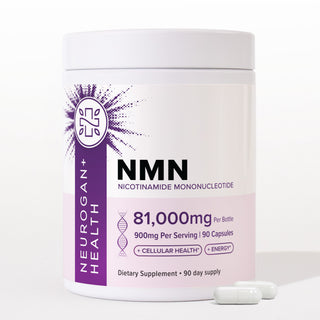
There is no scientifically established universal best time to take NMN. Morning use is common in human trials, but one randomized study comparing earlier and later dosing found some favorable results in the later-day NMN group.
There is also no human evidence showing that NMN must be taken on an empty stomach to work. Clinical studies have used different schedules, including before breakfast, after breakfast, and other once-daily routines.
The most practical approach is to follow the directions for the specific product, use a schedule you can follow consistently, and adjust timing if you notice sleep or digestive issues.
Best Time to Take NMN at a Glance
| Question | What the evidence currently shows |
|---|---|
| Morning or night? | No universal winner. Morning is common in trials, but one randomized study found some favorable later-day outcomes in older adults. |
| With food or without food? | No comparative human evidence shows one is superior. Trials have used both before-breakfast and after-breakfast dosing. |
| Empty stomach? | Not required by current human evidence. |
| Before bed? | Not proven harmful, but nighttime dosing has not been established as better. Move it earlier if it seems to affect sleep. |
| Powder vs capsules? | No human evidence establishes a different ideal time based on dosage form alone. |
| Split dose? | Not shown to be superior to once-daily dosing in human trials. |
| With coffee? | This is a separate question. See our dedicated NMN and coffee guide. |
What Is the Best Time to Take NMN?
The most accurate answer is:
There is no single best clock time established by human clinical evidence.
Many NMN studies have used morning dosing, which is one reason morning use is often recommended in supplement routines.
But “commonly studied in the morning” is not the same as “proven best in the morning.”
A direct human timing study complicates the picture.
NMN in the Morning vs Evening: What Human Studies Show
A randomized, double-blind, placebo-controlled study enrolled 108 adults aged 65 and older and compared 250 mg of NMN taken at different times of day for 12 weeks.1
Participants were assigned to one of four groups:
- NMN earlier in the day;
- NMN later in the day;
- placebo earlier in the day;
- placebo later in the day.
The study defined the earlier dosing window as after waking until noon and the later dosing window as 6:00 p.m. until bedtime.
The researchers evaluated:
- sleep quality;
- daytime drowsiness;
- fatigue;
- grip strength;
- sit-to-stand performance;
- walking performance.
The later-day NMN group showed the largest effect sizes for sit-to-stand performance and drowsiness.
However, the study does not establish that evening NMN is universally better because:
- some outcomes improved over time in placebo groups too;
- there was no significant group-by-time interaction for overall Pittsburgh Sleep Quality Index scores;
- the participants were older Japanese adults;
- the study tested one amount, 250 mg;
- it did not compare every possible dosing time.
The evidence therefore supports a more cautious conclusion:
Time of day may influence some NMN-related outcomes, but one trial is not enough to define a universal best time.
Should You Take NMN in the Morning?
Morning is a reasonable and well-studied option.
Several human NMN trials have used morning administration.
For example:
- a 12-week study gave healthy adults 250 mg once daily in the morning;2
- a 60-day randomized dose-ranging study instructed participants to take NMN once daily before breakfast;3
- an 8-week study in healthy middle-aged men used 250 mg before breakfast.4
These studies show that morning dosing can raise NMN- and NAD-related biomarkers.
They do not prove that the same amount taken later in the day would work less well.
Should You Take NMN at Night?
There is no strong human evidence that taking NMN at night is inherently unsafe.
The direct timing trial included a later-day group that took NMN between 6:00 p.m. and bedtime and did not identify a clear overall sleep-quality penalty from that schedule.1
That does not mean nighttime dosing is ideal for everyone.

If you personally notice:
- difficulty falling asleep;
- earlier waking;
- restlessness;
- unusual alertness;
after taking NMN late in the day, moving the dose earlier is a reasonable practical adjustment.
Those symptoms should not be interpreted automatically as proof that NMN is “boosting energy.”
Does NMN Affect Sleep?
Human evidence is limited and does not show one consistent effect on sleep.
The 12-week timing trial found some favorable drowsiness and physical-performance findings in the later-day NMN group, but several sleep outcomes changed over time across groups and the study did not establish NMN as a sleep treatment.1
Another 12-week trial in older adults reported improvements in selected sleep measures after daily NMN supplementation.5
The current evidence does not support claims that:
- NMN should always be taken before bed;
- NMN should never be taken at night;
- morning NMN always improves sleep;
- evening NMN always disrupts sleep.
For sleepiness or fatigue as possible side effects, see our NMN side effects guide.
Should You Take NMN With Food or Without Food?
There is no human trial showing that NMN is more effective when taken on an empty stomach.
Clinical studies have successfully used different food-related schedules.
Before Breakfast
A 60-day randomized trial of 300 mg, 600 mg, and 900 mg daily instructed participants to take NMN once daily before breakfast with water.3
All three NMN groups showed increases in blood NAD-related measures.
After Breakfast
A separate randomized trial involving 66 healthy adults used 300 mg daily after breakfast for 60 days.6
That study also reported increases in NAD-related measures.
Before Breakfast in an Open-Label Study
An 8-week study of healthy middle-aged men used two 125 mg NMN capsules once daily before breakfast and reported increased NAD+ in peripheral blood mononuclear cells.4
Together, these studies show that NMN can produce measurable biological changes under both fed and fasted administration conditions.
They do not tell us that one condition is superior.
Does Taking NMN on an Empty Stomach Improve Absorption?
That has not been established in a human head-to-head trial.
The idea that fasting improves NMN absorption is plausible in theory, but current clinical evidence does not demonstrate that taking the same NMN product on an empty stomach produces:
- higher blood NMN;
- higher NAD+;
- better physical outcomes;
- better clinical outcomes;
than taking it with food.
Do not interpret a before-breakfast study protocol as proof that breakfast interferes with absorption.
Should You Take NMN With Food?
Taking NMN with food is also reasonable when it matches the directions of the specific product.
Food may be preferable for some people if taking supplements on an empty stomach causes:
- nausea;
- abdominal discomfort;
- other digestive symptoms.
However, current evidence does not show that food is required for NMN absorption or that it produces a slower, more sustained release.
Follow the product label rather than applying one universal food rule to every NMN formulation.
Does NMN Need Fat for Absorption?
No human evidence shows that NMN must be taken with dietary fat.
This is different from some poorly water-soluble supplements that may have formulation-specific fat recommendations.
NMN should not inherit resveratrol timing or food instructions simply because the two ingredients are sometimes sold together.
How Should You Take NMN Powder?
For NMN powder, the first priority is accurate measurement and the product’s storage and mixing instructions.
There is no human evidence showing that NMN powder has a different ideal time of day from NMN capsules.
Powder should not automatically be described as:
- faster absorbing;
- more bioavailable;
- better on an empty stomach;
- more effective than capsules.
Those comparisons require direct human evidence.
If using powder:
- measure the serving accurately;
- mix it according to the manufacturer’s directions;
- avoid assuming a larger scoop will work better;
- store it as directed because supplement stability can depend on temperature, moisture, and packaging.
Do NMN Capsules Need Different Timing?
No clinically established timing difference exists between NMN capsules and powder.
Capsules offer a premeasured amount, while powder may allow more flexible serving sizes.

The dosage form alone does not prove that one:
- works faster;
- lasts longer;
- should be taken at a different time;
- produces better outcomes.
Should You Split Your NMN Dose?
There is no strong evidence that splitting NMN into multiple daily doses is better than taking it once daily.
Most published human intervention studies have used once-daily administration.
Split dosing may be used in some product routines or higher-dose experimental protocols, but it has not been established as superior for:
- NAD+ increases;
- energy;
- sleep;
- exercise performance;
- healthy-aging outcomes.
Follow the directions for the specific product rather than inventing a split schedule based on theory alone.
Should You Take NMN Before Exercise?
No human evidence establishes a specific pre-workout NMN window.
Some NMN trials have investigated physical performance after weeks of daily supplementation, but they did not establish that taking NMN one or two hours before exercise improves the workout itself.
NMN is not an acute pre-workout stimulant.
Can You Take NMN With Coffee?
NMN and coffee have distinct timing and interaction questions, and this site has enough search demand to treat them separately.
There is no established evidence that coffee universally prevents NMN from working.
However, questions about:
- mixing NMN powder directly into coffee;
- heat stability;
- caffeine interactions;
- coffee and fasting;
are covered in our dedicated guide to taking NMN with coffee.
What About NMN With Resveratrol?
NMN and resveratrol do not have to follow the same timing rules.
The ingredients have different chemistry, human evidence, formulation issues, and food considerations.
There is no controlled human evidence showing that taking them at the same clock time creates better anti-aging or longevity results.
For the combination evidence, see NMN and resveratrol.
What Should You Avoid When Taking NMN?
There is no validated list of foods or supplements that everyone must avoid with NMN.
More defensible precautions include:
- do not exceed the product directions simply because higher amounts have appeared in research;
- do not assume empty-stomach use is required;
- do not assume evening use is harmful;
- do not assume every other “longevity” supplement should be taken at the same time;
- review the full routine with a healthcare professional if you take prescription medication.
For supplement-combination questions, see our guide to NMN with other supplements.
Does Consistency Matter More Than Clock Time?
Based on current evidence, consistency is a more defensible practical priority than claiming one exact hour is best.
Human trials demonstrating increases in NAD-related biomarkers generally used repeated daily supplementation over several weeks.
What they do not show is that:
- 8:00 a.m. is universally superior to 2:00 p.m.;
- taking NMN within six hours of waking is proven optimal in humans;
- everyone should take it before breakfast;
- nighttime use prevents NMN from working.
Choose a consistent routine that matches the product label and that you tolerate well.
What About the “Six Hours After Waking” Recommendation?
This recommendation is often traced to a 2021 circadian-modeling study.7
That paper used a mathematical model incorporating:
- the mouse liver circadian clock;
- NAD+;
- SIRT1;
- AMPK;
- mTORC1;
- feeding schedules.
The researchers simulated how timing might influence hypothetical anti-aging interventions.
This was not a clinical trial in people taking NMN at different hours.
It is therefore useful as circadian biology research but should not be presented as proof that humans should take NMN exactly six hours after waking.
Frequently Asked Questions
What is the best time to take NMN?
No universal best time has been established. Morning use is common in human studies, while one randomized trial in older adults found some favorable results with later-day dosing. Consistency and following the product directions are more defensible than claiming one exact hour is optimal.
Is it better to take NMN in the morning or at night?
Neither has been proven universally superior. Morning is commonly studied, but a later-day group performed well on selected outcomes in one 12-week trial. If late dosing seems to interfere with your sleep, move it earlier.
Can I take NMN at night?
There is no strong evidence that nighttime NMN is inherently unsafe. Human evidence is limited, so use a schedule that fits the product label and your sleep response.
Should NMN be taken with food?
NMN does not have to be taken with food based on current evidence. Some human trials used after-breakfast administration, while others used before-breakfast dosing.
Should NMN be taken on an empty stomach?
It can be, but empty-stomach use has not been proven superior. Before-breakfast studies demonstrate that the schedule works, not that food reduces absorption.
Does food reduce NMN absorption?
No direct human head-to-head study has established that food reduces NMN absorption or clinical effectiveness.
Can I take NMN before bed?
You can encounter later-day dosing in human research, but before-bed use is not established as better. If it appears to affect sleep, use it earlier.
Does NMN affect sleep?
Some small human studies report changes in drowsiness or sleep-related outcomes, but NMN is not an established sleep aid and does not have one proven sleep-optimal dosing time.
How should I take NMN powder?
Measure it accurately and follow the product’s mixing and storage directions. Human evidence does not establish that powder should be taken at a different time than capsules.
Can I take NMN with coffee?
There is no established evidence that coffee universally blocks NMN. Questions involving caffeine, hot coffee, powder mixing, and fasting are covered in our dedicated NMN-and-coffee guide.
How much NMN should I take per day?
Timing and dose are separate questions. There is no universally established optimal NMN amount. See our NMN dosage guide for amounts tested in human trials.
How long does it take for NMN to work?
That depends on the outcome being measured. NAD-related biomarkers can change within days to weeks, while subjective or functional effects have no universal onset time. See how long NMN takes to work.
Should I take NMN every day?
Most human trials used daily supplementation. Those studies support daily administration as a commonly studied schedule, but long-term multi-year safety and an optimal duration remain uncertain.
The Bottom Line
There is no scientifically established universal best time to take NMN.
The current human evidence supports a more practical conclusion:
- morning dosing is common in clinical research;
- one randomized timing study found some favorable later-day outcomes in older adults;
- nighttime dosing has not been shown to be inherently harmful;
- NMN does not have to be taken on an empty stomach based on current evidence;
- trials have used both before-breakfast and after-breakfast schedules;
- food has not been shown to reduce NMN effectiveness;
- powder and capsules do not have established different timing requirements;
- split dosing has not been proven superior;
- consistency and following the specific product instructions are more defensible than chasing one “perfect” hour.
The biggest mistake is turning circadian theory into a rule that human trials have not confirmed.
For amount, see the NMN dosage guide. For onset, see how long NMN takes to work. For side effects, see NMN side effects and safety.
References
- Kim M, Seol J, Sato T, et al. Effect of 12-Week Intake of Nicotinamide Mononucleotide on Sleep Quality, Fatigue, and Physical Performance in Older Japanese Adults: A Randomized, Double-Blind Placebo-Controlled Study. Nutrients. 2022;14(4):755. PMID: 35215405. doi:10.3390/nu14040755.
- Nicotinamide mononucleotide intake increases plasma NMN and NAD+ levels in healthy subjects. Clinical Nutrition ESPEN. 2023. PMID: 37344088.
- Yi L, Maier AB, Tao R, et al. The efficacy and safety of β-nicotinamide mononucleotide supplementation in healthy middle-aged adults: a randomized, multicenter, double-blind, placebo-controlled, parallel-group, dose-dependent clinical trial. GeroScience. 2023;45(1):29–43. PMID: 36482258.
- Safety and efficacy of long-term nicotinamide mononucleotide supplementation on metabolism, sleep, and nicotinamide adenine dinucleotide biosynthesis in healthy, middle-aged Japanese men. 2024. PMID: 38191197.
- Morifuji M, Higashi S, Ebihara S, Nagata M. Ingestion of β-nicotinamide mononucleotide increased blood NAD levels, maintained walking speed, and improved sleep quality in older adults in a double-blind randomized, placebo-controlled study. GeroScience. 2024. PMID: 38789831.
- Huang H. A Multicentre, Randomised, Double Blind, Parallel Design, Placebo Controlled Study to Evaluate the Efficacy and Safety of Uthever (NMN Supplement), an Orally Administered Supplementation in Middle Aged and Older Adults. Frontiers in Aging. 2022;3:851698. PMID: 35821806.
- Sadria M, Layton AT. Aging affects circadian clock and metabolism and modulates timing of medication. iScience. 2021;24(4):102245. PMID: 33796837. doi:10.1016/j.isci.2021.102245.