
Peptides, particularly copper peptides (GHK-Cu), consisting of a small peptide, Glycyl-L-Histidyl-L-Lysine (GHK), and copper ions (Cu), have become a focal point in the health and beauty industries for their multifaceted potential benefits, from hair and skin rejuvenation to possibly playing a role in maintaining overall health with age.
The potential benefits of GHK-Cu for include wound healing, skin density, hair growth, and anti-aging.
GHK-Cu Dosage Guide
In formulating skin care products containing GHK-Cu, concentration levels are based on the intended frequency of use and specific skin areas targeted by the product.
Tablets are the easiest to measure because they are already pre‑measured. All you need to do is follow the label for how many tablets or capsules to take per day.
For topicals, you'll typically see the concentration labeled. It's best to use the same amount each time by relying on the built‑in pump (for example, 1–2 pumps) or a consistent “pea‑sized” amount, instead of guessing from the bottle.
For injectables, accuracy matters most. After the vial is mixed as directed, you measure your dose with a marked insulin syringe, using the volume (units or mL) that corresponds to your prescribed milligram amount.
Taken together, this means tablets are counted, creams and serums are dispensed by pump or consistent fingertip size, and injections are measured precisely with a calibrated syringe rather than by eye.
GHK Cu Concentrations
This peptide is typically found in 2% to 10% concentrations to optimize efficacy while minimizing the risk of skin irritation.
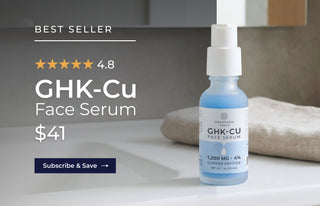
For products intended for daily application, such as morning and evening routines, the regular concentration is 4% of GHK-Cu for our face, neck, scalp, and more.
Most skin types can use similar GHK‑Cu strengths — sensitive skin just needs slower introduction and less frequent use, while dry or oily skin mainly differ in the kind of moisturizer or base you pair it with.
GHK-CU MG Doses
If you are using advanced copper peptide creams with high amounts of mg, we suggest you start with one dollop of cream on your finger, which we measured equates to about 50mg of GHK-Cu. This applies for most creams and serums on the market. Keep in mind these are rough estimates.
If you choose to take tablets or capsules, it’s best to start with one or two at most, providing about 100-200 mcg a day.
This concentration is designed to effectively promote skin health, including enhancing collagen production and reducing the appearance of fine lines, while being gentle enough for regular use on most skin types.

A lower concentration of 2% GHK-Cu is used in our eye serums for the delicate area around the eyes. This approach aligns with the principle of targeted therapy in dermatological science, where the dosage and formulation are adjusted to the specific needs and tolerance of different skin regions.
By adjusting the GHK-Cu dosage according to product use frequency and targeted skin areas, these skincare solutions are engineered to maximize the peptide's regenerative properties while ensuring user safety and comfort.
Can GHK-Cu Dosage Be Adjusted For Different Age Ranges?
GHK‑Cu dosing can be personalized by age, but there isn't an official age‑based dosing chart like you see with prescription drugs.
Clinics and brands mainly adjust dose and frequency based on age‑related sensitivity and goals, rather than having strict “per age group” milligram rules.
Natural GHK levels in the body decline with age, which is one reason older adults often see more noticeable benefits from supplementation.
Because of this, adults over about 35–40 are the main target group for anti‑aging and repair protocols, while younger adults (20s–early 30s) usually do well on more conservative, maintenance‑style dosing.
Most adult injectable protocols cluster around 0.5–2 mg per day (or several times per week), with up to 3–4 mg/day in short, intensive healing protocols, regardless of age.
What Are The Side Effects of Taking GHK-Cu At Higher Dosages?
At higher doses or stronger concentrations, people are more likely to notice local side effects such as redness, itching, tingling, or skin irritation, or mild pain and bruising, especially if they're injectables.
A small number of people may also react more strongly with hives, swelling, or allergy‑type symptoms when taken orally, injected, or applied topically, in which case the product should be stopped, and medical care should be sought.
Because GHK‑Cu carries copper, there is a theoretical risk of copper build‑up if someone uses very high doses for a long time, especially if they also take other copper supplements or have liver or copper‑metabolism issues. This hasn't been clearly shown in studies, but experts recommend caution in people with liver disease, known copper problems, or during pregnancy and breastfeeding.
There isn't an officially established “maximum safe dose” for GHK‑Cu, because it's not an FDA‑approved drug, so long‑term systemic dosing isn't standardized. What we have instead are common practices that range from clinics to research protocols.
Overview Benefits of Using GHK-Cu
While direct medical treatments and benefits are still under research and not FDA-approved, here’s a look at the promising aspects of GHK-Cu:
- Hair Growth Potential: GHK-Cu is noted for its potential to stimulate hair follicles, possibly leading to improved hair growth. This makes it an area of interest for those looking into solutions for thinning hair.
- Wound Healing/Skin Regeneration: Preliminary studies suggest GHK-Cu might play a role in enhancing wound healing and promoting the regeneration of skin cells. Its potential to support the body's natural healing processes makes it a compound of interest in skincare.
- Skin Firmness: GHK-Cu has improved skin elasticity and firmness. Boosting collagen production helps reduce the appearance of fine lines and wrinkles, contributing to a more youthful skin appearance.
GHK-Cu Peptide Injection Dosage
GHK-Cu injections are available as a 10 mg/mL solution in a 5 mL vial for subcutaneous (subq) delivery. This injection dosage amount has been studied for various therapeutic and cosmetic uses, including hair growth, skin rejuvenation, wound healing, and anti-inflammatory effects.
GHK-Cu injections have been explored for several therapeutic and cosmetic applications driven by their potential for hair growth, skin rejuvenation, wound healing, and anti-inflammatory effects [1, 2,].

There's no one approach to GHK-Cu injection dosages — how much is given is based on the specific GHK-Cu formulation, the size of the area being treated, individual health conditions, and the purpose of the treatment.
The availability of GHK-Cu injectables online has made them accessible to more people, especially bodybuilders, but just because you can find injectable copper peptides online doesn't mean you should opt for this method.
Self-administration of any injectable carries significant risks like infection, allergic reactions, and the impairment of nervous system function.
It's strongly recommended that any GHK-Cu injection treatment be conducted under the supervision of a qualified healthcare professional, ideally in a clinical setting. Medical professionals can ensure the treatment is appropriate for the individual's health status, manage the correct dosage, and minimize the risks associated with injections.
GHK-Cu Injection Dosage for Hair Growth

In clinical settings or studies focusing on hair growth, GHK-Cu dosages have not been universally standardized. Still, some research protocols have administered GHK-Cu in concentrations ranging from 0.1% to 1.0% in injectable topical application solutions [1].
When it comes to injections, dosages might be adjusted based on the area of the scalp treated, with careful consideration given to the depth and spacing of injections to maximize the peptide's reach to hair follicles.
However, specific dosages for subcutaneous injections aiming at hair growth stimulation are less commonly detailed in the publicly available research literature.
GHK-Cu Injection Dosage for Skin Healing and Rejuvenation

GHK-Cu is also promising for its skin healing and rejuvenating properties. It's thought to promote collagen and elastin production, improve skin elasticity, and diminish fine lines and wrinkles. This makes it a popular choice for people looking to address aging skin in clinical settings.
For injectable solutions, concentrations may again range from 0.1% to 1.0% (10 mg in 5 mL vials or 5 mg in 5 mL vials), adjusted according to the treatment plan and the size of the area being treated.
Treatments might be spaced over several sessions, with the total dosage spread out to monitor and evaluate the skin's response.
A personalized treatment plan is essential for harnessing the full potential of GHK-Cu injections. This involves not only adjusting dosages but also integrating other modalities as necessary.
Micro-needling, a procedure that involves creating tiny punctures in the skin using micro-fine needles, naturally stimulates the body's wound healing response, leading to increased collagen and elastin production. When GHK-Cu is applied to the skin in conjunction with micro-needling, the theory is that the benefits of both treatments are enhanced.
While micro-needling can be done at home with devices designed for consumer use, applying GHK-Cu professionally ensures the correct technique, sterilization, and product quality. This minimizes the risk of infection and maximizes the treatment's benefits.
Ingestable GHK-CU Dosage
We are the first brand to offer peptide products through an ingestible format, known as “beauty from within.” Dosage can vary based on individual factors such as age, lifestyle, and health goals. To support this, we provide the only GHK-Cu tablets available, delivering about 120 mcg per serving, which can be taken as 1-2 tablets daily.
Researchers are still exploring how to maximize the body’s absorption and utilization of GHK-Cu for effective results.
From keeping our red blood cells in shipshape to energizing our day and supporting our brain, copper plays a pivotal role in keeping our body at bay.

How to Dose GHK-Cu Peptides
GHK-Cu is available in product types like creams, serums, water-soluble sprays, and shampoos, designed to be massaged into the skin or applied to targeted areas. The most important part of dosing copper peptides is consistency and tracking your progress.
Serums: Start by washing your face to ensure it is clean and dry. Apply the serum to the targeted area 1-2 times a day and do not rinse it off after application.
Shampoo/Scalp Products: Begin by washing your hair thoroughly. Rub the product between your hands, then massage it deeply into your scalp, ensuring it reaches the skin.
Face Creams: Apply in the morning and at night as part of your daily routine.
Concentration Guidance: For face and neck applications, a 4% concentration is gentle enough to support natural skin repair. For eye serums, a 2% concentration is used to suit the delicate and sensitive skin around the eyes.
GHK-Cu peptides may require consistent use for up to three months to see noticeable improvements in skin health and rejuvenation. Regular application over this period allows the peptide to support tissue repair and promote anti-aging benefits effectively.
The complexity of bioactive compounds like GHK-Cu and their systemic effects mean that "one-size-fits-all" dosages are not feasible. Individual health status, potential interactions, and specific health goals must all be considered when determining the appropriate use of GHK-Cu, whether through injections or ingestible forms.
The Food and Drug Administration (FDA) has not approved the direct recommendation of copper peptides for therapeutic use without a prescription.
What To Do If You Miss A Dose of GHK-Cu
If you miss a dose of GHK‑Cu, skip it and take your next dose at the usual time rather than doubling up to “catch up.”
This applies to injections, tablets, and topical products. Missing an occasional dose isn't likely to change your overall results, since long‑term consistency matters more than one missed day.
If your schedule is non‑daily (for example, a few injections per week) and you realize you missed a dose right before the next one is due, it's usually best just to continue with your normal plan.
Resources:
- Pickart, L., & Margolina, A. (2018). Regenerative and protective actions of the GHK-Cu peptide in the light of the new gene data. International journal of molecular sciences, 19(7), 1987.
- Maquart, F. X., Pickart, L., Laurent, M., Gillery, P., Monboisse, J. C., & Borel, J. P. (1988). Stimulation of collagen synthesis in fibroblast cultures by the tripeptide‐copper complex glycyl‐L‐histidyl‐L‐lysine‐Cu2+. FEBS letters, 238(2), 343-346.