

GHK-Cu dosage depends on how you use it. Topical products are usually measured by concentration and amount applied, oral products are measured by the label’s serving size, and injectable GHK-Cu should only be handled through a licensed medical professional.
Copper peptides can be found in creams, serums, scalp products, tablets, and clinical-use preparations. Because each format works differently, the safest way to think about GHK-Cu dosage is by delivery method, not by one universal number.
This article breaks down how to dose GHK-Cu by product type, skin goal, age range, and safety considerations.
For a deeper ingredient overview, read: What Is GHK-Cu?
GHK-Cu Dosage Chart
| GHK-Cu format | How it is usually measured | Common use pattern | Best for | Key note |
|---|---|---|---|---|
| Face serum | Pumps or drops | 1–2 times daily | Face, neck, visible aging support | Start with clean, dry skin |
| Eye serum | Lower concentration | Usually once daily or as directed | Delicate eye area | Lower strengths are better tolerated |
| Face cream | Pea-sized amount or thin layer | Morning and night | Hydration, firmness, daily skin support | Apply after serum or as final moisturizer |
| Scalp serum | Drops applied to scalp | Once daily or as directed | Scalp and hair support | Massage into the scalp, not just hair |
| Body lotion | Thin layer over target areas | Daily or as directed | Larger body areas | Better for areas where face serum is too small |
| Tablets/capsules | Label serving size | Follow product label | "Beauty from within" routines | Do not exceed label directions |
| Injectable GHK-Cu | Prescribed amount in mg/mL | Medical setting only | Clinical/research contexts | Do not self-inject copper peptides |
The main rule: stay consistent and use the product the way it was designed to be used. Tablets are counted. Creams and serums are applied by pump, drop, or a consistent fingertip amount. Injections require medical direction and precise measurement.
How Much GHK-Cu Should You Use Daily?
Most people should dose GHK-Cu based on the product format.
For topical GHK-Cu, that usually means applying a small, consistent amount once or twice daily. For oral GHK-Cu, follow the serving size on the product label. For injectable GHK-Cu, dosing should only be set by a qualified healthcare provider.
GHK-Cu is not a one-size-fits-all ingredient. Skin sensitivity, product strength, age, health status, and personal goals can all change how often someone should use it.
GHK-Cu Concentration: What Do 2%, 4%, and 10% Mean?
GHK-Cu topical products are commonly discussed in concentration ranges from 2% to 10%.
A higher concentration is not always better. Stronger products may be more likely to cause redness, tingling, itching, dryness, or irritation, especially if your skin barrier is already sensitive.
A practical way to think about concentration:
| Concentration | Best use case | Notes |
|---|---|---|
| 2% | Eye area, sensitive skin, beginner routines | Better for delicate areas |
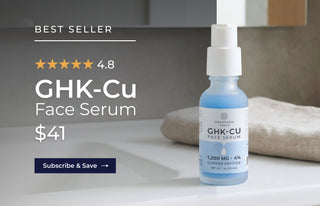
| 4% | Face, neck, scalp, daily topical use | A common daily-use strength |
| 10% | Higher-strength topical formulas | More likely to need slower introduction |
For face and neck use, a 4% GHK-Cu concentration is often gentle enough for regular routines. For eye-area products, 2% is more appropriate because the skin around the eyes is thinner and more reactive.
Shop related topical options:
Do You Take GHK-Cu Daily?
You can use many topical GHK-Cu products daily, but your ideal frequency depends on the product strength and your skin’s response.
If you are new to copper peptides or have sensitive skin, start slowly. Try every other day first, then move to daily use if your skin feels comfortable. If you notice redness, itching, peeling, stinging, or bumps, reduce frequency or stop use.
For oral GHK-Cu tablets, follow the serving directions listed on the product label.
Shop: GHK-Cu Copper Peptide Tablets
GHK-Cu Topical Dosage

Topical GHK-Cu is usually the simplest format to work into a routine. Instead of measuring milligrams yourself, you apply the product by pump, drop, or a consistent amount.
For face serums
Start with clean, dry skin. Apply your GHK-Cu serum to the target area and let it absorb. Most routines use serum before heavier creams or oils.
For face and neck use, try: GHK-Cu Neck & Face Serum
For face creams
Apply a thin layer in the morning, evening, or both, depending on your routine and skin tolerance. Creams are useful when you want GHK-Cu with extra moisture support.
Shop: GHK-Cu Copper Peptide Face Cream
For body lotion
Use a thin, even layer on larger areas like arms, legs, chest, stomach, or anywhere your face serum is not practical.
Shop: GHK-Cu Body Lotion
For scalp products
Apply drops directly to the scalp and massage them in so the product reaches the skin. Avoid applying only to the hair shaft.
Shop: GHK-Cu Hair & Scalp Serum
For broader topical routine help, read: How to Use Copper Peptides
GHK-Cu Dosage by Goal
GHK-Cu for skin firmness and visible aging
GHK-Cu is often used in skin care routines because copper peptides are associated with collagen and elastin support. People typically use face serums, creams, or lotions for this goal.
For visible skin-support routines, consistency matters more than applying too much at once. Many people need several weeks of steady use before they can fairly judge results.
Related reading: GHK-Cu Benefits, Risks & Effects
GHK-Cu for hair and scalp support
For scalp use, GHK-Cu is typically applied directly to the scalp once daily or as directed by the product label. Massage it into the skin so it reaches the area where it is meant to work.
Shop: GHK-Cu Hair & Scalp Serum
GHK-Cu for skin repair and rejuvenation
Topical GHK-Cu products are often used for hydration, firmness, and skin-repair support. Clinical and professional settings may use different concentrations or pair GHK-Cu with other skin procedures, but those routines should be handled by trained professionals.
If you are using GHK-Cu after a procedure, follow your provider’s aftercare instructions. Do not apply strong actives to freshly treated skin unless your provider says it is appropriate.
GHK-Cu Dosage for Women
There is no official female-only GHK-Cu dosage chart. Most dosage decisions are based on product format, skin sensitivity, health goals, and tolerance rather than gender alone.
Women searching for GHK-Cu dosage often want to know whether age, skin changes, hormones, pregnancy, or sensitivity affect how they should use it. The safest answer is to start with the product label, introduce topicals slowly, and speak with a healthcare professional before using GHK-Cu internally or in clinical formats.
Do not use GHK-Cu supplements if you are pregnant, nursing, under 18, or managing a condition that affects copper metabolism unless a doctor has cleared it.
Can GHK-Cu Dosage Be Adjusted by Age?
GHK-Cu dosage can be personalized by age, but there is no official age-based dosing chart like you would see with prescription medication.
Most adjustments are based on skin sensitivity, goals, and product type:
| Age range | Common approach | Notes |
|---|---|---|
| 20s to early 30s | Conservative, maintenance-style use | Often focused on hydration, scalp support, or prevention-minded routines |
| Mid-30s to 40s | More consistent topical routine | Often focused on fine lines, elasticity, and skin texture |
| 50+ | Slow, steady routine with careful monitoring | Skin may be drier or more reactive, so start gradually |
Natural GHK levels decline with age, which is one reason older adults may be more interested in copper peptide routines. Still, stronger is not always better. Skin tolerance should guide how quickly you increase frequency.
GHK-Cu Injection Dosage

GHK-Cu injections are different from topical serums, creams, or tablets. Injectable use involves sterile technique, correct dilution, precise measurement, and medical screening.
There is no single standard GHK-Cu injection dose that applies to everyone. Clinical dosing depends on the formulation, treatment area, individual health status, and provider-directed plan.
We do not recommend self-injecting copper peptides. Self-administration can carry risks such as infection, allergic reactions, improper dosing, pain, bruising, and unexpected side effects.
For a safer comparison, read: Are GHK-Cu Injections Safe Enough? Alternatives Options
GHK-Cu Injection Dosage for Hair Growth

In clinical or research settings, GHK-Cu has been explored for scalp and hair-related uses, but subcutaneous injection dosing for hair growth is not universally standardized.
Dose, spacing, depth, and treatment area should be handled by a qualified medical professional. For at-home routines, topical scalp products are a more practical option for most people.
Shop: GHK-Cu Hair & Scalp Serum
GHK-Cu Injection Dosage for Skin Healing and Rejuvenation

GHK-Cu has also been explored in professional skin settings because of its role in skin-support pathways, collagen care, and tissue-repair research.
Some providers may pair GHK-Cu with treatments like microneedling, but sterile technique and correct product selection matter. Applying strong actives after skin procedures without guidance can raise the risk of irritation or infection.
If you are considering any injectable or professional skin procedure, work with a licensed provider rather than trying to calculate or perform the treatment yourself.
Ingestible GHK-Cu Dosage

Ingestible GHK-Cu is designed for people who want a “beauty from within” routine. Instead of applying the peptide to the skin, oral products are taken by label serving size.
Follow the product label and do not stack oral GHK-Cu with other copper supplements unless your doctor says it is appropriate. Since GHK-Cu carries copper, taking too much for too long may be a concern for people with liver issues, copper metabolism concerns, or pregnancy/nursing considerations.
Shop: GHK-Cu Copper Peptide Tablets
Related reading: Can GHK-Cu Be Taken Orally?
What Are the Side Effects of Too Much GHK-Cu?
Higher doses or stronger concentrations may increase the chance of side effects.
Possible side effects include:
- Redness
- Itching
- Tingling
- Dryness
- Peeling
- Mild stinging
- Breakouts or small bumps
- Bruising or pain with injectable use
- Allergy-type reactions such as hives or swelling
Stop using the product and seek medical care if you notice hives, swelling, trouble breathing, severe irritation, or symptoms that feel unusual for you.
For the full safety article, read: GHK-Cu Side Effects
How Long Does GHK-Cu Take to Work?
GHK-Cu is not usually an overnight product. For topical routines, consistent use over several weeks is more realistic than expecting results after one or two applications.
| Timeline | What to watch for |
|---|---|
| 1–2 weeks | Skin tolerance, redness, dryness, sensitivity |
| 3–6 weeks | Hydration, texture, scalp comfort, routine consistency |
| 8–12 weeks | More noticeable changes in skin feel, appearance, or hair routine response |
Keep your routine steady, take photos in the same lighting, and avoid adding several new actives at the same time.
What Is the Best Time of Day to Use GHK-Cu?
The best time depends on the product.
Topical serums and creams can often be used in the morning, evening, or both. Scalp serums are usually easiest to apply at night or when you have time to massage them into the scalp. Tablets should be taken according to the product label.
If your skin is sensitive, nighttime use may be easier because you can keep the rest of your routine simple.
Can You Use GHK-Cu With Vitamin C or Retinol?
Be careful when combining GHK-Cu with strong actives like vitamin C, retinoids, exfoliating acids, or prescription topicals. Some people tolerate these combinations well, while others notice stinging, peeling, dryness, or irritation.
A safer approach is to separate strong actives from GHK-Cu at first. For example, use GHK-Cu in one routine and retinoids or acids in another. If your skin feels irritated, simplify your routine and give your barrier time to recover.
Read more: GHK-Cu Side Effects
What To Do If You Miss a Dose of GHK-Cu
If you miss a dose of GHK-Cu, skip it and take your next dose at the usual time. Do not double up to “catch up.”
This applies to tablets, topical products, and provider-directed routines. Missing one day is unlikely to change your overall results. Long-term consistency matters more than one missed application.
If your schedule is not daily and your next dose is already close, continue with your normal plan.
GHK-Cu Dosage FAQ
How much GHK-Cu should I use daily?
Use GHK-Cu based on the product format. Apply topical products by pump, drop, or a thin layer as directed. Take oral GHK-Cu according to the label. Injectable GHK-Cu should only be dosed by a licensed medical professional.
Do you take GHK-Cu daily?
Many topical GHK-Cu products can be used daily. If you have sensitive skin, start every other day and increase only if your skin tolerates it.
What is the best GHK-Cu concentration for face and neck?
A 4% GHK-Cu concentration is commonly used for face and neck routines. Sensitive skin may do better with slower introduction or lower-strength products.
What is the best GHK-Cu concentration for the eye area?
A 2% GHK-Cu concentration is better suited for the delicate eye area because that skin is thinner and more sensitive.
Can you inject GHK-Cu into your face?
Do not inject GHK-Cu into your face at home. Injectable use should only be handled by qualified medical professionals in a clinical setting.
Is there a GHK-Cu dosage for women?
There is no official female-only GHK-Cu dosage. Women should dose by product label, skin sensitivity, goals, and health status.
Can GHK-Cu cause side effects?
Yes. Some people may notice redness, itching, tingling, peeling, dryness, bumps, or irritation. Stop use if symptoms are severe or persistent.
Can I take too much GHK-Cu?
Yes, especially with stronger topical concentrations, oral supplements, or injectable use. Since GHK-Cu carries copper, people with liver issues or copper metabolism concerns should speak with a doctor before using it.
How long should I use GHK-Cu before judging results?
Give topical GHK-Cu several weeks of consistent use. Many routines need up to 8–12 weeks before results are easier to judge.
What should I do if I miss a dose?
Skip the missed dose and continue your normal schedule. Do not double up.
The Takeaway
GHK-Cu dosage depends on the product format. Topical products are usually measured by concentration and application amount. Oral products should follow the label. Injectable GHK-Cu should only be handled by a licensed medical professional.
For most people, the best GHK-Cu routine is simple: start low, stay consistent, track your skin or scalp response, and avoid using stronger formulas faster than your body can tolerate.
Shop Neurogan GHK-Cu products: