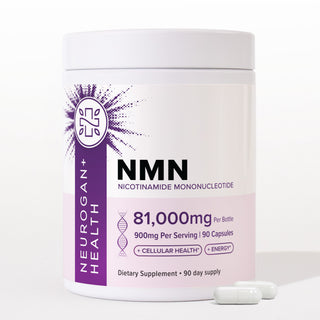
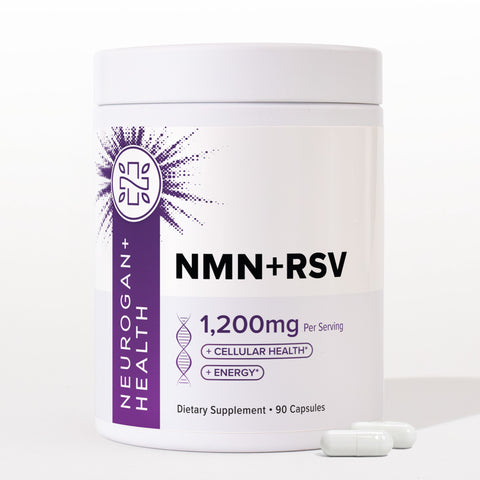

NMN has not been proven to produce reliable weight loss in humans.
One small randomized trial in overweight or obese middle-aged and older adults found greater short-term weight loss with 2,000 mg per day of a specific microcrystalline β-NMN formulation called MIB-626. However, a 2026 systematic review and meta-analysis of 15 randomized trials found no significant overall effect of NMN supplementation on body weight or BMI.1,2
That means NMN should not be treated as a fat burner, appetite suppressant, or evidence-based obesity treatment.

Most of the stronger claims about NMN increasing fat oxidation or energy expenditure still come from animal research rather than human weight-loss trials.
NMN and Weight Loss at a Glance
| Question | Current human evidence |
|---|---|
| Does NMN reduce body weight? | Not consistently |
| Does NMN reduce BMI? | No significant pooled effect |
| Does NMN burn body fat? | Not established |
| Does NMN reduce belly or visceral fat? | Not established |
| Does NMN suppress appetite? | No convincing human evidence |
| Does NMN speed up metabolism? | Not proven in humans |
| Does NMN cause weight gain? | No consistent evidence |
| Does NMN improve glucose control? | Mixed; pooled evidence largely negative |
| Does NMN lower cholesterol? | One small trial was positive; pooled evidence is not consistently positive |
| Is NMN a weight-loss drug? | No |
Why Researchers Thought NMN Might Affect Weight
NMN—nicotinamide mononucleotide—is a precursor involved in the body's production of NAD+.
NAD+ participates in normal cellular metabolism and redox reactions, and NAD+-dependent pathways have been studied in relation to aging, mitochondrial function, glucose regulation, and energy metabolism.
That gives researchers a plausible reason to investigate whether increasing NAD+ availability through NMN could influence metabolic health.
But this distinction is important:
A molecule being involved in metabolism does not mean supplementing it automatically increases metabolic rate or causes weight loss.
For the broader biology, see What Is NMN?.
What Animal Studies Show About NMN and Fat Loss
Animal research has produced some of the strongest weight-related NMN findings.
For example, a 2025 study in diabetic db/db mice found that dietary NMN reduced body fat mass and triglyceride accumulation while increasing energy expenditure and fat oxidation.5
Those findings help explain why NMN is being investigated for metabolic effects.
They do not establish that an NMN supplement causes fat loss in humans.
Mouse studies can identify mechanisms and hypotheses, but human weight loss has to be demonstrated in human trials.
The Human NMN Trial That Found Weight Loss
One randomized controlled trial provides the strongest direct human signal that an NMN formulation might affect body weight.1
Who Was Studied?
The trial included 30 overweight or obese adults aged 45 years or older.
What Did They Take?
Participants were randomized in a 2:1 ratio to receive either placebo or MIB-626, a specific microcrystalline β-NMN formulation.
The active group took two 500 mg tablets twice daily, for a total of 2,000 mg per day, for 28 days.1
What Happened to Body Weight?
Body weight decreased significantly more in the MIB-626 group than in the placebo group.
The adjusted between-group difference was approximately 1.9 kg over 28 days.1
The study also reported greater reductions in:
- diastolic blood pressure;
- total cholesterol;
- LDL cholesterol;
- and non-HDL cholesterol.
What Did Not Improve?
The same study found no significant treatment-related improvement in:
- intra-abdominal fat;
- liver fat;
- insulin sensitivity;
- muscle strength;
- muscle fatigability;
- aerobic capacity;
- or stair-climbing power.1
That makes the interpretation much narrower than “NMN burns fat.”
The study found a short-term body-weight signal with one specific high-dose formulation. It did not show that ordinary NMN supplements reliably reduce body fat or improve obesity.
What Does the Broader Human Evidence Show?
A single positive trial is useful, but systematic reviews provide a broader view of the evidence.
A 2026 systematic review and meta-analysis included 15 randomized controlled trials of oral NMN or NMN-related preparations. Daily doses ranged from 250 to 2,000 mg, and treatment periods ranged from 14 days to 24 weeks.2
Across the trials, researchers found no significant pooled effect on:
- body weight;
- BMI;
- fasting glucose;
- HbA1c;
- lipid profiles;
- or systolic blood pressure.2
There was a small reduction in diastolic blood pressure and a non-significant downward trend in HOMA-IR, but broad metabolic benefits were not established.2
The overall conclusion is therefore more conservative than the single positive weight-loss trial:
Across randomized human research as a whole, NMN has not demonstrated consistent weight-loss efficacy.
Does NMN Burn Fat?
There is no solid human evidence that NMN acts as a direct fat burner.
Animal studies suggest NMN can influence fat oxidation and energy expenditure under certain experimental conditions.5
But human evidence does not currently show that taking NMN reliably increases fat oxidation enough to produce meaningful fat loss.
Even in the 28-day MIB-626 trial that found lower body weight, researchers did not find significant reductions in intra-abdominal or liver fat.1
So:
Weight loss in one study should not be reinterpreted as proof that NMN burns body fat.
Does NMN Reduce Belly Fat or Visceral Fat?
That has not been established.
The MIB-626 trial specifically measured intra-abdominal fat, and it did not significantly decline compared with placebo.1
There is therefore no good human evidence supporting claims such as:
- “NMN burns belly fat”;
- “NMN targets visceral fat”;
- or “NMN reduces waist fat.”
If body composition is the outcome of interest, body weight and body fat should also be kept separate. Losing scale weight is not automatically the same as losing visceral fat.
Does NMN Suppress Appetite?
There is no convincing human evidence that NMN suppresses appetite.
NMN is not an established appetite suppressant, stimulant, or GLP-1 receptor agonist.
The main human NMN trials have focused on outcomes such as NAD-related biomarkers, insulin sensitivity, physical function, blood pressure, glucose metabolism, lipids, and safety—not clinically meaningful appetite suppression.
If someone reports feeling less hungry while taking NMN, that personal experience should not be converted into a general claim that NMN reduces appetite.
Does NMN Increase Appetite or Make You Hungry?
There is also no convincing evidence that NMN reliably increases appetite.
Current randomized evidence does not support treating NMN as either an appetite suppressant or an appetite stimulant.
Changes in hunger can be influenced by many factors, including food intake, sleep, activity, medication use, stress, and individual metabolic differences.
Can NMN Cause Weight Gain?
There is no consistent evidence that NMN causes weight gain.
The 2026 meta-analysis found no significant overall change in body weight across randomized studies.2
That finding also means NMN should not be assumed to prevent weight gain.
The most accurate position is:
NMN has not shown a consistent overall effect on human body weight in randomized trials.
Does NMN Speed Up Your Metabolism?
NMN participates indirectly in metabolic pathways because it is a precursor to NAD+.
Animal research has reported higher energy expenditure under specific experimental conditions.5
But human research has not established that NMN supplementation meaningfully increases resting metabolic rate, daily calorie expenditure, or the number of calories a person burns.
So these are not equivalent statements:
“NMN is involved in NAD+ metabolism”
and
“NMN speeds up your metabolism.”
The first reflects biological pathways. The second is a clinical outcome that has not been established.
NMN and Insulin Sensitivity
One important human study found a metabolic effect without demonstrating weight loss.
A 10-week randomized, double-blind, placebo-controlled trial included 25 postmenopausal women with prediabetes who were overweight or obese. Participants received either 250 mg of NMN per day or placebo.3
NMN improved insulin-stimulated glucose disposal in skeletal muscle and increased muscle insulin signaling compared with placebo.3
However, the study did not show meaningful changes in body composition, and it was conducted in a very specific population.3
That means:
Improved muscle insulin sensitivity in one population is not evidence that NMN is a general weight-loss supplement.
Broader meta-analyses have also failed to find consistent improvements in fasting glucose, fasting insulin, HbA1c, HOMA-IR, or lipid profiles across randomized trials.4
Does NMN Lower Cholesterol?
The evidence is mixed.
In the 28-day MIB-626 trial, total cholesterol, LDL cholesterol, and non-HDL cholesterol declined significantly more in the NMN group than in placebo.1
However, systematic reviews pooling multiple randomized trials have not found a significant overall effect of NMN supplementation on lipid profiles.2,4
So it would be too strong to say that NMN generally lowers cholesterol.
A more accurate conclusion is:
One small high-dose study found favorable cholesterol changes, but the broader randomized evidence does not show a consistent lipid-lowering effect.
NMN Weight Loss Before and After: What Should You Expect?
There is no evidence-based amount of weight that someone should expect to lose before and after starting NMN.
The strongest positive human signal comes from one 28-day trial that found an adjusted body-weight difference of about 1.9 kg between a specific 2,000 mg/day MIB-626 regimen and placebo.1
But the broader evidence does not reproduce a consistent weight-loss effect.2
That means customer anecdotes, social-media transformations, or isolated before-and-after stories should not be treated as predictable NMN outcomes.
For the broader expectations around supplementation, see NMN Before and After.
How Much NMN Should I Take for Weight Loss?
There is no established NMN dose for weight loss.
The MIB-626 trial used 2,000 mg per day, but that should not be interpreted as a recommended consumer weight-loss dose.1
It was:
- a specific microcrystalline β-NMN formulation;
- studied in a small trial;
- used for only 28 days;
- and administered under a defined research protocol.
A dose used in one research study is not automatically the dose someone should take for a particular goal.
For the amounts studied across human NMN research, see NMN Dosage.
Is NMN Like Ozempic?
No.
NMN is an NAD+ precursor.
Ozempic is the brand name for semaglutide, a prescription GLP-1 receptor agonist.
They have different mechanisms, evidence bases, regulatory status, and clinical uses.
NMN has not been shown to reproduce the appetite or weight-loss effects associated with GLP-1 medications and should not be marketed as a “natural Ozempic” or a substitute for prescription obesity treatment.
NMN vs Proven Weight-Loss Approaches
NMN should not replace established approaches to weight management.
Evidence-based weight management can involve factors such as:
- an appropriate sustained energy deficit;
- adequate protein and overall diet quality;
- regular physical activity;
- sleep;
- behavioral support;
- and clinician-directed obesity treatment when appropriate.
Prescription weight-management medications may also be appropriate for some people under medical supervision.
NMN has not been shown to substitute for these approaches.
Should You Take NMN Specifically for Weight Loss?
Weight loss alone is not a strong evidence-based reason to choose NMN.
NMN remains an active area of research because of its role as an NAD+ precursor and its effects on NAD-related biomarkers.
But current human evidence does not justify expecting:
- reliable body-weight reduction;
- fat burning;
- belly-fat loss;
- appetite suppression;
- or a major increase in metabolic rate.
If you are considering NMN for its broader research context, see NMN Benefits & How It Works.
Is NMN Safe?
Short-term randomized human studies have generally reported favorable tolerability.
The 2026 systematic review and meta-analysis found no clear increase in overall adverse events, serious adverse events, withdrawals due to adverse events, or ALT and AST abnormalities across the included short-term randomized trials.2
That does not establish long-term safety for every person, dose, formulation, or medical condition.
Do not use Neurogan Health supplements if you are under 18, pregnant, or nursing. If you take prescription medication or have a significant medical condition, discuss supplementation with a qualified healthcare professional.
For the full safety discussion, see NMN Side Effects & Safety.
Frequently Asked Questions
Does NMN help with weight loss?
Not consistently.
One small 28-day randomized trial found greater body-weight reduction with 2,000 mg/day of a specific microcrystalline β-NMN formulation, but a 2026 meta-analysis found no significant overall effect on body weight or BMI across randomized trials.1,2
Does NMN help you lose weight?
It is possible that some specific formulations or populations may show a weight-related response, but current evidence does not support predictable weight loss from NMN supplementation.
Does NMN burn fat?
There is no solid human evidence that NMN functions as a fat burner.
Animal studies show effects on fat oxidation and energy expenditure, but those findings have not been demonstrated consistently as human fat loss.5
Can NMN help lose belly fat?
That has not been established.
The human MIB-626 trial that found lower body weight did not find a significant reduction in intra-abdominal fat.1
Does NMN suppress appetite?
There is no convincing human evidence that NMN suppresses appetite.
NMN is not an established appetite suppressant or GLP-1 medication.
Does NMN increase appetite?
There is also no convincing evidence that NMN reliably increases appetite.
Can NMN cause weight gain?
There is no consistent evidence that NMN causes weight gain.
Across randomized trials, pooled evidence shows no significant overall body-weight effect.2
Does NMN speed up metabolism?
NMN is involved in NAD+ metabolism, but human research has not established that NMN supplementation meaningfully increases metabolic rate or daily calorie expenditure.
Does NMN lower cholesterol?
One small high-dose trial found reductions in total, LDL, and non-HDL cholesterol, but broader randomized evidence has not shown a consistent overall lipid-lowering effect.1,4
Does NMN improve insulin sensitivity?
A randomized study in postmenopausal women with prediabetes who were overweight or obese found improved skeletal-muscle insulin sensitivity after 250 mg/day of NMN for 10 weeks.3
That finding was population-specific and did not establish weight-loss efficacy. Broader pooled evidence on glucose metabolism remains mixed.4
How much NMN should I take for weight loss?
There is no established NMN dose for weight loss.
Do not use the 2,000 mg/day dose from one research study as a general consumer weight-loss recommendation.
Is NMN like Ozempic?
No.
NMN is an NAD+ precursor. Ozempic is a prescription GLP-1 receptor agonist. NMN has not been shown to reproduce its appetite or weight-loss effects.
Is NMN a weight-loss supplement?
Not based on current evidence.
NMN is studied primarily as an NAD+ precursor. Weight loss has not emerged as a consistent effect across randomized human trials.
What should I expect before and after taking NMN?
You should not expect a predictable amount of weight loss.
One trial found a short-term weight difference, while broader pooled research found no consistent body-weight effect.1,2
See NMN Before and After for the broader expectation-setting discussion.
Final Takeaway
NMN is involved in NAD+ biology and has interesting metabolic effects in animal research.
But that does not make it a proven human weight-loss supplement.
One small high-dose human trial found greater short-term weight reduction with a specific microcrystalline β-NMN formulation, while the broader randomized evidence shows no consistent reduction in body weight or BMI.1,2
Current evidence also does not establish that NMN:
- burns human body fat;
- reduces belly fat;
- suppresses appetite;
- or significantly speeds up metabolism.
If you are considering NMN, evaluate it based on the broader human evidence rather than expecting a predictable weight-loss result.
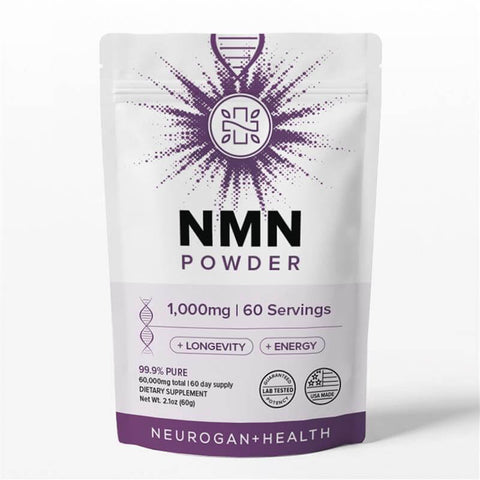
Compare Neurogan Health NMN Supplements.
References
- Pencina KM, Valderrabano R, Wipper B, et al. Nicotinamide Adenine Dinucleotide Augmentation in Overweight or Obese Middle-Aged and Older Adults: A Physiologic Study. Journal of Clinical Endocrinology & Metabolism. 2023;108(8):1968–1980. PMID: 36740954. doi:10.1210/clinem/dgad027.
- Yang W, Huang J, Tang Z, Chen C, Sun Y. Safety and Metabolism-Related Outcomes of Oral Nicotinamide Mononucleotide Supplementation in Adults: A Systematic Review and Meta-Analysis. Nutrients. 2026;18(14):2251. PMID: 42514320. doi:10.3390/nu18142251.
- Yoshino M, Yoshino J, Kayser BD, et al. Nicotinamide mononucleotide increases muscle insulin sensitivity in prediabetic women. Science. 2021;372(6547):1224–1229. PMID: 33888596. doi:10.1126/science.abe9985.
- Chen F, Zhou D, Kong AP-S, et al. Effects of Nicotinamide Mononucleotide on Glucose and Lipid Metabolism in Adults: A Systematic Review and Meta-analysis of Randomised Controlled Trials. Current Diabetes Reports. 2024;25(1):4. PMID: 39531138. doi:10.1007/s11892-024-01557-z.
- Shirouchi B, Mitsuta S, Higuchi M, Okumura M, Tanaka K. Dietary Nicotinamide Mononucleotide, a Key NAD+ Intermediate, Alleviates Body Fat Mass and Hypertriglyceridemia by Enhancing Energy Expenditure with Promotion of Fat Oxidation and Hepatic Lipolysis and Suppressing Hepatic Lipogenesis in db/db Mice. Metabolites. 2025;15(5):333. PMID: 40422909. doi:10.3390/metabo15050333.