
NAD+ and mitochondria are closely connected, but not quite in the way a lot of over hyped supplement marketing sometimes makes it sound.
NAD+ (Nicotinamide Dinucleotide) is a coenzyme your cells need to turn nutrients into usable cellular energy.
Inside mitochondria, NAD+ picks up electrons and becomes NADH. NADH then helps deliver those electrons to the electron transport chain, which your cells use to produce ATP, their main form of usable energy.
NAD+ is also involved in other processes tied to cellular maintenance, signaling, and metabolism.
That makes NAD+ important to mitochondrial health, but being essential for mitochondrial function doesn't mean taking more NAD+ automatically improves mitochondrial function.
Human trials of NAD+ precursors like NMN and NR show that supplementation can raise NAD+ levels. Whether those increases consistently translate into more energy, better physical performance, sharper cognition, or a longer life is less certain [1, 2, 3].
Here's what we actually know.
What Is NAD+?
NAD+ stands for nicotinamide adenine dinucleotide. It's found throughout the body and works as a coenzyme, meaning it helps other enzymes carry out important chemical reactions.
The National Institutes of Health notes that more than 400 enzymes require NAD to function. It's involved in reactions that transfer energy from carbohydrates, fats, and proteins toward making ATP [4].

NAD commonly shifts between two forms: NAD+, the oxidized form that can accept electrons, and NADH, the reduced form after NAD+ has picked up those electrons.
Think of it less as an energy supplement and more as a cellular shuttle.
NAD+ picks up high-energy electrons during metabolism. NADH carries those electrons to other reactions, including the ones involved in mitochondrial ATP production. Your cells continuously recycle these two forms back and forth.
NAD+ Isn't the Same as Vitamin B3
NAD+ and vitamin B3 are related, but they aren't the same thing.
Niacin is the general name for vitamin B3 compounds like nicotinic acid and nicotinamide. Your tissues can use absorbed niacin to produce NAD.
Other compounds can also feed into NAD+ production. Two that have gotten a lot of attention are NMN (nicotinamide mononucleotide) and NR (nicotinamide riboside). Both are NAD+ precursors.
Understanding these differences is important when you're comparing NAD+ supplements, because a product containing NAD+ itself isn't the same as a product designed to provide a precursor your body can use to make NAD+.
What Do Mitochondria Do?
Mitochondria are structures inside most of your cells that play a major role in converting nutrients into ATP.
ATP stands for adenosine triphosphate. Your cells use ATP to power all kinds of processes, from muscle contraction to maintaining ion gradients to building new cellular components.
Mitochondria aren't simply little batteries, though. They’re also needed for energy metabolism, fatty-acid oxidation, cellular signaling, calcium regulation, programmed cell death, and mitochondrial quality control.
For our purposes, the key relationship is this: mitochondria need a steady flow of electrons to produce ATP efficiently, and NAD+/NADH is one of the major systems that moves those electrons.
If you want the broader explanation of what cellular energy actually means, read our guide to Cellular Energy vs. Regular Energy.
How NAD+ Helps Mitochondria Produce ATP
This is where the NAD+-mitochondria connection becomes more obvious.
When you eat carbohydrates, fats, and proteins, your body breaks them down through a series of metabolic pathways. During those reactions, NAD+ picks up electrons and becomes NADH. NADH can then deliver those electrons to the mitochondrial electron transport chain.
Food → metabolic pathways → NAD+ accepts electrons → NADH → electron transport chain → ATP production
Inside the inner mitochondrial membrane, electrons move through a series of protein complexes. That movement helps build a proton gradient across the membrane. Your cells then use that gradient to power ATP synthase, an enzyme that produces ATP.
So when people say NAD+ is involved in "cellular energy," they're describing a biochemical relationship. But NAD+ isn't a stimulant.
Taking NAD+ shouldn't be thought of as equivalent to drinking coffee or eating calories. It's part of the machinery your cells use to process energy, not an energy source on its own.
NAD+ Does More Than Support Energy Metabolism
ATP production gets most of the attention, but NAD+ has other jobs too.
NAD+ also supports enzymes involved in cellular signaling and maintenance, including sirtuins, PARPs, and CD38. These systems support gene regulation, DNA maintenance, stress responses, metabolism, and cellular communication
That's one reason NAD+ has become linked with healthy-aging research. Sirtuins are a good example.
They're NAD+-dependent enzymes involved in metabolic regulation and cellular stress responses, and some sirtuins operate directly inside mitochondria. That creates an important link between NAD+ availability, mitochondrial metabolism, and mitochondrial homeostasis.
However, mechanistic evidence shouldn't be confused with clinical proof. Showing that a pathway is involved in aging biology doesn't prove that boosting that pathway with a supplement will make people live longer. That distinction matters even more with NAD+.
Does NAD+ Decline With Age?
Research suggests that NAD+ metabolism changes with age, and lower NAD+ concentrations have been observed in various tissues and experimental models.
Several mechanisms may be involved, including changes in NAD+ production and increased NAD+ use.
One enzyme that has received particular attention is CD38, which consumes NAD+.
Research suggests its activity may contribute to age-related changes in NAD+ metabolism, leading researchers to investigate whether restoring NAD+ availability could influence age-related cellular changes.
The biology here is promising. The human outcomes are still less certain. That's why we prefer saying NAD+ is involved in healthy cellular aging, rather than calling NAD+ a proven "anti-aging molecule."
Does Increasing NAD+ Improve Mitochondrial Function?
Human studies are showing that NAD+ precursors can raise NAD+ levels. What they don't consistently show is that higher NAD+ leads to better mitochondrial function or overall health outcomes.
Consider a few human trials:
|
Intervention |
What Researchers Found |
What It Tells Us |
|
250 mg NMN/day for 12 weeks |
Increased blood NAD+ in older adults |
NMN can affect NAD+ metabolism [1] |
|
300 to 900 mg NMN/day for 60 days |
Dose-dependent increases in blood NAD |
NMN response varies considerably between people [2] |
|
NR in older adults with mild cognitive impairment |
Increased blood NAD+ |
Increasing NAD+ didn't improve cognition in this study [3] |
|
Mixed NAD+ precursors in physically compromised older adults |
No improvement in skeletal-muscle mitochondrial function |
More NAD-related substrate doesn't guarantee better mitochondrial performance [5] |
The first study is particularly useful.
Researchers gave 60 older adults either placebo or 250 mg of NMN per day for 12 weeks. NMN increased blood NAD+ and related metabolites [1]. The study's main physical outcome, a stepping test, wasn't significantly different from placebo. That said, the NMN group did show improvements in four-meter walking time and some sleep measures as secondary outcomes.
Another trial looked at 300, 600, and 900 mg of NMN per day in adults aged 40 to 65. Blood NAD concentrations rose in a dose-dependent pattern, but variation between individuals was substantial [2].
That variability is worth paying attention to. Two people taking the same amount of an NAD+ precursor may not experience identical changes in NAD metabolism.
The Takeaway
We can say with reasonable confidence that certain NAD+ precursors can raise NAD+ biomarkers in humans. We can't yet say that raising those biomarkers reliably increases daily energy, improves cognition, restores mitochondrial function, reverses aging, or extends human lifespan. Those are much bigger claims.
NAD+ vs. NMN vs. NR: What's the Difference?
These compounds often get grouped together, but they aren't interchangeable.
NAD+
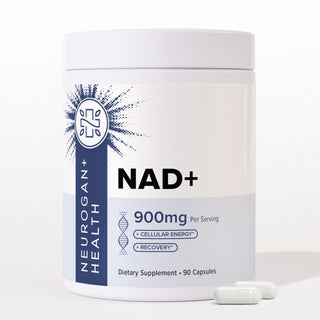
NAD+ is the final coenzyme your cells actually use. Neurogan Health's standard NAD+ Capsules provide 900 mg of NAD+ per serving and are third-party tested for purity and potency. There's also a Liposomal NAD+ option providing 500 mg per serving.
NMN
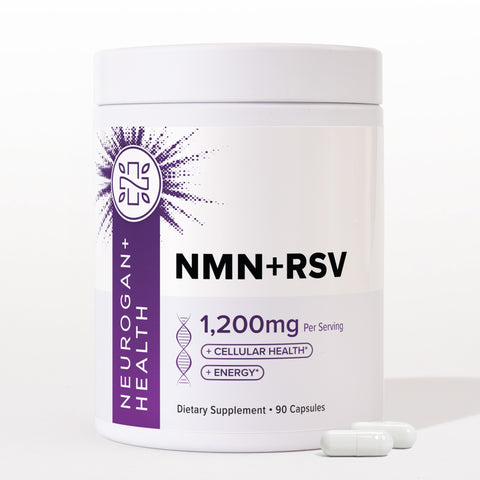
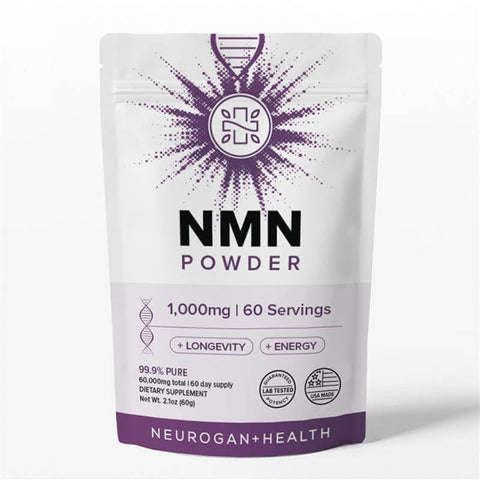
NMN is a direct NAD+ precursor. Your body can use NMN in pathways that ultimately produce NAD+. Human NMN trials have tested several amounts, including 250, 300, 600, and 900 mg per day [1, 2]. Neurogan Health offers several NMN formats, including 500 mg NMN capsules, 900 mg NMN capsules, and liposomal NMN capsules.
NR
NR (Nicotinamide Riboside) is another vitamin B3-related NAD+ precursor. Human studies show that oral NR can increase NAD+ metabolites [3]. Most of the published evidence has involved branded NR ingredients and/or industry relationships, underscoring the need for larger, longer-term, independently replicated trials.
Which One Is Better?
We don't currently have enough high-quality head-to-head human evidence to declare NAD+, NMN, or NR universally superior. These products are often marketed as though the debate has already been settled. It hasn't.
Does Oral NAD+ Work?
This is a surprisingly tricky question to answer.
Direct oral NAD+ supplements exist, but the human clinical literature is much more developed for NAD+ precursors like NMN and NR. So we shouldn't take evidence showing that NMN raises blood NAD+ and automatically assume the same holds true for direct oral NAD+. They're different interventions.
The NIH also makes an important point about dietary NAD: NAD and NADP consumed in food are converted to nicotinamide in the gut before they're absorbed.
Research into supplemental NAD+ delivery continues, including formulations designed for better absorption. For now, more direct human evidence shows increases in NAD-related biomarkers from NMN and NR supplementation than from conventional oral NAD+ itself.
How Much NAD+ or NMN Should You Take?
There's no established universal dose of NAD+ or NMN for "mitochondrial health." That's the single most important thing to understand before looking at any numbers.
Human NMN research has included 250 mg/day for 12 weeks in older adults, and 300, 600, and 900 mg/day for 60 days in adults aged 40 to 65 [1, 2].
Those are research doses, not official recommended daily allowances. In the 300 to 900 mg study, higher doses produced greater changes in blood NAD overall, but individual responses varied considerably [2]. That means "more" shouldn't automatically mean "better."
Product serving sizes don’t mean they’re clinically established optimal doses. For example, Neurogan Health's NMN 500 mg Capsules deliver 500 mg per serving, while its higher-potency NMN Capsules have 900 mg per cap. Those numbers tell you how much NMN is in the product. They don't mean 500 or 900 mg is the ideal amount for everyone.
Does NAD+ Improve Brain Function?
The brain has high energy demands, so NAD+ metabolism is genuinely relevant to brain function. That doesn't mean NAD+ supplementation has been proven to make people sharper or reverse cognitive aging.
A randomized placebo-controlled trial studied NR in older adults with mild cognitive impairment. NR substantially increased blood NAD+, but researchers didn't find improved cognition during the study [3].
This is a useful example of why biomarkers and clinical outcomes need to be kept separate. A supplement can successfully change the biological marker it targets without necessarily changing how someone feels or functions day to day.
Research into NAD+ metabolism and neurological aging remains active, but claims about memory, focus, or cognitive rejuvenation should stay conservative for now.
NAD+ vs. CoQ10: Which Is Better for Mitochondria?
Neither is simply "better." NAD+/NADH and CoQ10 play different roles in mitochondrial energy metabolism. NAD+/NADH helps transfer electrons generated during nutrient metabolism, while CoQ10 helps shuttle electrons between protein complexes within the mitochondrial electron transport chain.
They're part of related machinery, but they don't perform the same job. Choosing between them shouldn't come down to statements like "NAD+ is for longevity while CoQ10 is for energy." Human physiology is more complicated than that.
Can You Take NAD+ and CoQ10 Together?
NAD+ and CoQ10 operate at different points in cellular energy metabolism, and they aren't inherently opposing compounds. But research on whether combining them creates a special mitochondrial "synergy" in healthy adults is limited.
If you take prescription medication or manage a health condition, review your supplement routine with your healthcare provider rather than assuming that individually available supplements are automatically fine to combine. The FDA specifically warns that dietary supplements can interact with medicines and with other supplements.
What Are the Downsides of NAD+ Supplements?
Most short-term human NMN and NR trials have reported fairly good tolerability, but they have a few limitations.
We Don't Have Decades of Safety Data
Many human NAD+ precursor trials last weeks or months. That's useful for judging short-term tolerability. It tells us a lot less about taking high-dose NAD-related supplements continuously for decades.
Higher NAD+ Doesn't Guarantee Better Health
This may be the most important limitation. Studies have shown that NAD+ biomarkers can rise without any corresponding improvement in the actual clinical outcome being studied.
NAD+ Biology Is Complex
NAD+ takes part in hundreds of enzymatic reactions, which is exactly why researchers are interested in it, and it's also why "more NAD+ is always better" is an oversimplification.
Supplements Can Interact With Your Broader Routine
Supplements can interact with medications, other supplements, medical conditions, and even lab tests. The FDA recommends discussing supplement use with a healthcare professional, particularly if medications or health conditions are involved.
How to Choose a Quality NAD+ or NMN Supplement
Once you've decided which NAD-related compound interests you, the next question is quality.
The Exact Active Ingredient
The label should clearly tell you whether you're getting NAD+, NMN, NR, niacin, or something else. "NAD booster" by itself isn't specific enough.
Amount Per Serving
Check the Supplement Facts panel rather than relying on numbers printed prominently on the front of the bottle.
Third-Party Testing
Testing helps confirm that what's actually inside the bottle matches what's supposed to be there. Neurogan Health publishes lab results for its NAD+ and NMN products and states that these products undergo third-party testing for purity and potency.
A Certificate of Analysis
A COA, or an accessible lab report, gives you a lot more information than a generic "lab tested" badge. Look for identity, potency, purity, and contaminant testing where applicable.
Simple Formulation
More ingredients don't automatically make an NAD+ product better. A straightforward formula also makes it easier to understand exactly what you're taking.
Realistic Claims
Be skeptical of products promising to reverse aging, repair all mitochondrial damage, dramatically increase lifespan, cure fatigue, or prevent disease. Dietary supplements aren't approved by the FDA for safety and effectiveness before they reach the market, and disease-treatment claims can cause a product marketed as a supplement to be regulated as a drug instead.
Can You Support Mitochondria Without NAD+ Supplements?
Absolutely. Supplementation is only one small part of mitochondrial health.
Regular physical activity is one of the most well-established ways to influence mitochondrial adaptation. Both aerobic exercise and resistance training create metabolic demands that encourage your body to adapt.
Other fundamentals include getting enough sleep, eating enough protein, getting adequate vitamins and minerals, maintaining metabolic health, avoiding smoking, staying physically active, and eating a varied, nutrient-dense diet.
Your body also makes NAD+ from dietary precursors. Niacin-containing foods include poultry, beef, fish, nuts, legumes, grains, and fortified foods. Tryptophan from dietary protein can also support NAD+ production.
Supplements should complement these basics, not replace them.
So, Does NAD+ Help Your Mitochondria?
Yes, biologically.
NAD+ is essential to normal mitochondrial metabolism. It helps carry electrons generated during nutrient metabolism and supports the chain of reactions mitochondria use to produce ATP. NAD+ is also involved in signaling and regulatory pathways connected to cellular maintenance.
The supplementation question is more complicated. Human studies show that NMN and NR can raise NAD+ biomarkers [1, 2, 3]. What we don't yet have is equally strong evidence showing that raising NAD+ consistently improves mitochondrial function, energy, cognition, or longevity in otherwise healthy people.
That's why we see NAD+ support as a growing area of nutritional science, rather than a solved anti-aging equation.
If you're exploring this category, start by understanding whether you're buying direct NAD+ or an NAD+ precursor, check the actual dose, look for transparent third-party testing, and keep your expectations tied to what human research has actually shown so far.
Frequently Asked Questions
What Is NAD+ and What Does It Do in Mitochondria?
NAD+ is a coenzyme needed for cellular energy metabolism. It accepts electrons during metabolic reactions and becomes NADH. NADH can then deliver those electrons to the mitochondrial electron transport chain, helping support ATP production.
Does NAD+ Give You Energy?
Not in the same way that calories or caffeine can make you feel energized. NAD+ takes part in the biochemical processes your cells use to convert nutrients into ATP. It's part of cellular energy metabolism, not a stimulant.
Does NAD+ Decline With Age?
Research indicates that NAD+ metabolism changes with aging, and NAD+ concentrations can decline in certain tissues. How much it changes varies by tissue, metabolic state, and other factors.
Is NAD+ Just Vitamin B3?
No. Vitamin B3 compounds like nicotinic acid and nicotinamide can be converted into NAD, but NAD+ itself is a coenzyme used throughout cellular metabolism.
What's the Difference Between NAD+ and NMN?
NAD+ is the coenzyme your cells actually use. NMN is a precursor that cells can convert into NAD+. Human trials show that oral NMN can increase blood NAD+ levels [1, 2]
Which Is Better, NAD+ or CoQ10?
Neither is universally better, since they perform different functions. NAD+/NADH carries electrons during metabolism, while CoQ10 transfers electrons within the mitochondrial electron transport chain.
Can I Take NAD+ and CoQ10 Together?
They play different roles in cellular energy metabolism, but strong human evidence for special benefits from combining them is limited. Check any combination with a healthcare professional if you take medication or have a health condition.
What Is the Best Form of NAD+ to Take?
There isn't enough comparative human evidence to name one universally best form. Direct NAD+, NMN, and NR are different compounds. NMN and NR currently have more human clinical evidence showing increases in NAD-related biomarkers.
Does Oral NAD+ Work?
Direct oral NAD+ is studied less extensively in humans than oral NAD+ precursors like NMN and NR. Evidence from NMN or NR shouldn't automatically be used to claim that direct oral NAD+ behaves the same way.
What Is the Downside of Taking NAD+?
The main limitations are incomplete long-term safety data, uncertain translation from higher NAD+ biomarkers into meaningful health benefits, and the possibility of interactions with medications or other supplements. Human evidence doesn't establish NAD+ supplementation as a way to reverse aging.
Is It Safe to Take NAD+ Every Day?
NAD-related compounds have generally been well tolerated in short-duration human trials, but long-term evidence is more limited. Follow the product label and talk with your healthcare provider about regular supplementation, particularly if you use medications or manage a health condition.
How Can I Improve Mitochondrial Health Naturally?
Regular exercise, adequate sleep, good nutrition, avoiding smoking, and maintaining metabolic health all support normal mitochondrial function. A varied diet also provides niacin and tryptophan that your body can use to produce NAD+.[1]
References
-
Morifuji, M., Higashi, S., Ebihara, S., & Nagata, M. (2024). Ingestion of β-nicotinamide mononucleotide increased blood NAD levels, maintained walking speed, and improved sleep quality in older adults in a double-blind randomized, placebo-controlled study. GeroScience, 46(5), 4671–4688.
-
Kuerec, A. H., Wang, W., Fokke, K. D. M., Yi, L., Lin, Z., Vaidya, A., Pendse, S., Thasma, S., Andhalkar, N., Avhad, G., Kumbhar, V., & Maier, A. B. (2025). Association between blood nicotinamide adenine dinucleotide levels and blood laboratory parameters at baseline and after nicotinamide mononucleotide supplementation in middle-aged healthy individuals: Post hoc analysis of a randomized, double-blinded, placebo-controlled clinical trial. GeroScience. Advance online publication.
-
Orr, M. E., Kotkowski, E., Ramirez, P., Bair-Kelps, D., Liu, Q., Brenner, C., Schmidt, M. S., Fox, P. T., Larbi, A., Tan, C., Wong, G., Gelfond, J., Frost, B., Espinoza, S., Musi, N., & Powers, B. (2024). A randomized placebo-controlled trial of nicotinamide riboside in older adults with mild cognitive impairment. GeroScience, 46(1), 665–682.
-
National Institutes of Health, Office of Dietary Supplements. (2022, November 18). Niacin: Fact sheet for health professionals.
-
Lotti, S., Pagliai, G., Colombini, B., Sofi, F., & Dinu, M. (2022). Chronotype differences in energy intake, cardiometabolic risk parameters, cancer, and depression: a systematic review with meta-analysis of observational studies. Advances in Nutrition, 13(1), 269-281.